For a meeting coffee break, start with the flavour you’re looking for: choose a recipe described as “dark cocoa” or “dark chocolate” if that profile matters, or a classic cocoa and hazelnut spread if that’s what you’d like to serve. Organic certification and no palm oil are additional considerations, not guarantees of a more cocoa-rich flavour. Before choosing, compare the ingredients, allergens, sugars and jar size.
Who is this choice for?
Fans of a pronounced cocoa flavour
You’re looking for a recipe described as “dark cocoa”, “intensely dark” or “dark chocolate” to go with your coffee. Product listings from Carrefour and Auchan show why it’s worth comparing the ingredients and stated percentages, rather than relying on the word “dark” alone.
Organisers mindful of allergens
You’re serving several people and need to check the ingredients in each jar, particularly for hazelnuts, milk, soya and any may-contain warnings. A “dark” or “organic” label is no substitute for checking.
People in charge of the coffee break
You want to choose a size that suits the number of attendees and check your chosen shop’s collection or delivery options before the meeting.
What should you look for?
First, choose the type of recipe, then check the needs of everyone sharing the jar. A spread described as “dark” can also be organic; these labels don’t necessarily refer to three separate categories.
| Criteria |
What to check |
Who is it for? |
| Cocoa profile |
Check how the recipe is described, then distinguish between the percentage of low-fat cocoa powder and that of dark chocolate in the ingredients. |
If I want to serve a spread with a pronounced cocoa profile, the word “dark” alone isn’t enough to help me choose. Around 36% of consumers would put this profile at the top of their list of criteria. |
| Allergens |
Read the ingredients and any may-contain warnings on the specific jar you plan to serve. |
When several people are sharing the coffee break, I need to be able to rule out a recipe that isn’t suitable for their allergies. Ingredient suitability would be a priority for around 29% of consumers. |
| Sugars and labelling |
Compare sugar content on the same basis, particularly per 100 g. Also check the nutritional information and, if shown on the product, the Nutri-Score. |
When choosing between two recipes, I’d rather check their nutritional values than infer what’s in them from a label on the front. Around 21% of consumers would put this check first. |
| Size and collection |
Check the jar’s weight against the number of attendees, as well as the collection or delivery options offered by your chosen shop. |
If I’m organising the meeting, I want a suitable quantity and a jar I can get in time. Around 14% of consumers would put these arrangements first. |
Mistakes to avoid
-
Assuming “dark” means a specific cocoa percentage
A Carrefour listing for Jardin Bio étic gives 13% low-fat cocoa powder and 6.5% dark chocolate, while a separate Auchan listing states 20% dark chocolate. These percentages refer to different ingredients, so they aren’t directly comparable as though they represent the same total cocoa content.
For each recipe, note which ingredient the percentage refers to and read the full ingredients list before choosing between jars.
-
Applying the sugary drinks tax to chocolate spread
The levy described by Légifrance in France applies to drinks and liquid preparations for drinks, not chocolate spread. It therefore can’t tell you how much sugar is in a jar.
To compare recipes, check the sugar content per 100 g in the nutritional information and consider the portion you plan to serve.
-
Assuming an organic or plant-based recipe is suitable for every allergy
Organic spreads can contain hazelnuts or milk. Nutella also states that its Plant-Based recipe may contain milk and isn’t suitable for people with a milk protein allergy.
Check the ingredients and any may-contain warnings on the jar you buy. If a recipe isn’t suitable for someone attending, provide a separate option that meets their needs.
-
Choosing a large jar without planning how you’ll use it
A larger size is only useful if the quantity suits the number of attendees and what you’ll be serving during the break.
Estimate the portions before choosing a size, then check the product available from your shop and its storage instructions.
Brands to know when comparing recipes
Jardin Bio étic
Two products described as “Intensely Dark and Hazelnut” or “dark cocoa” offer a chance to explore recipes with a dark chocolate focus.
- Depending on the product, Carrefour and Auchan listings state 13% low-fat cocoa powder and 6.5% dark chocolate, or 20% dark chocolate.
- These figures describe different recipes and ingredients. Also check the allergens and any may-contain warnings for the specific product you choose.
Côte d'Or
A “dark chocolate” spread is one to consider if that description matches the flavour you’re looking for.
- The Auchan listing presents this product under the name “Noir de Noir”.
- To compare ingredients, sugars or allergens, check the information on the jar you choose.
Nutella
A classic cocoa and hazelnut recipe to consider if you’re not specifically looking for a spread labelled “dark”.
- Nutella France states that its recipe contains 13% hazelnuts and lists cocoa, sugar, palm oil and milk among its ingredients.
- This recipe isn’t suitable if you’re looking for a product without palm oil or milk. Check the ingredients of the size you buy.
Carrefour Bio
Cocoa and hazelnut spreads to consider if organic certification or no palm oil is one of your meeting’s requirements.
- A Carrefour Bio listing describes a recipe without palm oil, containing hazelnuts, milk and low-fat cocoa powder, among other ingredients.
- This doesn’t mean it’s “dark chocolate” or free from allergens: check the exact product.
Auchan Bio
An organic cocoa and hazelnut recipe to compare if this flavour profile appeals to you more than a “dark chocolate” label.
- The Auchan listing states that the product in question contains 13% hazelnuts and 7.5% low-fat cocoa powder.
- The recipe contains milk and hazelnuts; don’t assume these percentages apply to other spreads from the brand.
Chocolate spreads for a coffee break
These Joybuy products include cocoa and hazelnut recipes and cocoa spreads with other ingredients, in a range of sizes. If you’re specifically looking for “dark chocolate”, check the description and ingredients on the jar before choosing: the products below aren’t described as “dark” recipes.
 Image unavailable
Rigoni di Asiago Nocciolata Organic Cocoa & Hazelnut, 250 g
Worth considering if you’d like a cocoa and hazelnut spread for your coffee break rather than a recipe described as “dark”.
250 g jar. If anyone has allergies, check the ingredients and information on the jar you serve.
View on Joybuy
 Image unavailable
FUNKIE Organic Hazelnut Cocoa Smooth Spread, 200 g
Worth considering if you’re looking for an organic hazelnut and cocoa spread in a smaller size, without expecting an explicitly “dark chocolate” flavour profile.
200 g jar. The recipe also contains red bean purée. To compare sugar content, check the amount per 100 g on the label.
View on Joybuy
 Image unavailable
Nutella, cocoa and hazelnut spread, 1 kg
Worth considering if you’d like to serve a classic cocoa and hazelnut recipe from a large jar, rather than a spread described as “dark chocolate”.
1 kg jar. Check that it’s suitable for the number of attendees; ingredients and allergens are also important when sharing.
View on Joybuy
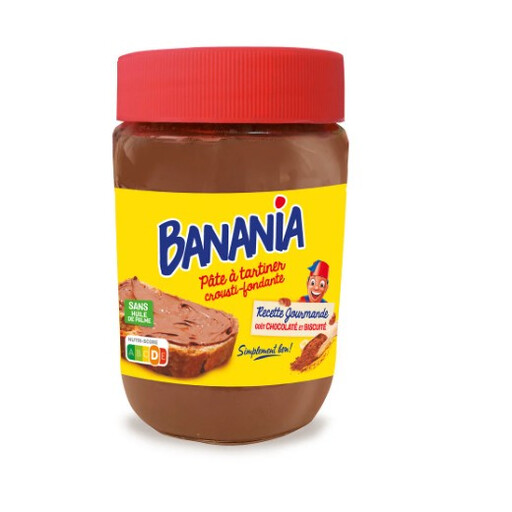 Image unavailable
Banania, spread with no palm oil, 400 g
Worth considering if no palm oil is important for your coffee break. Bear in mind that this is a cocoa and banana recipe, not a spread described as “dark chocolate”.
400 g jar. Check the allergens on the packaging before serving it to the group.
View on Joybuy
Image unavailable
Banania, spread with no palm oil, 750 g
This size is worth considering if you plan to serve this cocoa and banana recipe to several people; it isn’t a substitute if you’re looking for a “dark chocolate” flavour.
750 g jar. Before sharing it, check the allergens listed on the jar and make sure the quantity suits the number of guests.
View on Joybuy
Frequently asked questions
Does the sugary drinks tax apply to chocolate spread in France?
No. The levy described by Légifrance applies to drinks and liquid preparations for drinks, under the conditions set out in French legislation, not to chocolate spread. To choose between two jars, compare their ingredients and sugar content per 100 g instead.
Is Nutri-Score compulsory on chocolate spread?
No, displaying Nutri-Score is voluntary, as Santé publique France explains. The European Commission states that nutritional information has been compulsory since 13 December 2016 for the prepacked foods covered by the rules. You can still check the nutritional values even if there’s no Nutri-Score on the front of the pack.
Is “dark chocolate” spread always free from milk and hazelnuts?
No. Recipes described as “dark” can contain hazelnuts and may include warnings about milk, soya or other nuts. If you have an allergy, read the ingredients and any may-contain warnings on the specific jar you plan to serve.
Should you put the jar in the fridge after opening?
Follow the storage instructions for the spread you’ve bought, as they can vary between recipes. Check the label before deciding how to store the opened jar after the meeting.


