People who want to keep the jar
You’re looking for a small glass container to keep after your coffee break or recycle once it’s empty. Check that the material is specified on the product page or label, rather than relying on the photo.


If you’re looking for a glass jar for your coffee break, check that the material is explicitly stated: the appearance of the container isn’t enough. Then compare the ingredients and nutritional values per 100 g across different recipes, and remember to check the allergens for the specific product you choose.
You’re looking for a small glass container to keep after your coffee break or recycle once it’s empty. Check that the material is specified on the product page or label, rather than relying on the photo.
You want to compare several chocolate and hazelnut spreads by looking at their ingredients, hazelnut content and nutritional values per 100 g.
You need to check for hazelnuts, milk or soya, as well as any ‘may contain’ warnings. This applies to the exact recipe, even if the jar size suits you.
When choosing chocolate spread for your coffee break, start with what matters most to you: the container, comparing recipes or checking allergens. Then check the other details for the specific product you’re thinking of buying.
| Criterion | What to check | Who is it for? |
|---|---|---|
| Glass jar | Look for an explicit mention of glass and check the recycling information to find out what to do with the packaging. | I’d like to keep the jar after my coffee break or recycle it without having to guess the material from a picture; around 33% of consumers make a glass container their main criterion. |
| Ingredients | Compare the ingredients, hazelnut content, sugars and saturated fats per 100 g across products in the same category. | If I’m considering several recipes, I want to compare their ingredients on a like-for-like basis; for around 42% of consumers, this comparison comes before other criteria. |
| Allergens | Read the ingredients and any ‘may contain’ warnings for the exact product. | Before choosing a jar, I need to know whether its recipe includes ingredients I want to avoid; checking allergens is a priority for around 25% of consumers. |
The word ‘jar’ and a product photo don’t necessarily tell you what the container is made of.
Look for wording such as ‘glass jar’ on the product you’ve chosen. To recycle it after use, check the recycling information on the packaging.
According to the European Commission and Manger Bouger, displaying Nutri-Score is voluntary. Its absence doesn’t tell you what’s in a chocolate spread.
If it appears on the jar, use it as an additional guide and check the ingredients and nutritional values per 100 g.
The presence of milk, soya or possible traces can vary between products, even under the same brand.
Check the ingredients list and any ‘may contain’ warnings on the exact product every time you buy it.
In its March 2025 overview, the Ministry of the Economy describes this levy as applying to sugary drinks, not spreads.
When comparing these products, check their sugar content per 100 g instead.
The Joybuy France product page for the 630 g Nutella format describes a chocolate and hazelnut recipe, but doesn’t confirm that this format comes in a glass jar.
Carrefour France product pages for two 300 g chocolate and hazelnut products state that they come in glass jars with metal lids.
E.Leclerc lists a 400 g spread made with hazelnuts from Lot-et-Garonne, with nutritional values you can use to compare the recipe.
Carrefour France lists a Poulain chocolate and hazelnut spread made without palm oil.
This chocolate spread is an option to consider for a coffee break. If a glass jar is your priority, confirm the material for the variant you’re buying and check the recipe label too.
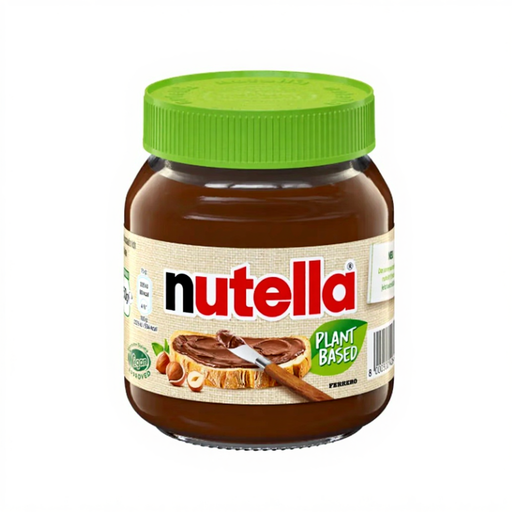 Image unavailable
Before choosing this product for your coffee break, check its label for the ingredients, allergens and nutritional values per 100 g. If you plan to keep the glass jar, also confirm the material of the container you’ll receive.
No. According to the European Commission and Manger Bouger, displaying it is voluntary. If it appears, compare it with products in the same category and also check the ingredients and nutritional values per 100 g.
No. The levy outlined by the Ministry of the Economy in March 2025 applies to sugary drinks. For chocolate spread, check the sugar content listed in the nutritional information.
Look for an explicit mention of the material on the product page or packaging: the word ‘jar’ and a photo aren’t enough. After use, the recycling information tells you where to put the packaging; the Ministry for the Ecological Transition states that glass packaging can be recycled.
No. These two claims relate to different ingredients. The Poulain spread made without palm oil featured by Carrefour France lists hazelnuts, milk and soya lecithins, among other ingredients. Check the ingredients list and any trace warnings on the jar you choose.