Hosts who want to portion servings in advance
If everyone needs their own serving of chocolate spread, without sharing from a communal jar, look for 15 to 25 g portions. Check how many are in the multipack before planning how to serve them.


To give each guest their own serving of chocolate spread, choose individual 15 to 25 g portions, after checking how many are included in the multipack. For a small group, a jar of around 200 to 220 g lets you portion it out into ramekins yourself; filled biscuits can be served as they are, but they’re not a substitute for a serving of spread on its own. Whatever format you choose, compare the sugar content for the amount you’ll serve, and check the ingredients if anyone has dietary requirements.
If everyone needs their own serving of chocolate spread, without sharing from a communal jar, look for 15 to 25 g portions. Check how many are in the multipack before planning how to serve them.
If you’re serving chocolate spread alongside a selection of nibbles, a jar lets you fill ramekins with as much as you like. You’ll need to plan how to serve it rather than relying on individual portions.
If a guest needs to avoid certain ingredients, the exact recipe matters more than the format. A cocoa and hazelnut spread may contain hazelnuts, milk or soya; a variety labelled ‘dairy-free’ does not necessarily mean it’s free from hazelnuts.
Choose this if: you want to set aside one portion per guest and avoid sharing from a jar.
Bear in mind: the weight of a portion alone tells you nothing about its sugar content; some mini formats come in multipacks, so check what’s included.
Choose this if: you’d rather portion out the spread for a small group, particularly into ramekins.
Bear in mind: a jar doesn’t set the amount each person gets; Nutella’s 15 g reference serving is a guide, not a set portion size.
Choose this if: you’re after a bite-sized snack that needs no bread or other base to prepare.
Bear in mind: the biscuit is part of the product, so it isn’t a portion of chocolate spread to serve separately.
For a get-together with friends, start with how you plan to serve the product, then check the exact quantity and recipe. The proportions below relate to consumers grouped by their main concern.
| What matters to you | What to check | Who is this for? |
|---|---|---|
| Planning portions | Weight per portion and number of portions; distinguish spread on its own from a filled biscuit. | When I’m putting together a buffet, I want to give everyone a set amount without opening a communal jar or buying too many portions. Around 45% of consumers are thought to prioritise having defined portions. |
| Comparing sugar content | The ‘of which sugars’ figure per 100 g and for the amount you’ll actually serve; the Nutri-Score, if shown. | Even if the containers are small, I still want to know what’s in the amount I’m going to serve. This is thought to be the main concern for around 33% of consumers. |
| Checking ingredients | The ingredients list and allergens for the exact product; don’t assume an ingredient is absent just because it says ‘dairy-free’. | Before serving a guest with dietary requirements, I need to be able to check the recipe they’ll be eating. For around 22% of consumers, suitability is thought to come before the choice of format. |
The container can help you plan how to serve the spread, but the amount of sugar also depends on the recipe and how much is eaten. Nutella says its 15 g reference serving contains 8.4 g of sugars.
Compare the nutritional information per 100 g, then work out how it relates to the portion you plan to serve.
According to the French Public Health Agency, producers display the Nutri-Score voluntarily. Its absence therefore tells you nothing about the nutritional quality of a chocolate spread.
If it is shown, use it as additional information when comparing products in the same category; check the nutritional information and ingredients too.
A multipack may contain more portions than you need for your get-together. Mini-format offers listed by idealo France include multipacks containing several mini jars.
Count your guests and check the number of portions, as well as the total weight stated by the seller.
A large multipack also means thinking ahead about what to do with any portions you don’t serve.
The DGCCRF (French Directorate-General for Competition Policy, Consumer Affairs and Fraud Control) states that allergens must be highlighted on the labels of prepacked foods. The Nutella recipe shown by the brand contains hazelnuts, milk and soya, among other ingredients.
Check the exact packaging before serving and keep its information available for guests, even if you transfer the spread into ramekins.
A cocoa and hazelnut spread sold in jars; Nutella gives a reference serving size of 15 g. Mini-format options are also available from online sellers.
The brand offers organic cocoa and hazelnut spreads, including Nocciolata L’Originale and L’Intense, which is described as dairy-free. It also offers filled mini tartlets.
Auchan lists a 360 g jar of Bonne Maman hazelnut and cocoa spread, described as containing no palm oil.
Carrefour France lists this brand’s hazelnut and cocoa spreads among its jarred products.
These products suit a few different ways of serving nibbles: portioning spread from a jar, choosing a 25 g format or serving a ready-to-eat product. The wafers and snack are not portions of chocolate spread on its own.
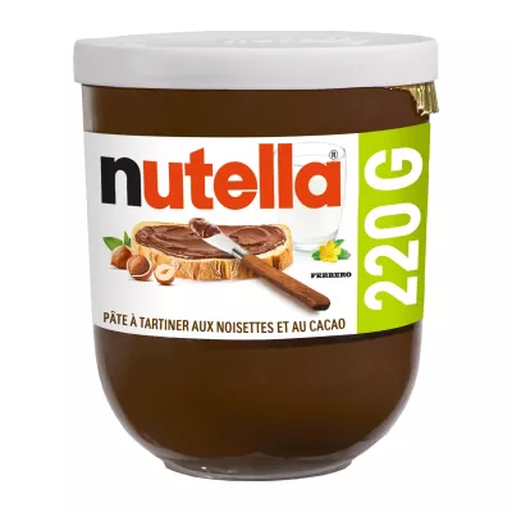 Image unavailable
For a small group, this 220 g jar lets you portion the spread into ramekins yourself. The amount each person gets depends on how much you serve, so check the label to compare it with the nutritional information.
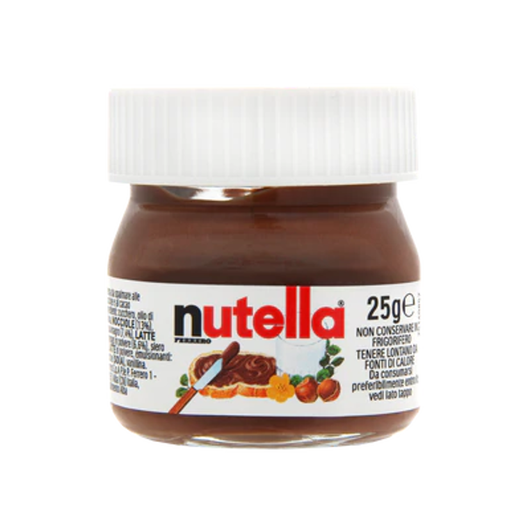 Image unavailable
This 25 g format is worth considering if you want to set aside a separate amount for a guest rather than serving from a communal jar. Before offering it to anyone with dietary requirements, check the ingredients and allergens on the exact packaging.
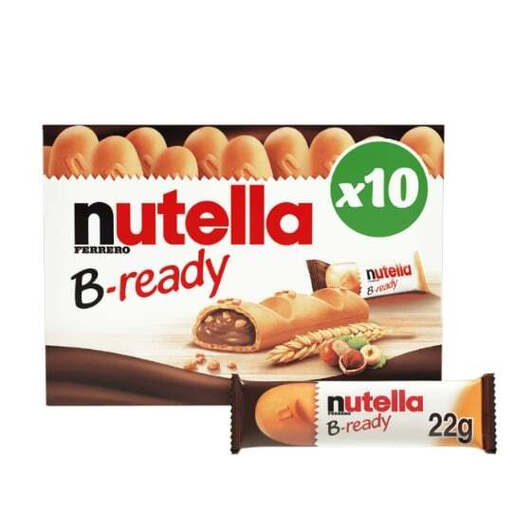 Image unavailable
Worth considering if you want to serve filled wafers without preparing a separate base. The pack is the T10 variety and weighs 220 g in total; this product doesn’t let you portion chocolate spread on its own as you wish.
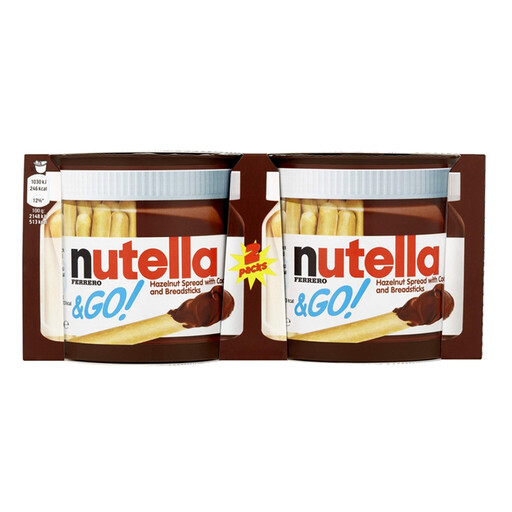 Image unavailable
This 78 g snack combines chocolate spread with breadsticks, making it a good choice if you want to serve everything without preparing an accompaniment. It isn’t a portion of spread on its own; check the label for the ingredients and the amount you plan to serve.
No. The contribution known as the ‘soda tax’, described by the French Ministry of the Economy, applies to sugary drinks, not chocolate spread. To compare chocolate spreads, look at the ‘of which sugars’ figure in their nutritional information and the amount you plan to serve.
No. The French Public Health Agency explains that displaying it is voluntary for producers. If it isn’t shown, use the nutritional information and ingredients list on the packaging to compare the products you’re interested in.
Before serving the product, check the ingredients list and the allergens highlighted on the exact packaging. The Nutella recipe shown by the brand contains hazelnuts, milk and soya, among other ingredients; don’t assume the same list applies to another product.
Follow the storage instructions on the jar you’ve bought. For the 200 g Nutella jar listed by Auchan, the instructions say to store it in a cool, dry place, away from heat, and not to refrigerate it; check the guidance on your own packaging.