For a film night, choose a chocolate spread whose glass jar is confirmed for the specific product you want, then pick a size that suits sharing. Next, compare the sugars per 100 g, the ingredients and the allergens. An organic or dairy-free recipe won’t necessarily meet all these requirements, and the Nutri-Score is optional, as the DGCCRF points out.
Who are these jars for?
Anyone who wants to serve it from a glass jar
If the container matters as much as the size for your film night, look for an explicit statement that the specific product comes in glass. Nutella describes its jar as glass, while Carrefour confirms that the 300 g Jardin Bio étic chocolate spread comes in a glass jar.
Anyone comparing recipes
If the sugar content or ingredients influence your choice, compare the nutritional information per 100 g and the ingredients list rather than relying on a single logo or the word ‘organic’.
Households mindful of dairy and allergens
If you’re serving several people, check the exact recipe and the label on the jar you buy. The dairy-free Nocciolata variant featured by Auchan still contains hazelnuts and soya lecithin.
What should you check before buying?
For a film night, first confirm the jar’s material, then check the recipe and allergens before choosing a size that’s suitable for sharing.
| Criterion |
What to check |
Who it matters to |
| Glass and size |
Confirmation that the exact product comes in glass, and its net weight. |
If I’m serving several people and might reuse the container, I want to confirm that it’s made of glass and choose a suitable size. Around 25% of consumers would make this their top priority. |
| Sugars and ingredients |
The ‘of which sugars’ figure per 100 g and the ingredients list; the Nutri-Score doesn’t replace this information. |
If I’m comparing recipes, I want to be able to compare their sugar content on the same basis and know what they contain. Ingredients would be the priority for around 42% of consumers. |
| Allergens and dairy |
Highlighted allergens, any ‘may contain’ warnings and the recipe of the variant you’re buying. |
Before sharing the jar, I need to check that it’s suitable for my guests’ dietary requirements. This would be the first criterion for around 33% of consumers. |
What mistakes should you avoid?
-
Making the Nutri-Score a must-have
In France, the Nutri-Score is voluntary, according to the DGCCRF. If it’s not shown, you should still read the nutrition declaration, which is compulsory for most prepacked foods.
Compare the figures per 100 g, particularly sugars and fat, then check the ingredients.
-
Assuming ‘organic’ or ‘no palm oil’ means ‘less sugar’
These claims describe other characteristics. Auchan’s listing for standard organic Nocciolata states 51 g of sugars per 100 g. This figure applies to the specific product listed, not every recipe from the brand.
Check the ‘of which sugars’ figure separately for each product you’re considering.
-
Assuming a ‘jar’ is always made of glass
The name of the container doesn’t tell you what it’s made of. Carrefour’s listing for Jardin Bio étic specifies a ‘glass jar’, but you’ll need to check this detail for any other product.
If glass is essential, confirm it on the listing or packaging for the exact product.
-
Relying on an old list of allergens
Recipes can change: Carrefour notes, for example, that an allergen has been added to one Simpl product. A dairy-free variant may also contain hazelnuts or soya.
Before serving, check the highlighted allergens and any ‘may contain’ warnings on the jar you’ve bought.
Which brands should you look at?
These brands offer useful points of comparison for the container, recipe or size. Always check the specific variant you plan to buy.
Nutella
A cocoa and hazelnut classic to consider if glass is a deciding factor: Nutella says its jar is made of glass and can be reused.
- The brand explicitly states what the jar is made of.
- This doesn’t tell you about the sugar content or allergens in the variant you choose; recycling depends on local facilities.
Jardin Bio étic
Carrefour describes a 300 g organic hazelnut and chocolate spread in a glass jar with a metal lid.
- Carrefour’s listing states that it contains 20% hazelnuts and is made without palm oil or soya lecithin.
- This recipe contains milk and hazelnuts; the listing also warns that it may contain traces of soya and other nuts.
Lucien Georgelin
A 400 g organic chocolate spread to look at if you’re interested in the recipe described by Carrefour, which is made without palm oil.
- The listing describes a recipe containing 16% hazelnuts and skimmed milk.
- Check what the jar is made of if you need glass; the listing also says the spread may need stirring.
Nocciolata (Rigoni di Asiago)
A range of cocoa and hazelnut spreads that includes a standard organic recipe and a dairy-free variant. Make sure you know which one you’re buying.
- Auchan’s listings state that the standard recipe checked contains 51 g of sugars per 100 g, while the dairy-free variant checked contains 53 g.
- The dairy-free variant still contains hazelnuts and soya. If you need glass, check the container for the exact product.
Nustikao (Marque Repère, E.Leclerc)
A range to consider when choosing a size to suit the number of people you’re serving.
- E.Leclerc lists 400 g, 600 g and 1 kg sizes in this range.
- Check the container material, ingredients and allergens for the product you choose; size alone won’t tell you this.
A product to consider on Joybuy
This 350 g product may appeal if you’d like to serve chocolate spread at a film night in a container described as glass. Check the label of the product you choose for its ingredients.
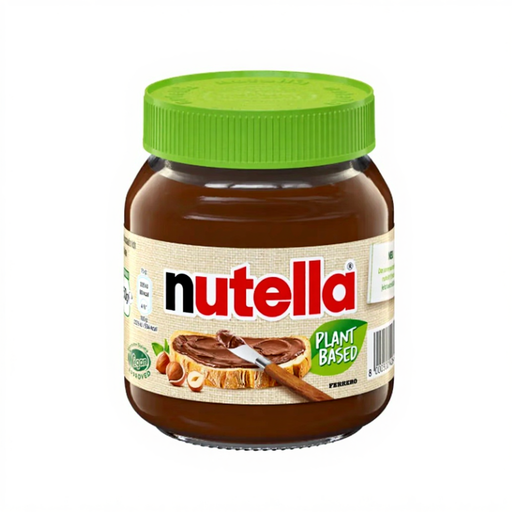 Image unavailable
Nutella Plant Based 350 g
If you’re serving it to share and the container matters, the description for this product says it comes in a reusable glass jar.
The stated size is 350 g. Before choosing this variant based on its sugar content or dietary requirements, check its nutritional information per 100 g, ingredients and allergens on the label.
View on Joybuy
Frequently asked questions
Is the Nutri-Score compulsory on chocolate spread in France?
No, the Nutri-Score is voluntary, according to the DGCCRF. A nutrition declaration is compulsory for most prepacked foods, however. Use the figures per 100 g, in particular, to compare sugar content.
Does the ‘soda tax’ apply to chocolate spreads?
No. The levy described by the official French public finance bulletin applies to non-alcoholic drinks, not chocolate spreads. If sugar content matters to you, check the product’s nutrition declaration instead.
How can you tell if a jar is really made of glass?
Look for an explicit statement about the material for the exact product. Nutella says its jar is made of glass, and Carrefour specifies ‘glass jar with metal lid’ for the 300 g Jardin Bio étic product. The word ‘jar’ alone doesn’t confirm what it’s made of.
Is a dairy-free chocolate spread suitable for everyone with an allergy?
No. The dairy-free Nocciolata variant featured by Auchan contains hazelnuts and soya lecithin. Check the allergens and any ‘may contain’ warnings on the label of the product you buy.
Should you refrigerate the jar after opening?
Follow the storage instructions for your product. Auchan’s listing for standard organic Nocciolata recommends storing it in a cool, dry place between 15 and 25 °C. Don’t assume this advice applies to other recipes.


