People who prepare snacks at home
You make toast before heading out and want a jar size that suits how often you use it.


For a pre-workout snack, a jar is a good choice if you prepare your toast in advance; a single portion is better suited to taking a set amount with you. Either way, check the ingredients and allergens for the specific product, then compare the nutritional values per 100 g with those for the portion you plan to eat.
You make toast before heading out and want a jar size that suits how often you use it.
You prefer a portion that’s easy to carry and check whether you’ll need to bring bread or an extra utensil.
You check the ingredients, allergens and nutritional values for the specific product before choosing a format.
When choosing a chocolate spread for a pre-workout snack, start by thinking about how you’ll eat it, then check the portion size and the label on the specific product.
| What to consider | What to check | Who is it for? |
|---|---|---|
| Jar size | Net weight and the amount you’d usually spread on a slice of toast. | I regularly make toast at home and want a jar size that suits this use; around 34% of consumers would prioritise a format that fits their habits. |
| Portability and portion size | Weight of the individual portion and whether you’ll need to bring bread or an utensil. | When I head to a workout, I’d rather take a portion than carry a jar; around 33% of consumers would prioritise this convenience. |
| Ingredients | Allergens in the ingredients list and sugars per 100 g, then per portion if this information is shown on the pack. | If certain ingredients matter to me, I check the recipe before choosing a format; around 33% of consumers would put ingredients first. |
Article 1613 ter of the French General Tax Code applies to drinks and liquid preparations for drinks, not to this category of chocolate spread.
To compare the products you’re interested in, look instead at their format, ingredients and nutritional values.
The DGCCRF states that displaying Nutri-Score is voluntary. Its presence doesn’t mean you can skip the nutritional information or ingredients list.
Compare sugars and fats per 100 g in particular, whether or not the logo appears on the packaging.
These claims describe specific aspects of a recipe; on their own, they don’t tell you how much sugar it contains or which allergens are present.
Check the ingredients list and nutrition table for the specific product you’re considering.
The range includes jars of hazelnut and cocoa spread, as well as Nutella & Go, which pairs spread with breadsticks.
Carrefour Classic' hazelnut spread is available in a 750 g jar, among other formats.
Auchan lists Pouce cocoa and hazelnut spread in a 750 g jar, as well as a 400 g Auchan Bio recipe.
Aldi describes Tartichoc as a hazelnut spread available in a 750 g format.
These Nutella products include jars for making toast and a single portion to take with you. Don’t confuse the 25 g format with Nutella & Go, which comes with breadsticks.
 Image unavailable
This 1 kg jar is suitable for making toast at home. Check the ingredients and allergens, and think about how much you plan to spread.
 Image unavailable
This 3 kg format is suited to frequent use and making toast in advance. Before choosing it, check that the jar size matches how much you’ll use.
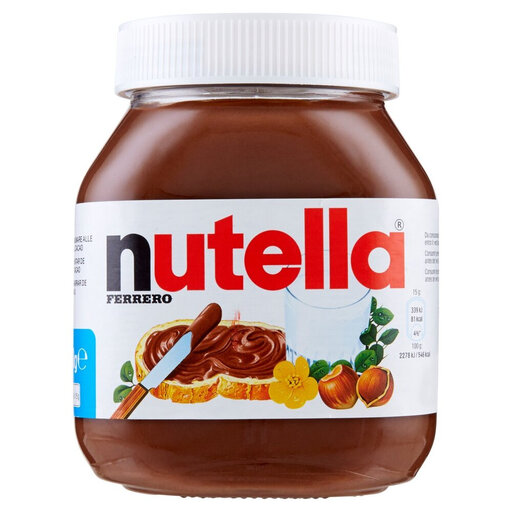 Image unavailable
This 630 g jar lets you prepare a slice of toast before heading out. Check the label for sugars and allergens for this specific product.
 Image unavailable
This 750 g jar is intended for making toast at home. Check the sugars per 100 g, as well as the ingredients and allergens, on the packaging.
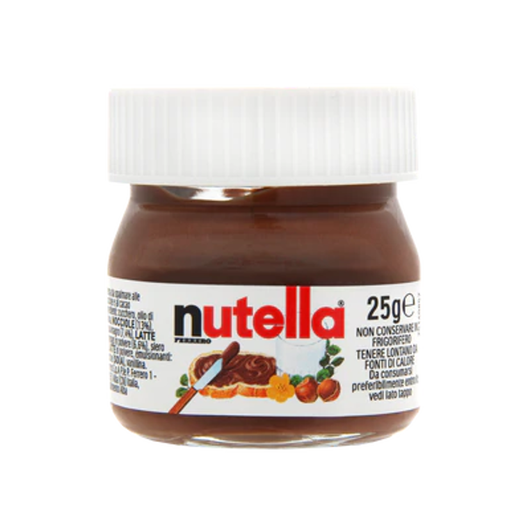 Image unavailable
This 25 g single portion is easier to carry than a jar. If you want to eat it without any preparation, check whether you’ll need something to eat it with or an utensil; also check the allergens on the packaging.
The contribution described in article 1613 ter of the French General Tax Code applies to drinks and liquid preparations for drinks, not to chocolate spreads. So it can’t help you choose between a jar and a single portion for your snack.
No. The DGCCRF states that displaying Nutri-Score is voluntary. To compare two products, read their nutritional information per 100 g and their ingredients lists, even if one displays the logo.
Read the ingredients list and any ‘may contain traces’ statements on the packaging of the specific product you’re considering. The Carrefour and Nutella product information mentioned here lists hazelnuts and milk, among other ingredients; you should still check each product individually.
Compare the nutritional values per 100 g, then consider how much you’ll actually eat. Also check whether the portion comes with something to eat it with, or whether the jar means you’ll need to make toast: the same unit weight doesn’t necessarily mean the same amount of chocolate spread.