For a weekend breakfast, start by comparing sugar per 100 g, ingredients and allergens, then choose a jar size that suits how much you eat. A recipe that highlights its hazelnuts, a stated reduction in sugar or the absence of palm oil won’t, on its own, tell you everything you need to know. If shown, the Nutri-Score can help you assess the label too.
Who is this guide for?
Anyone keeping an eye on sugar
You want to compare recipes on a like-for-like basis by checking the “of which sugars” figure per 100 g. Any stated reduction is relative to a comparison product or figure: it doesn’t tell you the sugar content of your chosen spread on its own.
Households sharing a jar
If you’re making toast, brioche or crêpes for several people at the weekend, the jar size matters just as much as how quickly you’ll get through it and the storage instructions.
Anyone looking for a particular recipe
You might be checking the hazelnut content, whether it contains palm oil, or whether the recipe is plant-based or organic. Also check the allergens and nutrition information for the exact product you’re considering.
What should you look at first?
For weekend breakfast, start with the factor that matters most to you, then check the other details on the jar’s label.
| Factor | What to check | Who it matters to |
|---|
| Sugar |
Compare the “of which sugars” figure per 100 g and, if a reduction is claimed, check what it is compared with. |
If I’m mainly looking to compare the sugar in my weekend toast toppings, I want to be able to compare recipes on a like-for-like basis; around 33% of consumers would make this their top priority. |
| Ingredients and allergens |
Read the ingredients list, check the allergens highlighted and look for any warnings about possible traces on the jar you’re considering. |
If an ingredient doesn’t suit me, the exact ingredients matter more than the product name or picture; around 25% of consumers would make this their priority. |
| Hazelnuts |
Check the stated percentage, then look at the sugar per 100 g too. |
I might prefer a recipe that highlights its hazelnuts, but that doesn’t tell me everything about its overall make-up; around 25% of consumers would put this first. |
| Jar size |
Compare the net weight with how quickly you’ll use it and the storage instructions. |
If the jar is for several shared breakfasts, I’d prefer a size the household can use while storing it properly; around 17% of consumers would put jar size first. |
Mistakes to avoid
-
Assuming “reduced sugar” means “low sugar”
A reduction is relative to a comparison product or figure. For the Jardin Bio étic spread in question, Auchan states a 37% reduction compared with the average for spreads. This comparison alone doesn’t tell you how much sugar it contains.
Read the full claim, then compare the “of which sugars” figure per 100 g on the jars you’re considering.
-
Assuming a missing Nutri-Score means something is wrong
According to Santé publique France, displaying the Nutri-Score is voluntary. The DGCCRF, on the other hand, says that the ingredients list and nutrition declaration are among the details that must be provided for prepacked foods.
Use the Nutri-Score if it’s shown, but don’t let it replace checking the ingredients and nutrition information.
-
Judging a recipe by just one ingredient
The E.Leclerc product page for Nos Régions ont du Talent lists 35% hazelnuts, as well as 47.3 g of sugars per 100 g and a Nutri-Score of E. So the hazelnut percentage alone doesn’t sum up the product’s nutritional information.
Look at the ingredients list, sugar, fat and allergens together. Do the same if you’re choosing a product because it contains no palm oil.
-
Choosing a large jar without thinking about how you’ll use it
A size designed for frequent use may be less suitable if your household rarely eats spread.
Choose a weight that suits your breakfasts and follow the storage instructions for the product you buy.
Brands and ranges to compare
Nutella
A chocolate and hazelnut spread available in several sizes. Auchan’s product page for the 350 g jar lists 13% hazelnuts.
- The same product page lists 56.3 g of sugars per 100 g, which you can compare with the size you’re buying.
- It lists hazelnuts, milk and soya, so check the allergens on the jar if this is relevant to you.
Carrefour Classic'
A retailer’s chocolate spread with a claim relating to sugar.
- Its label lets you compare this claim with the “of which sugars” figure per 100 g.
- Carrefour’s product page lists hazelnuts and milk, and warns that traces of other allergens may be present; check the exact jar.
Nos Régions ont du Talent / E.Leclerc
E.Leclerc’s product page for this 400 g spread lists 35% hazelnuts from Lot-et-Garonne.
- The recipe specifies the proportion of hazelnuts.
- The product page also lists 47.3 g of sugars per 100 g and a Nutri-Score of E: the hazelnut percentage alone isn’t enough to make a choice.
Auchan Bio
A 400 g cocoa and hazelnut spread that Auchan describes as organic and palm-oil-free.
- The product page confirms these recipe details for the product in question.
- It also lists 55 g of sugars per 100 g, 13% hazelnuts and milk.
TARTICHOC / ALDI
A hazelnut spread sold by ALDI in a 750 g jar.
- This size may be worth considering for shared breakfasts or frequent use.
- Before choosing this jar, check its ingredients, allergens and nutrition information directly.
Spreads for breakfast
This selection of Joybuy jars includes several Nutella sizes to compare based on how much you eat, as well as a Banania spread described as palm-oil-free. For each product, check the ingredients of the jar you’re interested in.
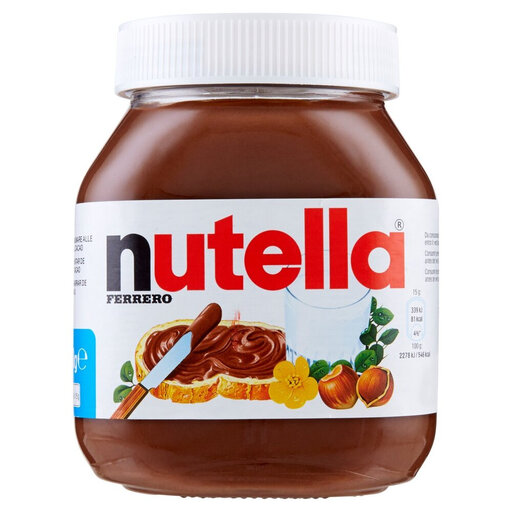 Image unavailable
Nutella hazelnut spread, 630 g
This 630 g jar is a good fit for breakfast toast if the size suits how much you eat. Compare the sugar per 100 g and check the allergens on the label.
View on Joybuy
 Image unavailable
Nutella hazelnut and cocoa spread, 1 kg
The 1 kg jar may suit a household that eats spread regularly at breakfast. Make sure the size and storage instructions work for you.
View on Joybuy
 Image unavailable
Nutella chocolate and hazelnut spread, 3 kg
This 3 kg size is intended for frequent or larger-scale use. Before choosing it for weekend breakfasts, make sure your household can use it while following the storage instructions.
View on Joybuy
 Image unavailable
Nutella, 750 g jar
If you’re sharing breakfast, the 750 g jar is another size to consider. Check the ingredients, allergens and storage instructions on the packaging.
View on Joybuy
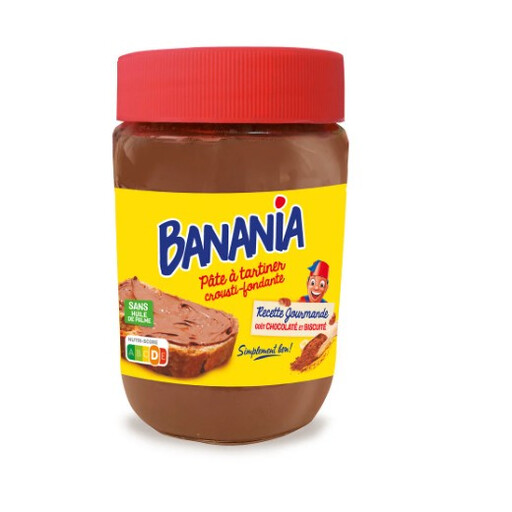 Image unavailable
Banania palm-oil-free spread, 400 g
This 400 g jar is worth considering if you’re looking for a spread described as palm-oil-free for your toast. This factor doesn’t replace checking the sugar per 100 g and the allergens.
View on Joybuy
Frequently asked questions
Does the sugar tax apply to chocolate spread?
No. The levy on sugary drinks described by the Ministry of the Economy applies to drinks, not jars of spread. To compare spreads, look at the “of which sugars” figure per 100 g instead.
Does a jar have to display the Nutri-Score?
No. According to Santé publique France, displaying it is voluntary. For prepacked food, the DGCCRF distinguishes this logo from the ingredients list and nutrition declaration, which are among the mandatory information.
What should I check first if certain ingredients are a concern?
Read the ingredients list and the allergens shown on the exact jar, then check for any warnings about possible traces. Depending on the recipe, it may contain hazelnuts, milk or soya. The words “chocolate and hazelnut” don’t tell you everything about its ingredients.
Should you refrigerate spread after opening?
Follow the instructions for the product you’ve bought rather than assuming the same rule applies to all spreads. Auchan’s product page for the 350 g Nutella jar says to store it in a dry place and not to refrigerate it; check the instructions on your chosen jar.


