In a hurry and shopping for a quick top-up
You need a jar you can get quickly, either in store or during a collection slot, and a quantity that suits a one-off purchase.


For a quick top-up shop, first look for a size available in your chosen shop or collection slot, then check that the specific product comes in a glass jar. Next, compare the ingredients, allergens and nutritional values per 100 g. In France, the Ministry of the Economy explains that Nutri-Score is voluntary, so its absence alone is no reason to rule out a product.
You need a jar you can get quickly, either in store or during a collection slot, and a quantity that suits a one-off purchase.
You want to compare ingredients, allergens and nutritional values per 100 g, whether or not the packaging displays a Nutri-Score.
The container material matters to you. You want to see an explicit mention of glass for the size you’re buying, rather than relying on the word ‘jar’ alone.
| What to check | Check this | Who this matters to |
|---|---|---|
| Availability and size | Check the shop or collection slot, the availability shown and the net weight. | If I can’t wait to buy it, finding an available jar in a suitable quantity for my one-off need comes first; around 46 % of consumers rank availability and size as their main priorities. |
| Ingredients and labelling | Read the allergen information and compare the nutritional values per 100 g, especially sugars and fat. | Before choosing, I want to be able to read the ingredients and allergen information, then compare nutritional values on the same basis; for around 36 % of consumers, checking the label is a priority. |
| Glass jar | Look for an explicit mention of glass for the specific size, then check your local recycling guidance. | If I’m looking for a glass container, the product name alone isn’t enough to confirm the material; around 18 % of consumers prioritise checking this. |
The French Ministry of the Economy says that displaying a Nutri-Score is voluntary in France. The absence of a logo doesn’t, on its own, tell you what the spread contains.
Check the ingredients list and compare the nutrition declaration per 100 g. The DGCCRF explains that this is mandatory for most prepacked foods.
The word ‘jar’ doesn’t tell you what material it’s made from. Nutella describes its jar as glass, and Auchan confirms this for one Jardin Bio étic product, but that doesn’t mean the same applies to every size and brand.
Before choosing a product, check the material stated on the product page or packaging for the exact size you’re buying.
The French Ministry of the Economy reminds shoppers that allergens must be highlighted in the ingredients list. A Nutella product page published by Carrefour lists hazelnuts, milk and soya, among other ingredients; you should check the ingredients for each product.
Also read any ‘may contain’ warnings on the jar you’re buying, even if you already know the brand.
A hazelnut and cocoa spread available in several sizes; Nutella France says its jar is made of glass.
Auchan lists a hazelnut and cocoa spread containing 20 % hazelnuts and no palm oil.
Auchan describes one chocolate and hazelnut spread as being packaged in a glass jar with a metal lid.
Carrefour France lists a Carrefour Classic' hazelnut spread in a 750 g jar, among other products.
This selection features a 400 g speculoos spread. If you specifically need a glass jar for a quick top-up shop, check the container material and availability before buying.
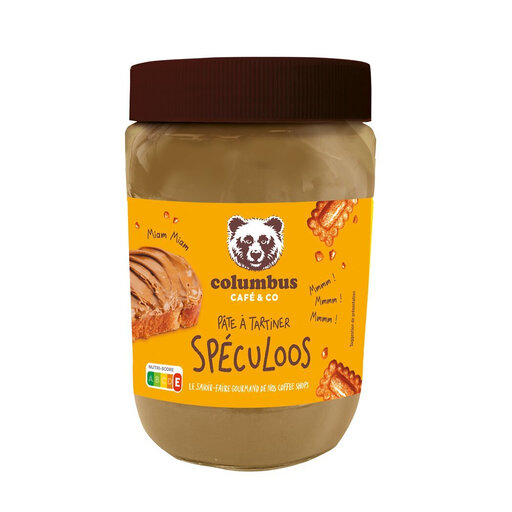 Image unavailable
Worth considering if you’re looking for a speculoos spread and a 400 g jar suits your one-off purchase.
If you need a glass jar, check the material of this size on its product page or packaging before choosing it. Also check availability and the label if particular ingredients or allergens matter to you.
No. The French Ministry of the Economy says that displaying a Nutri-Score is voluntary in France. The DGCCRF does, however, explain that a nutrition declaration is mandatory for most prepacked foods. So, even if there’s no Nutri-Score, you should still read the other information on the jar.
Compare their nutritional values per 100 g, especially sugars, fat and salt, then compare their ingredients lists. The DGCCRF says that information per 100 g or 100 ml provides a common basis for comparison.
Check the allergens highlighted in the ingredients list and any ‘may contain’ warnings on the specific product. For example, a Nutella product page published by Carrefour lists hazelnuts, milk and soya; these ingredients shouldn’t be assumed to be in every recipe.
Check your local council’s collection guidance. Nutella France says that recycling its glass jar depends on the availability of local collection and recycling facilities.