Households sharing a jar at the weekend
If several people have chocolate spread for breakfast, consider the jar’s weight alongside how quickly you’ll finish it.


If you regularly share a spread at breakfast, choose a size your household can finish while it’s still at its best. For an occasional treat or a first taste, a small jar means you won’t buy more than you need. Then compare recipes by checking their ingredients, allergens and nutritional values per 100 g. A label such as ‘organic’ or ‘palm oil-free’ doesn’t tell you how much sugar the spread contains. According to Santé publique France, displaying the Nutri-Score is voluntary. When it appears on several products in the same category, it can help you compare their labels.
If several people have chocolate spread for breakfast, consider the jar’s weight alongside how quickly you’ll finish it.
You’d rather check the sugar, fat, hazelnut content and allergens than choose based on the jar’s packaging alone.
An organic recipe, a palm oil-free option or a small jar for occasional use could help narrow down your choice. Check these details on the specific product you’re considering.
For weekend breakfast, start with how often you’ll enjoy the spread. Then compare recipes on a like-for-like basis per 100 g and check the ingredients on the jar you plan to buy.
| Criterion | What to check | Who it matters to |
|---|---|---|
| Jar size and how often you’ll use it | Check the net weight and think about how often you’ll open the jar. | If we share the jar every weekend, I want a size that suits our household; if I’m trying the recipe for the first time, I’d rather avoid a jar that’s too large. Around 42% of consumers would put this question of size first. |
| Nutritional values | Compare the sugar and fat content per 100 g in particular. Check the Nutri-Score if it’s displayed on products in the same category. | When several recipes appeal to me, I want to compare their values for the same amount rather than rely on the front of the jar. Around 33% of consumers would put this comparison first. |
| Ingredients and allergens | Read the ingredients list, check the hazelnut content if stated, and look for allergens and any ‘may contain’ warnings. | If my household is looking for a particular recipe or needs to avoid an ingredient, I check the exact product before serving it. Around 25% of consumers would put recipe suitability at the heart of their choice. |
A family-sized jar can suit regular use, while a smaller one may be a better fit if you’re trying a recipe for the first time or only enjoy it occasionally.
Choose a size based on how many people will share the jar and how often they’ll have some.
These claims describe aspects of a recipe, not its overall nutritional values. The product pages for organic spreads checked at Carrefour and Auchan show that sugar content varies between products.
Compare the sugar, fat and ingredients separately per 100 g.
According to Santé publique France, producers display the Nutri-Score voluntarily. Its absence doesn’t tell you anything about a product’s composition.
When it is displayed, use it to compare products in the same category. Also read their nutritional information and ingredients.
Products listed by Nutella France, Carrefour and Auchan include hazelnuts, milk or soya, depending on the recipe. Some may also carry warnings about traces of other nuts.
Check the ingredients and warnings on the exact jar before serving it to anyone who needs to avoid an allergen.
The chocolate and hazelnut recipe comes in several sizes, including a 750 g jar.
The 400 g chocolate and hazelnut spread listed by Carrefour is described as palm oil-free.
The 300 g jar listed by Carrefour combines ingredients from organic farming with a recipe described as palm oil-free.
The 350 g organic product listed by Auchan is described as palm oil-free.
Auchan’s range includes a 200 g cocoa and hazelnut spread and a 400 g organic recipe.
These jars offer a range of sizes and cocoa and hazelnut recipes for breakfast. Their size and the claims in their names can help you make an initial selection. Check the label on each product to compare its ingredients and make sure it meets any dietary requirements.
 Image unavailable
The 250 g jar is worth considering if you’d like to try an organic cocoa and hazelnut recipe without opting for a large size. Check its ingredients and allergens on the label.
 Image unavailable
The 400 g size could work if several people regularly share an organic spread. To compare it with other jars, check the nutritional values per 100 g and the allergens.
 Image unavailable
The 200 g jar is a good starting point if you’d like to try a smooth recipe in a smaller size. Check the nutritional values on the packaging before comparing them with another product.
 Image unavailable
This 750 g size is worth considering if your household regularly enjoys this recipe. Nutella France states that it contains 13% hazelnuts and 56.3 g of sugar per 100 g. The recipe also contains palm oil, milk and soya lecithins.
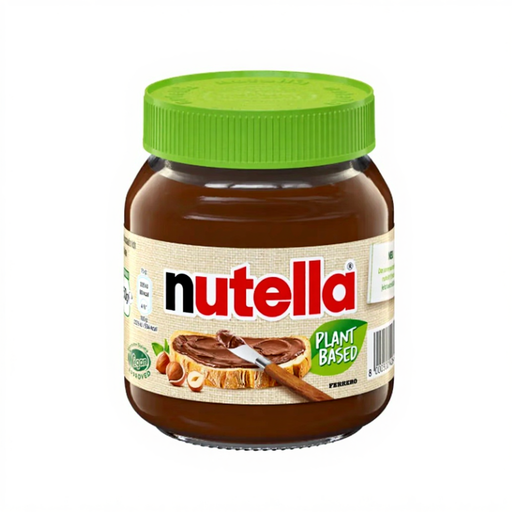 Image unavailable
This 350 g version may appeal if you’d like to try a recipe that differs from classic Nutella. If you need to avoid certain ingredients, check the full ingredients list and allergens on the exact jar before choosing it.
No. According to Santé publique France, producers can choose whether to display the Nutri-Score. When it appears on chocolate spreads in the same category, use it as an additional guide and check the ingredients and nutritional information too. Its absence doesn’t tell you what’s in a jar.
Check the allergens listed on the exact jar, including any ‘may contain’ warnings. Depending on the recipe, products listed by Nutella France, Carrefour and Auchan mention hazelnuts, milk, soya or possible traces of other nuts. An ‘organic’ or ‘palm oil-free’ claim doesn’t replace this check.
Follow the storage instructions for the product you buy. Depending on the product, the Auchan listings we checked recommend storing it in a cool, dry place or at room temperature. Don’t assume the instructions for one jar apply to another.
No. The levy described by the French Ministry of the Economy applies to sugary drinks, not chocolate spreads. To compare breakfast spreads, check the sugar content per 100 g instead.