For a big family shop, consider a squeezy bottle if serving crêpes or waffles is your priority and the spread is suitable for the way you plan to use it. A family-size jar gives you a choice of sizes. Whichever format you choose, check the ingredients, allergens and nutritional information. The seller describes the Dallery Simpa bottle as drip-proof, but you should also make sure its ordering terms work for your household.
Who are these formats for?
Families looking for a cleaner way to serve
If spills and washing spoons are making breakfast more of a chore, an upside-down bottle could be worth considering. However, check that the spread is intended for the way you plan to use it: Colis Gastronomiques presents the Dallery Simpa bottle as being particularly suitable for ice cream, crêpes and waffles.
Households that regularly get through large quantities
Choosing a size that matches how quickly you use the spread matters more than automatically going for the biggest option. Carrefour and Auchan list jars of chocolate spread ranging from 750 g to 1 kg. Also check the storage instructions for the product you choose.
People who pay close attention to ingredients
To compare recipes, check the ingredients, allergens and nutritional values per 100 g. The DGCCRF notes that nutrition information is compulsory for pre-packed foods, subject to applicable exceptions. Nutri-Score is an additional guide when it appears on the packaging.
What should you look for?
First decide whether you want a squeezy bottle or a jar in a size that suits your household. Then compare the recipe and product-specific guidance, rather than guessing what is inside based on the packaging.
| What to consider |
What to check |
Who it matters to |
| Serving and portioning |
Check what the spread is intended for and how the bottle closes. Colis Gastronomiques describes the Dallery Simpa as having a drip-proof cap. |
If I often serve crêpes or waffles, I want to keep spills to a minimum without using lots of utensils. Around 31% of consumers would prioritise this way of serving. |
| Sugars and ingredients |
Compare the “of which sugars” figure per 100 g and the ingredients list. If added sugars are listed separately, don’t confuse them with total sugars. |
When choosing a recipe, I prefer to check its nutritional information rather than rely on the format or a logo on the front. Ingredients would be the top priority for around 31% of consumers. |
| Size and ordering |
Match the quantity to how quickly your household uses the spread and check the seller’s ordering terms. |
When several people share a jar, I look for a size we can finish in line with the storage instructions. Around 25% of consumers would put choosing the right size first. |
| Allergens and storage |
Check the ingredients, “may contain” warnings and instructions for after opening on the exact product. |
If an allergen affects what my household can buy, the packaging warning matters more than the format. This would be the main concern for around 13% of consumers. |
Things to watch out for
-
Assuming the “soda tax” applies to chocolate spread
The French Ministry of the Economy describes this levy as applying to sugary drinks, not chocolate spread. It therefore won’t help you choose between these products.
To compare recipes, check the sugars per 100 g and the ingredients list instead.
-
Assuming Nutri-Score is compulsory
In France, Nutri-Score is voluntary. The DGCCRF distinguishes this logo from the nutrition information required for pre-packed foods, subject to applicable exceptions.
If a Nutri-Score is shown, use it as an additional guide. Also compare the sugars, fat and salt per 100 g.
-
Choosing a bottle without checking how it’s meant to be used
Colis Gastronomiques describes the Dallery Simpa as a smooth spread in an upside-down bottle, particularly for ice cream, crêpes and waffles. That description alone doesn’t tell you whether it will suit your usual use on toast.
Before replacing your jar, check the intended use, ingredients, allergens, storage instructions and ordering terms.
-
Assuming “Plant-Based” means milk-free
Nutella says its Plant-Based version may contain milk and is not suitable for people with a milk protein allergy.
If you have an allergy, read the warnings on the exact product rather than relying on the range name alone.
Brands to compare
Dallery Simpa
A 1 kg smooth spread in an upside-down bottle, presented by Colis Gastronomiques for ice cream, crêpes and waffles.
- The seller describes it as easy to handle and says the bottle has a drip-proof cap. These are the seller’s claims about the bottle.
- Before using it regularly for the whole family, check the recipe, allergens, storage instructions and ordering terms.
Carrefour Classic'
A 1 kg jar of hazelnut spread, a useful example of a family-size format.
- Carrefour’s product listing gives the size and information about the ingredients in this product.
- For this particular jar, Carrefour lists 48,48 g of added sugars per 100 g, as well as hazelnuts and milk. Check the packaging for any “may contain” warnings.
Lucien Georgelin
A range of jars that includes a 400 g spread with no added sugars.
- For this product, Lucien Georgelin lists 8,5 g of sugars per 100 g and displays a Nutri-Score A.
- “No added sugars” doesn’t mean sugar-free: the manufacturer says it contains naturally occurring sugars. The 400 g jar won’t meet the same needs as a 1 kg jar.
Nutella
Auchan’s range includes 750 g and 1 kg jars of hazelnut spread.
- These two sizes let you choose according to how much your household gets through.
- Nutella Plant-Based is different from the standard jars: Nutella says it may contain milk and is not suitable for people with a milk protein allergy.
Jars for the family shop
These Nutella spreads are available in jars of different sizes. They let you choose a quantity to suit your household, but they don’t offer the squeezy-bottle convenience described above.
 Image unavailable
Nutella hazelnut and cocoa spread, 1 kg jar
Worth considering if your household regularly uses chocolate spread and you’re looking for a 1 kg jar. This format doesn’t offer the convenience of a squeezy bottle. Check the product’s ingredients, allergens and storage instructions.
View on Joybuy
 Image unavailable
Nutella chocolate and hazelnut spread, 3 kg jar
This 3 kg jar is for a household that regularly gets through a large quantity. Before choosing this size, make sure it suits the way you’ll use it and the storage instructions. It isn’t a squeezy bottle.
View on Joybuy
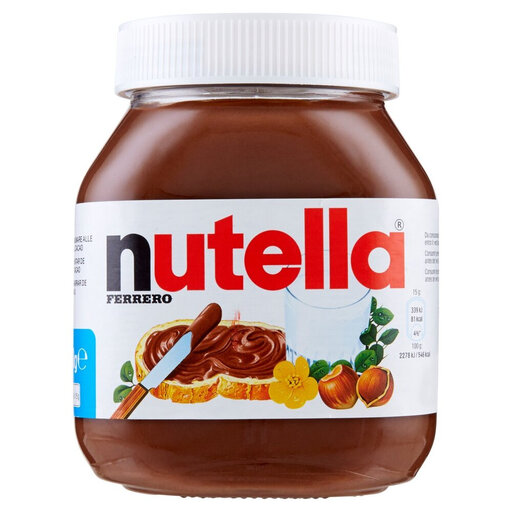 Image unavailable
Nutella hazelnut spread, 630 g jar
If your household is looking for a jar smaller than 1 kg, this one contains 630 g. It isn’t a squeezy bottle, so check the label to compare its ingredients and storage instructions.
View on Joybuy
 Image unavailable
Nutella, 750 g jar
This 750 g jar offers another size for regular family use, but it doesn’t have a squeezy bottle’s dispensing feature. Check the packaging for the ingredients, allergens and instructions for after opening.
View on Joybuy
Frequently asked questions
Does the “soda tax” apply to chocolate spreads?
No. The French Ministry of the Economy describes the so-called “soda tax” as applying to sugary drinks. When choosing a chocolate spread, check the ingredients and the sugars listed in the nutrition information instead.
Does chocolate spread sold in France have to show a Nutri-Score?
No, Nutri-Score is voluntary in France. The DGCCRF says nutrition information is compulsory for pre-packed foods, subject to applicable exceptions, so you can still check the values per 100 g even if there’s no logo.
Does “no added sugars” mean “sugar-free”?
No. Lucien Georgelin says its 400 g spread with no added sugars contains naturally occurring sugars and has 8,5 g of sugars per 100 g. Check the “of which sugars” figure for the declared amount in this product.
Is Plant-Based chocolate spread suitable if you have a milk allergy?
Not necessarily. Nutella says its Plant-Based version may contain milk and is not suitable for people with a milk protein allergy. Always check the warnings on the exact product.


