Travellers with cabin baggage only
If you need to keep the jar after passing through security, check the container’s capacity in millilitres. The net weight in grams isn’t enough to determine whether it can go in the cabin.


If the jar needs to go through security in your cabin baggage, check the container’s capacity first, not its weight in grams: at Paris-CDG and Paris-Orly, Paris Aéroport limits the relevant products to 100 ml per container. If you’re eating before security, you can choose how much to have, but plan what to do with any leftovers. Then compare the nutritional information and allergens for the exact product you’re considering.
If you need to keep the jar after passing through security, check the container’s capacity in millilitres. The net weight in grams isn’t enough to determine whether it can go in the cabin.
If you plan to open the jar at the airport before going through security, choose an amount that suits your meal and decide in advance what you’ll do with any leftovers.
To compare sugar levels or check for allergens, read the nutritional information and ingredients list for the exact product you’ve chosen. According to Santé publique France, displaying the Nutri-Score is voluntary.
Worth considering: if you’ll eat the spread before entering the secure area and won’t take the rest through security in your cabin baggage.
Plan ahead: any unfinished jar will still be subject to restrictions if you need to take it through security afterwards.
Worth considering: if you want the jar to reach your destination and have hold luggage.
Limitation: you won’t have the jar for your airport meal. Check your airline’s conditions too.
Worth considering: if the capacity shown on the container meets the applicable limit and the jar fits in the required bag.
Limitation: a net weight in grams doesn’t tell you the capacity in millilitres.
| What to consider | What to check | Who is this for? |
|---|---|---|
| Taking it through security | For departures from Paris-CDG or Paris-Orly, a maximum capacity of 100 ml per container, and space in one sealed transparent bag with a maximum capacity of 1 litre, according to Paris Aéroport. | I want to keep the jar with me after security without risking having to leave it behind. Around 50% of consumers would make this their top priority. |
| Amount for your meal | Net weight, how much you plan to eat and what you’ll do with the jar afterwards. Check separately that the container is glass if that’s important to you. | For a meal before security, I want enough spread to share without having to carry a large jar I don’t need. This would be the top priority for around 30% of consumers. |
| Label | Sugars per 100 g, ingredients and allergens for the exact product; check the Nutri-Score only if it appears on the packaging. | Before choosing a jar to share, I want to compare sugar levels and check the ingredients that matter to everyone eating. Nearly 20% of consumers would put this first. |
A label showing 300 g or 400 g tells you the product’s weight, not the container’s capacity in millilitres, which is what matters at security.
If the jar needs to go in your cabin baggage, look for a clearly stated capacity of 100 ml maximum and have the required transparent bag ready.
The French Civil Aviation Authority includes ‘pastes’ among the categories covered by security measures for liquids, aerosols and gels.
Check the cabin baggage rules for chocolate spread before choosing a jar to take through security.
Santé publique France says that producers display this logo voluntarily. Its absence alone doesn’t tell you how nutritious a product is.
Compare the nutritional information per 100 g and the ingredients list, and take the Nutri-Score into account if it appears on the product you’ve chosen.
Documents from the French Ministry of the Economy and the Official Bulletin of Public Finance concern a levy on non-alcoholic drinks, not a nutritional rating for chocolate spreads.
To compare two jars, look at the ‘of which sugars’ line in their nutritional information, using the same 100 g basis.
Carrefour lists, among other products, an 825 g jar of Nutella hazelnut and cocoa spread.
The retailer also lists Jardin Bio étic hazelnut and chocolate spread in a 300 g jar.
E.Leclerc lists Nustikao spread in a 400 g size.
Auchan offers a 400 g jar of its Auchan Bio cocoa and hazelnut spread.
ALDI’s range includes, among other products, milk and hazelnut spreads.
You could consider this spread for a meal before security if you don’t plan to take the remaining jar through security in your cabin baggage. Check the packaging of the exact product if a glass jar is essential to your choice.
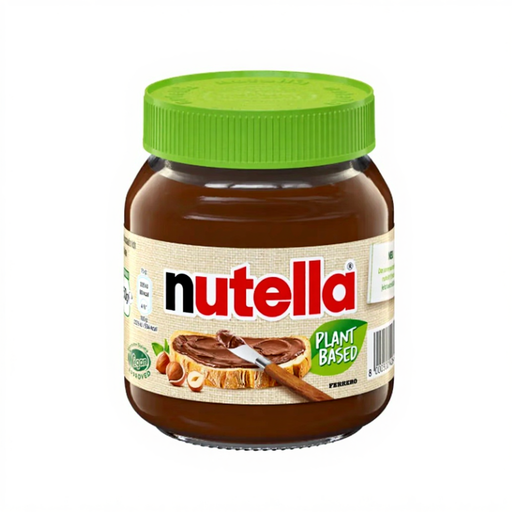 Image unavailable
Worth considering if you plan to eat the spread before security and won’t take the rest through in your cabin baggage.
Net weight shown: 350 g. If you do need to take the jar through security in your cabin baggage, check its capacity in millilitres. To compare sugar levels or allergens, check the label on the exact product.
Yes, as long as the container meets the applicable rules. At Paris-CDG and Paris-Orly, Paris Aéroport states a limit of 100 ml per container, placed in one sealed transparent bag with a maximum capacity of 1 litre. The French Civil Aviation Authority includes pastes among the relevant categories; check your airline’s conditions too.
The net weight doesn’t tell you: the security limit is expressed in millilitres per container. If you need to take the jar through security, check that its capacity is explicitly stated as 100 ml maximum.
No. According to Santé publique France, producers display it voluntarily. If it appears on the product you’ve chosen, you can use it alongside the nutritional information and ingredients list.
No. Documents from the French Ministry of the Economy and the Official Bulletin of Public Finance concern a levy on non-alcoholic drinks. To compare chocolate spreads, check the ‘of which sugars’ line per 100 g on each product.
Read the ingredients list and allergen information on the exact jar. Carrefour’s listing for the Nutella product reviewed mentions hazelnuts, milk and soya lecithins, among other ingredients. Its listing for Jardin Bio étic mentions hazelnuts and milk, as well as possible traces of soya and other tree nuts.