People who care about portion size
If you’re opening a chocolate bar for a snack on your own, check its net weight and how it’s divided into squares before deciding whether you’ll eat it all at once or over several occasions.


For a solo snack, start by choosing the net weight based on how much you plan to eat, then pick a recipe that suits your taste. You can save a bar for several snacks: compare the sugar content per 100 g and check the allergens for the exact product, rather than assuming that a smaller format has a particular composition.
If you’re opening a chocolate bar for a snack on your own, check its net weight and how it’s divided into squares before deciding whether you’ll eat it all at once or over several occasions.
Whether you prefer milk chocolate, dark chocolate, filled bars or added ingredients, start by choosing the flavour and texture you’re after. The cocoa percentage doesn’t tell you everything about the recipe.
Depending on the recipe, check for milk, soya, cereals containing gluten, eggs and nuts in particular. The DGCCRF (France’s consumer protection agency) reminds shoppers that allergens must be highlighted in the ingredients list of prepacked foods.
When you’re having a snack on your own, the weight you buy and the amount you eat are two different things. Once you’ve chosen the size, the label can help you compare recipes.
| Criteria | What to check | Who is it for? |
|---|---|---|
| Format | Net weight and how it’s divided into squares; the amount you plan to have for this snack. | If I don’t want to open a large bar for just one break, the total weight is the first thing I consider. Around 29% of consumers put a format suited to a solo occasion first. |
| Nutritional information | Sugars and fat per 100 g, followed by the amount actually eaten. | To compare two bars of different weights, I need to use the same basis. Comparing nutritional values is a priority for around 29% of consumers. |
| Recipe | Type of chocolate, cocoa percentage if shown on the bar, and any added ingredients. | When flavour or texture is the deciding factor for my snack, I choose between a dark, milk or inclusions recipe. This is the main consideration for around 21% of consumers. |
| Allergens | Ingredients list and ‘may contain’ warnings for the exact product. | If I need to avoid certain ingredients, taste preference alone isn’t enough to choose a bar. Checking allergens comes before other criteria for around 21% of consumers. |
In France, the DGCCRF describes Nutri-Score as a voluntary label. If it’s not shown, you should still read the nutritional declaration on a prepacked chocolate bar.
If it appears on the packaging, use it as an additional guide. Also compare sugars and fat per 100 g, as well as the ingredients.
In France, Article 1613 ter of the General Tax Code, published by Légifrance, applies to drinks and liquid preparations for drinks—not solid chocolate bars.
When choosing your bar, check its weight, recipe, sugar content and allergens instead.
A bar bought for a snack may be eaten over several occasions; its net weight isn’t necessarily the amount you’ll have in one break.
Check the total weight and choose an amount that suits how you plan to enjoy it before comparing nutritional values per 100 g.
A filled recipe or one with added ingredients may differ from a plain bar by the same brand. Lindt France, for example, flags several possible allergens or traces for its Lindor Milk bar; these warnings don’t apply to the whole range.
Read the ingredients list and any trace warnings on the packaging of the product you’ve chosen.
Lindt France features ranges including Excellence, Création, Lindor and Les Grandes, with dark, milk or filled recipes depending on the product.
For a milk chocolate bar, plain or with added ingredients, Carrefour.fr features a 95 g Milka milk chocolate and hazelnut product, among others.
Products featured by Carrefour.fr include dark chocolate bars and recipes with hazelnuts, milk or dark chocolate, depending on the product.
Carrefour Original, Classic’, Extra and Sélection offer different recipes and formats in the Carrefour.fr range.
Nestlé France features Dessert for home baking and Les Recettes de l’Atelier for tasting bars in a variety of recipes.
These products offer dark or milk chocolate for a solo snack or to enjoy over several occasions. The Toblerone multipack contains three bars: check the total weight as well as the weight of each bar.
 Image unavailable
The 35 g format is a good choice if you’re after a small bar for one break. This is a dark chocolate recipe with 70% cocoa; check the allergen information on the packaging if needed.
 Image unavailable
This 100 g bar is for anyone looking for an 85% cocoa dark chocolate recipe and who prefers to choose how many squares to have. It’s larger than a small 35 g bar; check the allergens on the exact product packaging.
 Image unavailable
Each 50 g bar gives you a handy guide to portion size for a snack, while the pack weighs 150 g in total. These are milk chocolate bars rather than a traditional slab; check the ingredients and allergens for the exact product.
 Image unavailable
This 100 g bar is a good option if you’re looking for dark chocolate with 70% cocoa. Check the label to decide how much to eat and compare its composition; in particular, look for the maltitol warning and allergen information.
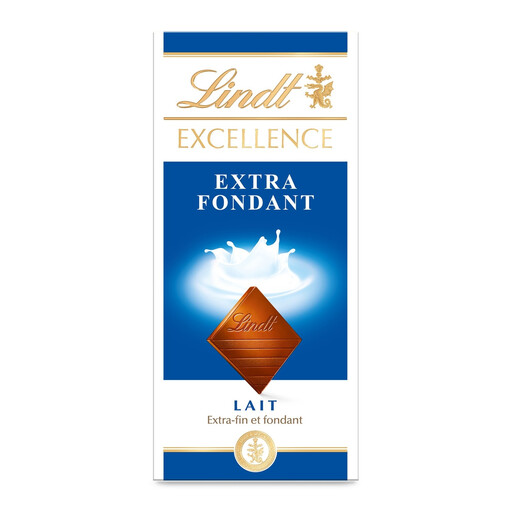 Image unavailable
This 100 g milk chocolate bar is a match if you prefer this type of recipe to dark chocolate. Decide how much you’d like for your snack, and check the ingredients list and allergens on the packaging.
No. A solid chocolate bar isn’t covered by the drinks and liquid drink preparations referred to in Article 1613 ter of the General Tax Code, published by Légifrance. To compare chocolate bars, read their nutritional information instead.
No. The DGCCRF says that Nutri-Score is voluntary in France, while a nutritional declaration is required for prepacked foods. Whether or not the logo is shown, compare values per 100 g and check the ingredients.
Check the net weight, ingredients, highlighted allergens and nutritional information in particular. The DGCCRF specifies that nutritional declarations are given per 100 g. This makes it possible to compare bars of different sizes without confusing composition with the amount you buy.