What should you check before buying?
For a secondary school lunchbox, start by checking the ingredients on the pack and any guidance that applies to the pupil. Then consider how much to pack, the nutritional information and the texture they prefer.
| Criteria | What to check | Who is it for? |
|---|
| Allergens and school guidance |
Read the ingredients, any allergens highlighted and any ‘may contain’ warnings on the pack you buy; follow the PAI and any guidance that applies to the pupil. |
If the pupil has an allergy or dietary restriction, rule out any unsuitable recipes before choosing a flavour. Around 31% of consumers put suitability first. |
| Format and quantity |
Check the number of pieces and their weight, if stated; see whether the pack contains individually wrapped portions if that matters for carrying it. |
For a snack on the go, some people mainly want to pack a clearly defined amount without any fuss. Portioning is the top priority for around 23% of consumers. |
| Nutritional information |
Compare the sugar and saturated fat content per 100 g, then per piece if that figure is given on the pack. |
If the family uses the snack’s sugar content to guide their choice, the product’s nutritional values and the amount actually packed matter more than the type of chocolate. Around 31% of consumers prioritise this comparison. |
| Flavour and texture |
Look at whether it’s a flat biscuit, a wafer or a filled biscuit, and check the ingredients for the variety you’re considering. |
Once dietary requirements have been taken into account, the pupil may prefer the crunch of a wafer or a chocolate biscuit. For around 15% of consumers, this preference is the main deciding factor. |
Biscuits and wafers available on Joybuy
This selection includes chocolate biscuits, biscuit sticks and a dark chocolate wafer to consider for a lunchbox. The products come in different shapes and pack formats, so check the recipe and how much you plan to take for each one.
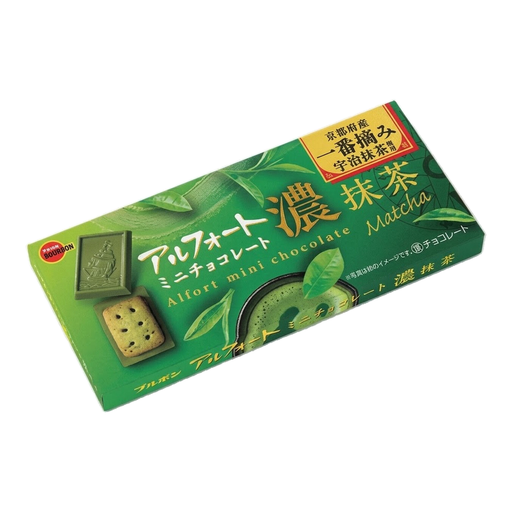 Image unavailable
Bourbon Alfort Mini Chocolate Dark Matcha, 12 pieces, 60 g
The pack contains 12 pieces, so you can choose how many to put in the lunchbox. It’s a matcha chocolate biscuit rather than a traditional biscuit toast.
The product information mentions wheat, milk and soya, as well as possible traces of nuts and egg. Check the pack label and the school’s guidance before packing it.
View on Joybuy
 Image unavailable
Mikado Dark Chocolate, 75 g
These dark chocolate biscuit sticks are a good option if you prefer this shape to a flat biscuit. To pack a precise amount, check the weight of each stick on the pack.
The product information mentions wheat, milk and soya, as well as possible traces of nuts. The figures per stick are based on an approximate weight of 7.5 g, so check the nutritional information on the pack you buy.
View on Joybuy
 Image unavailable
PETIT ECOLIER Dark chocolate, 150 g
This dark chocolate biscuit is a good choice if you’d prefer a chocolate biscuit to a wafer. If you want to separate the pieces in the lunchbox, check the pack format.
The product information mentions wheat, milk and soya. Check the label and the school’s guidance; to compare the amount you’re packing, look at the nutritional values per 100 g and per 25 g.
View on Joybuy
 Image unavailable
JUST THE FUN PART Dark Chocolate, 120 g
This dark chocolate wafer is for anyone who prefers its texture to that of a flat biscuit. If portioning matters for the lunchbox, check the number of pieces and how they’re packed before buying.
The product information mentions wheat and soya. Check the pack label and the school’s guidance, particularly if the pupil needs to avoid either ingredient.
View on Joybuy
Frequently asked questions
Is a chocolate biscuit toast suitable for a pupil who needs to avoid gluten?
Check the exact product before packing it: the Jardin BiO étic biscuit toast listed by Carrefour France contains wheat flour. The European Commission states that cereals containing gluten must be clearly identified when used as ingredients in foods sold in the European Union. Check the packaging of the product you buy and follow any guidance that applies to the pupil.
What should you check if a pupil has a food allergy at school?
Check the ingredients on the pack and the school’s guidance for that pupil; individual packaging alone does not mean the product is suitable. The French Ministry of National Education states that an individual healthcare plan (PAI) can be put in place for a pupil with a food allergy, among other reasons.
Is a dark chocolate biscuit always lower in sugar?
No. The type of chocolate alone doesn’t tell you how the sugar content compares with another biscuit. Check the nutritional information per 100 g on each pack, then per piece if the figures are given. As a guide for this particular recipe, Auchan’s listing for its filled, coated wafers gives a sugar content of 36.9 g per 100 g.
Is the online listing enough to check for allergens?
No. Use it to identify a recipe, then check the ingredients list and allergens on the pack you actually buy. The European Commission outlines the rules for declaring allergens used as ingredients; checking the product in your hand lets you confirm the recipe you’re going to pack.


