Parents managing allergens
If a lunchbox needs to meet specific dietary requirements, the ingredients in the pack you buy and the arrangements agreed with the school come before preferences about chocolate or pack size.


If your secondary school pupil wants a layer of chocolate on a shortbread biscuit, look for the words ‘chocolate-coated’ or ‘chocolate-covered’. Chocolate chips or a chocolate tablet are different types of biscuit. Before putting the packet in their lunchbox, check the allergens and any ‘may contain’ warnings on the packaging, as well as how the biscuits are packed. If they have a food allergy, follow the arrangements agreed with their school.
If a lunchbox needs to meet specific dietary requirements, the ingredients in the pack you buy and the arrangements agreed with the school come before preferences about chocolate or pack size.
If you’re after a layer of chocolate, the name of the biscuit matters. Shortbread with chocolate chips and biscuits topped with a chocolate tablet don’t quite match that preference.
Checking how many biscuits you need and whether they come in individual portions can make lunchbox prep easier. You can also divide a larger pack into suitable containers.
For a secondary school lunchbox, start with any dietary requirements, then choose the type of biscuit and packaging that suit how you plan to use it.
| What to consider | What to check | Who is it for? |
|---|---|---|
| Allergens and school requirements | Check the allergens and any ‘may contain’ warnings on the pack you buy. If there’s an allergy, also check the arrangements agreed with the school. | When food needs to meet allergy-related requirements, I can’t choose based on how the biscuit looks alone; around 36% of consumers put suitability first. |
| Portions and packing | Check how many biscuits you need, whether they come in individual portions and how they should be stored. | When preparing several lunchboxes, I want to portion out the biscuits without making every morning more complicated; this is the top priority for around 29% of consumers. |
| Type of chocolate | Look for ‘chocolate-coated’ or ‘chocolate-covered’ if you want a layer of chocolate. These are different from biscuits made with chocolate chips or topped with a chocolate tablet. | If my secondary school pupil specifically asks for shortbread covered in chocolate, I don’t want to give them a chocolate-chip biscuit instead; around 21% of consumers prioritise this distinction. |
| Recipe and nutritional information | Compare the ingredients and nutritional values per 100 g, then consider the portion you’ll actually pack. | When choosing between recipes that are already suitable for a lunchbox, I want to understand their ingredients and nutritional values; around 14% of consumers make this their top criterion. |
Chocolate-chip shortbread has chocolate mixed into the recipe, while a chocolate-covered biscuit has a layer of chocolate on top. A petit-beurre biscuit topped with a chocolate tablet is different again.
If the layer of chocolate is important, check the product description rather than relying on the picture on the pack.
The gluten-free cookie described by E.Leclerc contains egg, almonds and hazelnuts, among other ingredients. So ‘gluten-free’ doesn’t cover every dietary requirement.
Read the full ingredients list and allergen information on the pack you buy, and check the requirements that apply at the school.
Auchan says its Céréal Bio product comes in individual packets of 3 × 4 biscuits, but doesn’t give the same information for the Granola dark chocolate product it lists.
If you’re preparing several lunchboxes, check the exact packaging and, if necessary, have a suitable container ready for the portion you’re packing.
The Granola products listed by Carrefour France and Auchan are shortbread biscuits covered in milk or dark chocolate.
L’Atelier St Michel offers a 275 g box of shortbread biscuits with chocolate chips. It’s an alternative to chocolate-covered biscuits, but it’s a different recipe.
E.Leclerc describes this as a petit-beurre-style biscuit topped with a milk chocolate tablet, rather than chocolate-covered shortbread.
These options include a shortbread biscuit covered in milk chocolate and two other types of chocolate-covered biscuit. Consider them if they match your secondary school pupil’s preference.
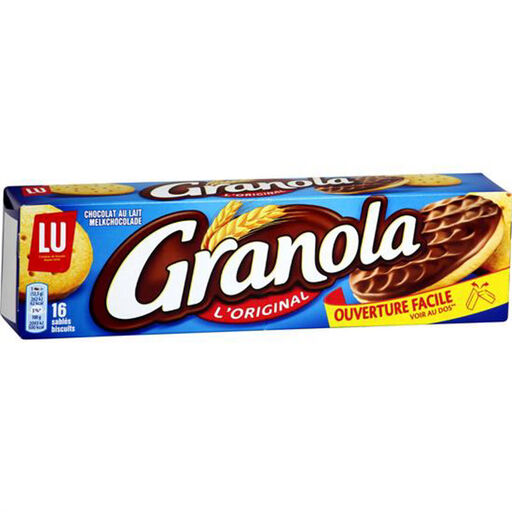 Image unavailable
Worth considering if you’re specifically looking for shortbread with a layer of milk chocolate. If the lunchbox needs to meet dietary requirements, check the allergens and any ‘may contain’ warnings on the pack you buy. Also check the packaging if you need individual portions.
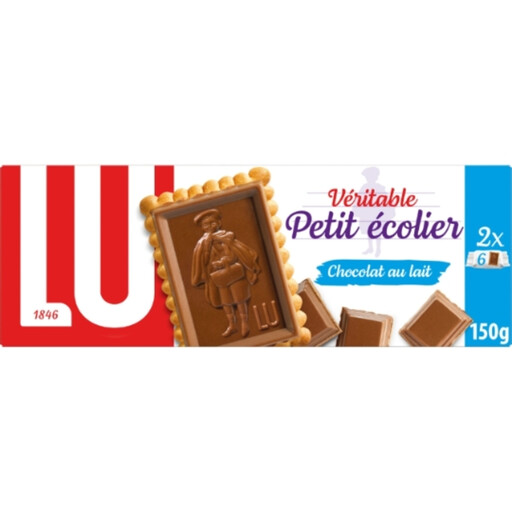 Image unavailable
This product is for anyone happy to choose a petit-beurre-style biscuit covered in milk chocolate instead of chocolate-covered shortbread. Check the pack for allergens, any ‘may contain’ warnings and individual portions if these affect what you can pack for lunch.
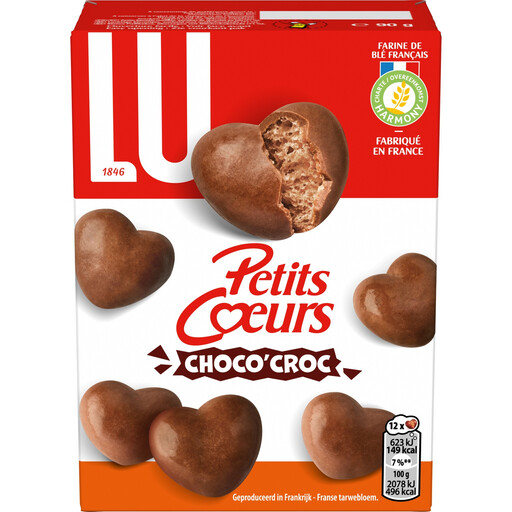 Image unavailable
This milk chocolate-covered biscuit is worth considering if having a layer of chocolate matters more than choosing a ‘shortbread’ biscuit. The product is described as cookies, so check that this is the style you want, then check the pack for allergens, any ‘may contain’ warnings and details of the packaging.
No. The Granola products listed by Carrefour France and Auchan are chocolate-covered, while the shortbread listed by L’Atelier St Michel contains chocolate chips. If the difference matters for your lunchbox, check the product description on the pack.
Check the ingredients, any highlighted allergens and ‘may contain’ warnings on the pack you buy. The French Ministry of National Education explains that an individual support plan, or PAI, can be set up to help a pupil with a food allergy at school. If this applies, follow the arrangements agreed with the school.
No. They make it easier to portion out biscuits, but you can also take a portion from a larger pack and put it in a suitable container. Check the product’s storage instructions, especially if the lunchbox could be exposed to heat or damp.
Compare nutritional values on the same basis, particularly per 100 g, then take into account the portion you’re packing and the ingredients list. A Nutri-Score label doesn’t replace checking allergens or packaging. Manger Bouger also recommends varying snacks and limiting sugary and fatty foods as part of your everyday diet.