People sharing at work or on the go
If you’re bringing chocolate for several people to share over a quick lunch, choose a pack size that suits the group rather than leaving you with a large, half-open bag.


If you’re sharing a quick lunch with others, choose the amount of chocolate to suit the number of people. A large bag is handy when you’re planning to share with a group, while a small box or bag helps avoid leftovers when there are only a few of you. Before serving, compare the nutritional information for similar products and check the ingredients and allergens for each one. Chocolate is a treat to share, not a lunch in itself.
If you’re bringing chocolate for several people to share over a quick lunch, choose a pack size that suits the group rather than leaving you with a large, half-open bag.
When choosing between chocolate treats to enjoy on the same occasion, you’ll want to look at the sugars and saturated fat per 100 g, as well as the Nutri-Score if one is shown.
Before offering an assortment to the group, check the ingredients and any ‘may contain’ statements for the exact product. Don’t rely on information for another flavour or size from the same brand.
For something to share over a quick lunch, start with the number of people, then check the nutritional values and ingredients of products that suit the group.
| Criteria | What to check | Who is it for? |
|---|---|---|
| Size for sharing | Net weight and number of pieces, if stated, in relation to the number of people. | If there are only a few of us, I want to be able to share the chocolates without leaving a large bag open. Around 44% of consumers rank a size that’s suitable for sharing as their top need. |
| Sugars and saturated fat | Values per 100 g for comparable products; Nutri-Score if it appears on the packaging. | When choosing between several chocolate treats, I want to compare their nutritional values rather than rely on the type of chocolate alone. This is the main priority for around 33% of consumers. |
| Allergens | Ingredients and any ‘may contain’ statements on the packaging of the product you choose. | Before serving the group, I need to know whether everyone can eat the product on offer. Checking allergens comes before other criteria for around 23% of consumers. |
The levy described by Légifrance applies to drinks and liquid preparations for drinks. The sugar content of a bag of chocolates is not enough to bring it within its scope.
When choosing between chocolates, look instead at the net weight, ingredients and nutritional values.
According to Santé publique France, producers display the Nutri-Score voluntarily. Its absence alone therefore doesn’t mean a chocolate product is non-compliant.
If it is shown, use it to compare similar products, then check their nutritional information and ingredients too.
The 1 kg LINDOR Dark 70% bag featured by Lindt France and the 250 g Lindor box described by Auchan aren’t designed for sharing with groups of the same size.
Decide how many people will be there before choosing the pack size.
A pack that’s too large for the occasion could leave you with chocolates to store after lunch.
The values shown for one dark chocolate recipe don’t apply to all dark chocolates, or to every product from the same brand.
Compare the sugars and saturated fat per 100 g for the specific products you’re considering.
These examples can help you spot pack sizes and product listings to compare; they don’t represent every product from a brand or retailer.
Lindt France features, among other products, a 1 kg bag of LINDOR Dark 70% chocolates to share; Auchan also describes a 250 g Lindor box.
Auchan features Kinder Mini Friends in a 122 g bag: milk chocolate bites with a filling.
The E.Leclerc catalogue features Marque Repère chocolates and confectionery, including sizes worth considering for sharing.
Auchan’s listings for the 250 g Lindor box and 122 g Kinder Mini Friends bag show two different sizes for sharing.
Lidl features chocolate and chocolate bars in its catalogue.
These products include chocolate confectionery to share among several people: two bags, a pack of bars and individually wrapped mini bars. The bars aren’t bags of bite-sized treats, so decide first how you’d like to share them.
 Image unavailable
A bag of chocolate treats to share during a break with others. Compare the nutritional values on the packaging and check the ingredients before sharing.
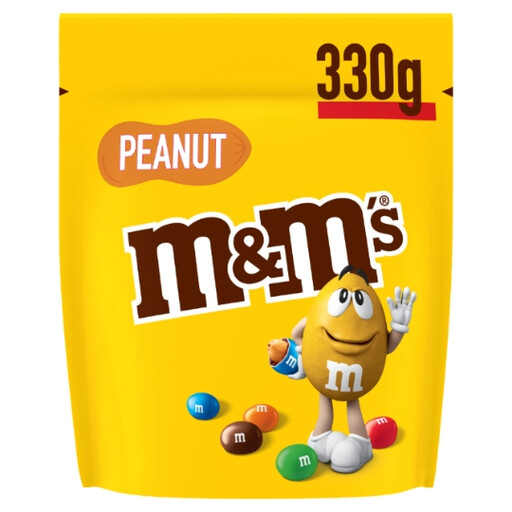 Image unavailable
This bag of chocolate-coated peanuts can be shared among several people. Peanuts are something to check with the group; to compare nutritional values per serving, refer to the pack label.
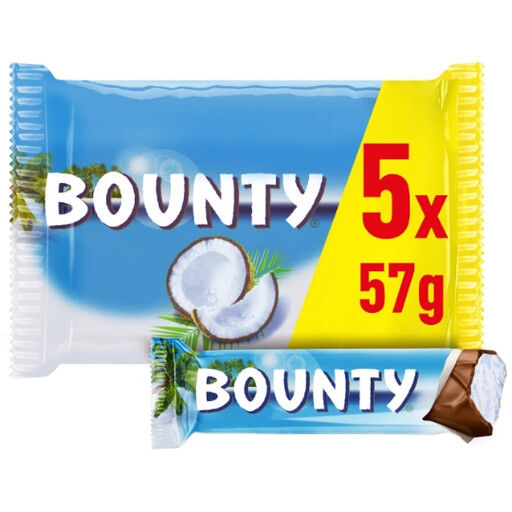 Image unavailable
Five bars to hand out if everyone would prefer a bar rather than taking bite-sized treats from a bag. Check the weight shown on the packaging before deciding whether there’s enough for the group.
 Image unavailable
The nine pieces offer another way to share chocolate confectionery during a break. Check the ingredients with the group and read the nutritional values on the packaging to compare this product with others.
No, not simply because it contains sugar. The levy described by Légifrance applies to drinks and liquid preparations for drinks, not a bag of solid chocolates.
No. Santé publique France says displaying it is voluntary, so its absence alone doesn’t mean a product is non-compliant. To compare boxes, check their nutrition declarations and ingredient lists.
First compare the weight with the number of people, then check the sugars and saturated fat per 100 g for similar products. If both display a Nutri-Score, use it alongside the nutritional information, but remember to check the ingredients too.
Don’t choose it as the only part of your lunch: in this context, chocolate is a treat to share or an occasional extra. Plan the rest of your lunch separately.
Read the ingredients and any ‘may contain’ statements for the exact product. The Lindor and Kinder Mini Friends listings featured by Lindt France and Auchan show that ingredients vary by recipe; don’t assume that information for one flavour or size applies to another.