People working from home who want a snack
If you’re having a bar between meals, check what’s in the portion you’ll actually eat. A convenient snack doesn’t become a complete lunch just because it contains protein.


For a break while working from home, choose a bar to suit how you plan to use it: as a snack between meals, after a workout or to meet specific ingredient requirements. Compare the serving size, protein, sugars and allergens. The word ‘protein’ alone doesn’t mean a bar can be considered a complete lunch.
If you’re having a bar between meals, check what’s in the portion you’ll actually eat. A convenient snack doesn’t become a complete lunch just because it contains protein.
After a workout, a bar marketed for recovery may serve a different purpose from a desk snack. Consider its protein, carbohydrates and sugars per bar together.
A plant-protein recipe may contain soya and other allergens. Check the ingredients and any ‘may contain’ warnings for the specific variety you choose, even if you’ve already checked another flavour.
First decide whether you want the bar as a snack or after a workout, then compare the nutritional values per serving and the recipe’s ingredients.
| What matters | What to check | Who is it for? |
|---|---|---|
| Snack or lunch | The serving size and its energy, protein and sugar values. | For a break between meals, I want a bar that’s easy to fit in around lunch, without treating it as the whole meal. Around 40% of consumers would prioritise this kind of snacking. |
| After a workout | Protein, carbohydrates and sugars per bar, as well as the use stated on the packaging. | When I work out around lunchtime, I look for a snack suited to that moment rather than choosing a bar based on its protein content alone. Around 30% of consumers would prioritise recovery. |
| Suitable ingredients | The protein source, allergens and any ‘may contain’ warnings for the exact variety. | If I avoid dairy proteins or certain ingredients, the recipe is the first thing I check to decide whether the bar is suitable. Around 30% of consumers would put this compatibility at the top of their list. |
The amount of protein alone doesn’t tell you everything about the bar or what you’re eating for lunch.
Check the nutritional values for the serving and decide whether the bar is a snack or part of your meal.
Decathlon’s chocolate recovery bar provides 20 g of protein, but also 23 g of carbohydrates, including 20 g of sugars, per 60 g bar. Its nutritional profile is suited to a different purpose from a break without a workout.
Compare this profile with that of a snack bar, taking your actual activity that day into account.
The product details for the TRAINSWEATEAT dark chocolate, almond and coconut bar list soya, peanuts and almonds, as well as several possible traces of other allergens.
Read the ingredients and allergen information on the packaging for the flavour you buy.
According to Santé publique France, producers display the Nutri-Score voluntarily. Its absence, on its own, therefore doesn’t tell you how good a bar’s ingredients are.
If it’s shown, use it to compare similar products. In all cases, check the nutritional information and ingredients list.
The product details available cover a milk chocolate-coated snack and a chocolate bar marketed for post-workout recovery.
The chocolate and almond bar listed by Carrefour is aimed at shoppers looking for a bar made with whey protein.
The dark chocolate, almond and coconut bar listed by Carrefour uses soya protein.
The chocolate and caramel bar listed by Carrefour is a 70 g protein bar.
The chocolate bar reviewed combines seeds and almonds, among other ingredients, in a 32 g bar.
This selection includes chocolate bars and chocolate-flavoured bars for snacking, as well as a chocolate bar marketed as a meal replacement. When choosing one for lunch while working from home, consider how you plan to use it before comparing serving sizes and ingredients.
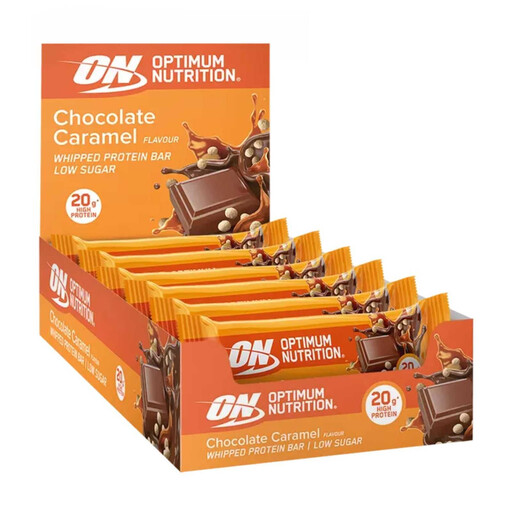 Image unavailable
Worth considering as a snack between meals or around a workout, depending on what you’re looking for.
The box contains ten 60 g bars. Before buying regularly, compare the sugars and polyols per bar and check the allergens on the packaging.
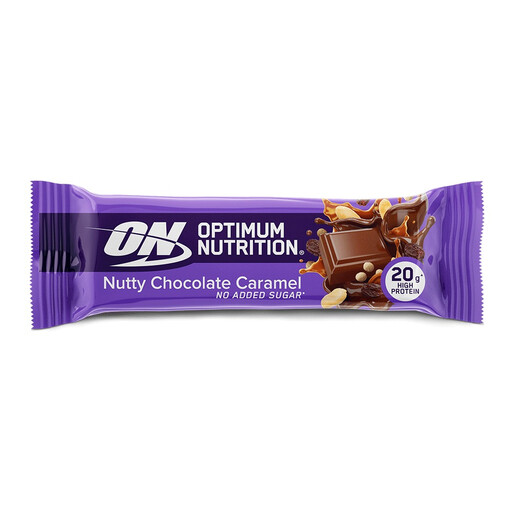 Image unavailable
Compare this one if you prefer a 70 g chocolate and caramel bar as a snack between meals.
The box contains ten bars. Check the sugars, sweeteners and allergens in this recipe rather than assuming the values are the same as for another Optimum Nutrition bar.
 Image unavailable
Worth a look if you want a chocolate and peanut snack to take with you or have around a workout.
The bar weighs 55 g. As it contains peanuts, it’s particularly important to check the ingredients and allergen information. Also check the polyols per serving.
 Image unavailable
Compare it with other snack bars if you’re looking for a salted caramel flavour.
This bar weighs 55 g. Check the ingredients, allergens and polyol content per bar, particularly if the latter is an important factor in your choice.
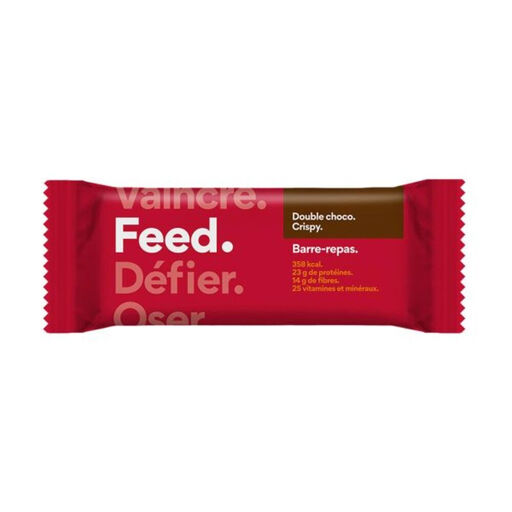 Image unavailable
Consider this separately from a simple snack if you’re thinking of choosing a bar marketed as a meal bar for your lunch break.
The bar weighs 100 g. Being marketed this way isn’t enough to establish whether it meets your needs for a complete lunch: check its ingredients, nutritional values and allergens.
Its protein content alone isn’t enough to tell you. Check the serving size and nutritional information, and consider what you plan to eat with the bar rather than assuming from its name that it replaces a meal.
Read the ingredients and allergens listed for the exact variety, along with any ‘may contain’ warnings. A plant-protein bar may contain soya, peanuts or tree nuts, for example. You can’t tell what’s in it from the protein source alone.
No. According to Santé publique France, producers choose whether to display it. To compare bars, check the nutritional information. The European Commission notes that nutrition declarations include energy, fat, sugars, protein and salt, among other information.
No. The levy described by the French Ministry of the Economy applies to sugary drinks, not chocolate bars simply because they contain sugar. Sugar content is still worth checking on the label when comparing products.