Households sharing one tin
If you regularly make several cocoa drinks at home, an 800 g or 1 kg tin, or a multipack, could mean fewer trips to restock. Before choosing, check the weight of each pack in the multipack and the storage instructions.


If you regularly make cocoa drinks to share mid-morning, compare the total weight of a large tin or multipack, and check whether you can store the powder after opening. For a lunchbox, individual sachets save you from having to measure out the powder on the go. Whichever format you choose, compare the sugars per 100 g of powder and check the ingredients of the specific recipe: the format alone tells you nothing about its composition.
If you regularly make several cocoa drinks at home, an 800 g or 1 kg tin, or a multipack, could mean fewer trips to restock. Before choosing, check the weight of each pack in the multipack and the storage instructions.
Individual sachets make it easy to take a portion of powder with you. Just check the weight of each sachet, the ingredients and how you’ll prepare the drink when you’re away from home.
If the recipe matters more than the packaging, compare the “of which sugars” figure per 100 g of powder across the exact variants. The nutrition information, rather than a product range name, gives you a consistent basis for comparison.
Start with how you’ll mainly use it — sharing at home, comparing recipes or taking a portion with you — then check the exact packaging.
| Criterion | What to check | Who it suits |
|---|---|---|
| Sharing and quantity | Total weight, number of tins and storage instructions after opening. | If several people regularly use the same powder, I want enough to share without having to open every tin at once; around 44% of consumers would put this need first. |
| Sugars in the powder | The “of which sugars” figure per 100 g, the ingredients and the exact variant. The French Directorate-General for Competition Policy, Consumer Affairs and Fraud Control (DGCCRF) points out that nutrition information enables comparisons on a per 100 g or 100 ml basis. | If I’m comparing two recipes for the same drink, I want to distinguish the sugars in the powder from those in the drink once prepared. This would be the top priority for around 33% of consumers. |
| Portion to take with you | Weight and number of sachets, ingredients and the liquid needed to prepare the drink. | For a lunchbox, I’d rather take an individual portion than measure out the powder on the go; around 23% of consumers would prioritise this type of packaging. |
The DGCCRF distinguishes between nutrition information, which is generally mandatory on prepacked food subject to applicable exemptions, and the Nutri-Score logo, which is voluntary. So the absence of the logo doesn’t, by itself, tell you how a powder rates.
When comparing recipes, look in particular at the “of which sugars” figure per 100 g and the ingredients list.
The legislation published on Légifrance covers drinks and liquid preparations for drinks. This scope doesn’t allow you to conclude that every dry chocolate powder that needs diluting is subject to the levy.
Don’t use this tax as a shortcut when choosing a powder; look at the ingredients of the specific product instead.
Carrefour listed a multipack of three 1 kg Nesquik tins as unavailable. The existence of a product listing doesn’t guarantee that the multipack can be ordered when you do your shopping.
Check that your chosen pack is available and confirm its total weight before preparing portions to share.
The Banania Original product listing mentions wheat and barley; the listing for the NESTLÉ individual sachets featured by Carrefour mentions soya lecithin. This information doesn’t automatically apply to other variants from those brands.
For a lunchbox or if you have dietary restrictions, check the ingredients and allergen information on the exact pack.
The range includes different pack sizes for different uses, including a multipack of three 1 kg tins and a 350 g Less Sugar variant.
The brand offers Grand Arôme in several tin sizes, as well as a separate Grand Arôme Less Sugar recipe.
Banania Original is a chocolate powder made with cocoa and cereals.
E.Leclerc’s range includes chocolate drink powders and unsweetened cocoa, which may not be used in the same quantities.
These products show the range of options, from individual sachets to tins or bags of powder to measure out at home. Compare the pack size and exact recipe depending on whether portability, sharing or sugar content matters most to you.
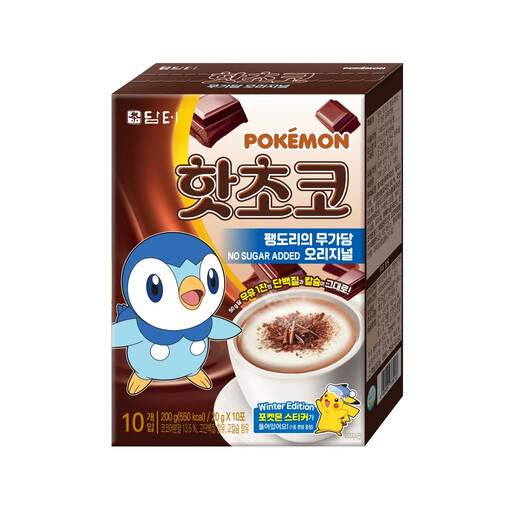 Image unavailable
The ten 20 g sachets are handy for making individual drinks on the go. Before choosing this recipe for its “Sugar Free” name, check the “of which sugars” figure and the ingredients on the exact product’s label.
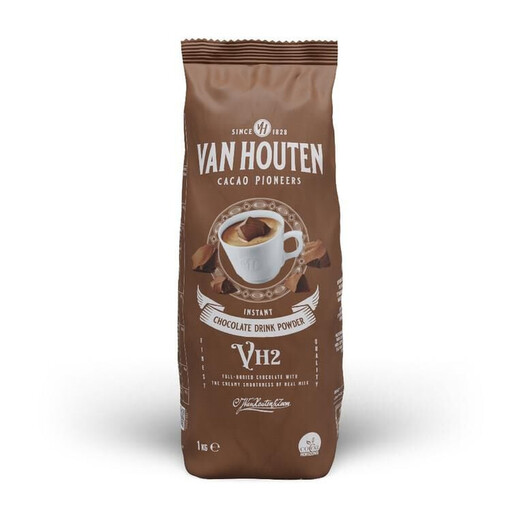 Image unavailable
The 1 kg pack is worth considering if you use powder regularly at home. It’s a single pack, not a multipack; check the packaging to see what “34%” refers to, and review the nutrition information.
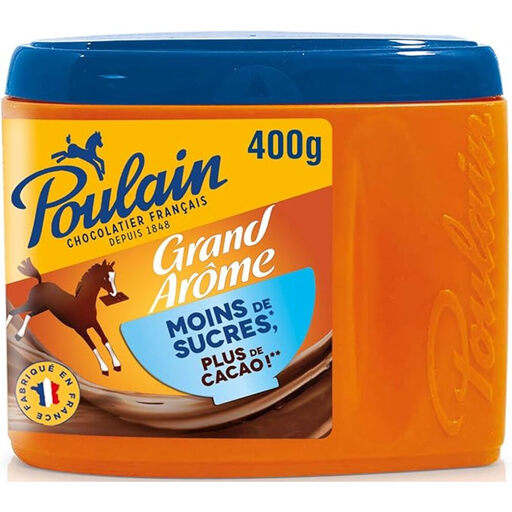 Image unavailable
This 400 g tin is for making drinks at home, where you measure out the powder yourself. It’s neither a multipack nor individually portioned. Check the recipe name and sugars per 100 g before comparing it with another Poulain variant.
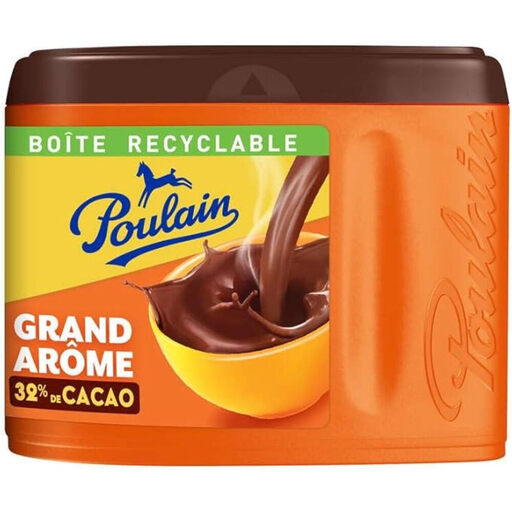 Image unavailable
The 450 g tin is another size to consider for making drinks at home and measuring out the powder yourself. Don’t confuse it with the 400 g size: check the recipe shown on each tin if you’re also comparing their ingredients.
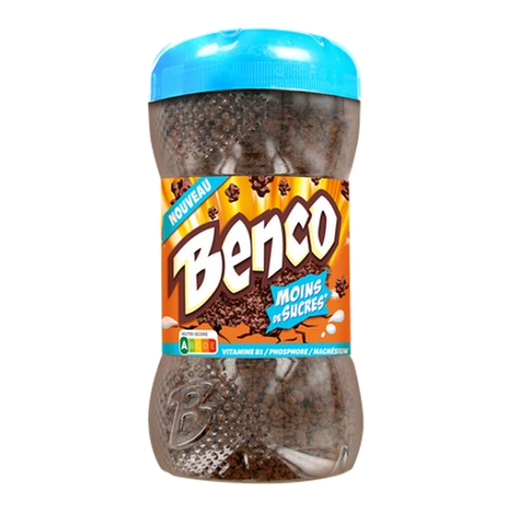 Image unavailable
This 400 g tin is for making drinks and measuring out the powder, rather than taking pre-measured portions with you. To compare the sugar content, check the nutrition information for this variant: its “Less Sugar” name alone doesn’t tell you how much sugar the powder contains.
No. The DGCCRF explains that displaying Nutri-Score is voluntary, while nutrition information on prepacked food is generally mandatory, subject to applicable exemptions. So the absence of Nutri-Score doesn’t tell you how the recipe rates; check its nutrition information to compare it with other products.
No, you can’t assume it applies to every dry powder that needs diluting. The legislation published on Légifrance covers drinks and liquid preparations for drinks; it isn’t enough to determine the tax status of every chocolate powder. To compare recipes, check their declared sugar content instead.
First, compare the “of which sugars” figure per 100 g of powder on a like-for-like basis. Then consider the amount you’ll use and the liquid you’ll add: the nutrition information for a prepared drink doesn’t describe the powder alone.
Not necessarily. Check the total weight, availability and storage instructions for each pack once opened. When its product listing was checked, Carrefour had listed a multipack of three 1 kg Nesquik tins as unavailable.
Read the ingredients and allergen information for the exact product. The listing for the NESTLÉ sachets featured by Carrefour mentions soya lecithin; the Banania Original recipe mentions wheat and barley. Also check what you need to add to the powder to make the drink away from home.