Households that often serve afternoon snacks to several people
If you regularly make several mugs, an 800 g or 1 kg pack could suit your routine. Check the recommended amount and storage instructions before choosing a size.


For regular shared afternoon snacks, first choose a recipe with ingredients and sugar levels that suit your household. Then pick a size you’ll use before its best-before date. Compare the sugars per 100 g of powder and the amount recommended per mug: the cocoa percentage alone won’t answer either question.
If you regularly make several mugs, an 800 g or 1 kg pack could suit your routine. Check the recommended amount and storage instructions before choosing a size.
You want to compare nutritional values on the same basis, while also accounting for how much powder you actually serve. A chocolatey taste or cocoa percentage is no substitute for the “of which sugars” line.
You may be looking for particular ingredients or checking for others. Ingredients and allergen information must be checked on the specific product: you can’t work them out from the brand name alone.
For a shared afternoon snack, first compare recipes on the same basis, then check whether the pack size and recommended amount suit how often you’ll use it.
| Criteria | What to check | Who it matters to |
|---|---|---|
| Sugars and serving size | Compare “of which sugars” per 100 g of powder, then check the recommended amount per mug. | If I’m making several drinks, I want to know how much powder is served rather than compare mugs made with different milks. Around 50% of shoppers prioritise this comparison of sugar levels. |
| Pack size and storage | Check the net weight, best-before date and storage instructions after opening. | When afternoon snacks are a regular thing, I’m looking for a pack that won’t be left open for too long. Pack size and storage are the main considerations for around 30% of shoppers. |
| Recipe and allergens | Read the ingredients list and allergen information on the pack you choose. | To serve a recipe everyone enjoys, or to check for an ingredient that needs to be avoided, I need to look at the exact product. Around 20% of shoppers put the recipe and allergens first when making their choice. |
Article 1613 ter of the French General Tax Code, published by Légifrance, applies to drinks and liquid preparations for drinks. It does not mean that a tub of dry powder itself should be classed as a product subject to this tax.
To choose between two powders, compare their ingredients, sugars per 100 g and the amount used per mug instead.
In France, the DGCCRF describes the Nutri-Score as voluntary labelling. So if it’s not shown, you’ll still need to check the nutritional information.
If it is displayed, read it alongside the nutrition table, ingredients list and allergen information.
The nutritional values of a prepared drink depend on how much powder and milk are used, so they can’t be directly compared with the values for powder alone.
Compare powders per 100 g, then work out the values for your mug based on the amount of powder and milk you actually use.
The cocoa percentage describes one aspect of a recipe, not its sugar content. For example, Chocolat Poulain lists 32% cocoa for Grand Arôme; that figure is no substitute for its nutritional information.
Choose a recipe to suit your household’s tastes, then check the “of which sugars” line and serving size separately.
The Nestlé Professional France product page features a 1 kg tub of Nesquik powder to be prepared with hot or cold milk.
Banania offers its Original chocolate powder in a 1 kg size, among others, with a recipe combining cocoa, cereals, banana and honey.
Chocolat Poulain states that Grand Arôme contains 32% cocoa; the product reviewed is available in an 800 g size.
Carrefour France features an 800 g tub of Classic' chocolate powder.
Auchan France features an 800 g pack of instant Pouce chocolate powder.
These products include two 1 kg packs to consider for regular shared afternoon snacks, plus a 400 g size if you’d prefer a smaller pack. Compare the recipe for each product before choosing.
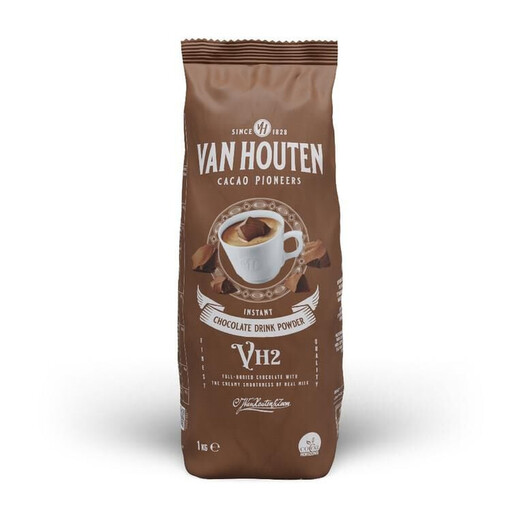 Image unavailable
The 1 kg size is worth considering if you regularly make drinks for several people. The product title includes “34%”: check which ingredient this refers to, along with the recommended amount and allergen information, on the pack you choose.
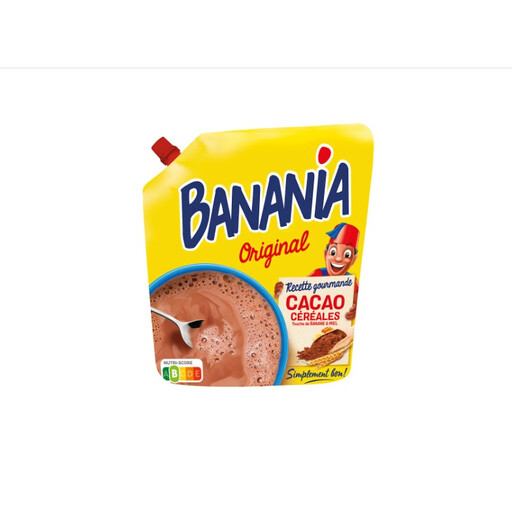 Image unavailable
This 1 kg size could suit frequent use for several people if you enjoy the recipe. Check the ingredients, allergens and recommended amount for this specific product on its packaging; its name doesn’t mean it has the same ingredients as another brand.
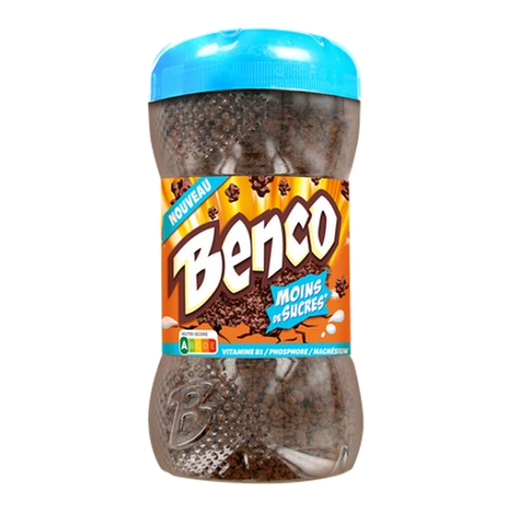 Image unavailable
The 400 g pack may suit you if you’d prefer to buy a smaller amount than the larger sizes featured here. “Less Sugar” is part of this variant’s name: compare its sugars per 100 g and recommended amount rather than assuming the name alone indicates a nutritional difference.
Not to dry powder as such: article 1613 ter of the French General Tax Code, published by Légifrance, applies to drinks and liquid preparations for drinks. When choosing between two tubs, compare their sugar levels and recommended amounts instead.
No. The DGCCRF states that the Nutri-Score is voluntary. For the prepacked foods covered by the rules, the nutrition declaration shows information including sugars per 100 g or 100 ml.
Start by comparing their values per 100 g of powder and their ingredients lists. Then check the recommended amount for each: the values per mug vary depending on how much powder and milk you use.
Check the best-before date and storage instructions on the packaging. An 800 g or 1 kg pack is better suited to regular afternoon snacks if you can store it as directed.
Read the label on the product you buy. The recipes reviewed show why: the Nesquik product information mentions soya, while Banania Original contains wheat and barley, among other ingredients; Poulain Grand Arôme states that it may contain milk.