If you regularly serve hot chocolate with a savoury breakfast, first choose a pack size your household will use, then compare the sugars per 100 g of powder, the amount per mug and the ingredients. Sweetened chocolate powder makes preparation simple; unsweetened cocoa lets you decide whether to add sugar, but means making the drink up yourself. In either case, the drink accompanies the meal: it does not become a savoury food.
Who is this choice for?
Families who often make hot chocolate
A 1 kg pack and an easy-to-repeat serving size can work well when several people drink it regularly. Carrefour and Auchan, for example, stock Nesquik, Banania and Super Poulain in this size; check the preparation instructions for the product you choose.
People keeping an eye on sugar
The “of which sugars” figure per 100 g of powder makes it easier to compare products on a like-for-like basis. If you want to decide for yourself whether to add sugar, distinguish unsweetened cocoa from sweetened chocolate powders, then take account of any other ingredients added to the drink.
Households with allergy concerns
Check the ingredients list before buying: Carrefour’s product pages for Nesquik and Super Poulain mention soya, while the one for Banania Original lists wheat and barley, among other ingredients. Also check the warnings about possible traces on the packaging of the product you choose.
What should you look for?
For a drink served with a savoury meal, start by checking the ingredients and allergens, then make sure the pack size and preparation suit how often your household will drink it.
| What to check |
What to look for |
Who it matters to |
| Sugars and ingredients |
Compare the sugars per 100 g of powder and the amount per mug. Distinguish sweetened powder from unsweetened cocoa. |
I want to know what the drink will add to my meal and, if necessary, choose how much sugar to add myself. Around 42% of consumers would put this first. |
| Pack size and preparation |
Check the net weight, the amount recommended per drink and the storage instructions. |
When several people regularly have hot chocolate, I look for a pack size and serving instructions that suit the way we use it. This would be the main concern for around 33% of consumers. |
| Allergens and recipe |
Read the ingredients and trace warnings for the exact product, especially for soya and cereals containing gluten. |
If someone in my household needs to avoid an ingredient, I check the recipes before choosing a large pack, even if the drink is only served alongside a meal. Around 25% of consumers would put this compatibility first. |
Common misconceptions to avoid
-
Assuming every pack has to display the Nutri-Score
In France, the DGCCRF states that displaying the Nutri-Score is voluntary. However, for most prepacked foods, the nutrition declaration lets you check the sugars per 100 g.
Check the nutrition table and ingredients list. Use the Nutri-Score as additional information when it is shown.
-
Comparing unsweetened cocoa with ready-to-mix chocolate powder
With unsweetened cocoa, you choose which ingredients to add. Sweetened chocolate powder is designed for a different kind of preparation, so the labels may not describe drinks made in the same way.
First decide whether you want to make up your own drink or follow the instructions for a chocolate powder, then compare products of the same type.
-
Choosing a 1 kg pack before checking the ingredients
A large pack may not suit your household if the recipe contains an ingredient you need to avoid. You also need to be able to store the powder according to the packaging instructions.
Check the allergens, amount per mug and storage instructions before settling on a pack size.
If you only drink it occasionally, you will also need to take extra care when storing an opened 1 kg pack.
-
Thinking of chocolate drinks as the savoury part of breakfast
Sweetened chocolate powder can be served alongside savoury foods, but that does not change its ingredients. The amount of powder used and any other ingredients in the drink all count towards what goes into your mug.
If the sugars in your meal are a factor in your choice, check the figures per 100 g of powder and the recommended serving, or consider making your own drink with unsweetened cocoa.
Brands to know when comparing recipes
These products show the different ingredients and preparation methods worth checking for each item. The brand name is no substitute for reading the label.
Nesquik
A chocolate powder available in a 1 kg tin, among other sizes, for making hot or cold drinks.
- Carrefour’s product page for this item lists 23% low-fat cocoa; Auchan’s page shows 75.1 g of sugars per 100 g of powder.
- The recipe contains soya. Check the recommended serving size on the product you buy before comparing prepared mugs.
Poulain
Super Poulain comes in a 1 kg tin, with a specific preparation instruction.
- Auchan’s product page recommends 15 g of powder per 200 ml of milk; Carrefour’s page lists 14.5% low-fat cocoa.
- The recipe contains soya and may contain milk. To compare its sugars with another powder, check the per-100 g figure on the packaging of the product you choose.
Banania
Banania Original combines cocoa and cereals, among other ingredients, and is available in a 1 kg pack.
- The Banania Original label lists 69 g of sugars and 6.7 g of fibre per 100 g of powder.
- Carrefour’s ingredients list includes wheat, barley and malted wheat, so this recipe is not suitable for anyone avoiding gluten.
Carrefour Classic'
The range includes KaoMix in a 1 kg pack, available from Carrefour.
- This size is worth considering if your household is looking for a family-size pack.
- Check the ingredients, allergens and nutrition information for the exact KaoMix product before comparing it with other recipes.
Auchan
Auchan’s range includes Cao Kido in a 1 kg pack and unsweetened cocoa in a 250 g pack.
- Cao Kido’s product page lists 21.3% low-fat cocoa. The 250 g pack of unsweetened cocoa offers a different way to make your own drink.
- The 250 g cocoa pack is not the same choice as a single 1 kg pack; compare each recipe using its own packaging information.
Powders and granules on Joybuy
These 800 g to 1 kg packs are for chocolate drinks served alongside breakfast. Compare their size and recipe without assuming that products with similar names have the same ingredients.
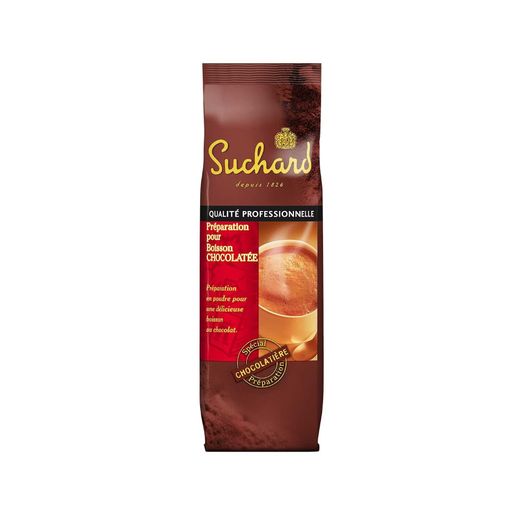 Image unavailable
Suchard hot chocolate powder, 20% cocoa, 1 kg
This 1 kg pack may suit a household that regularly makes chocolate drinks.
- The product name states that it contains 20% cocoa.
- If you need to avoid milk, soya or cereals containing gluten, check the ingredients and trace warnings on the packaging.
- Follow the recommended amount for your chosen preparation method.
View on Joybuy
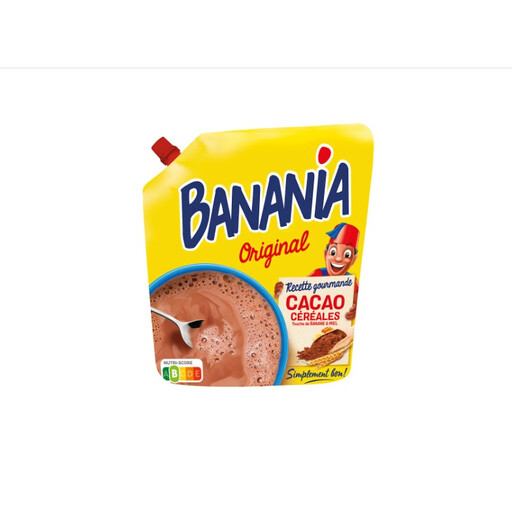 Image unavailable
Bananina Original chocolate powder, 1 kg
This 1 kg pack is for households that want to make chocolate drinks regularly.
- Check the ingredients list if you need to avoid cereals containing gluten.
- Also check for warnings about traces of milk and soya, as well as the recommended serving on the packaging.
- Do not assume that the nutrition information for another recipe called “Original” applies to Bananina Original.
View on Joybuy
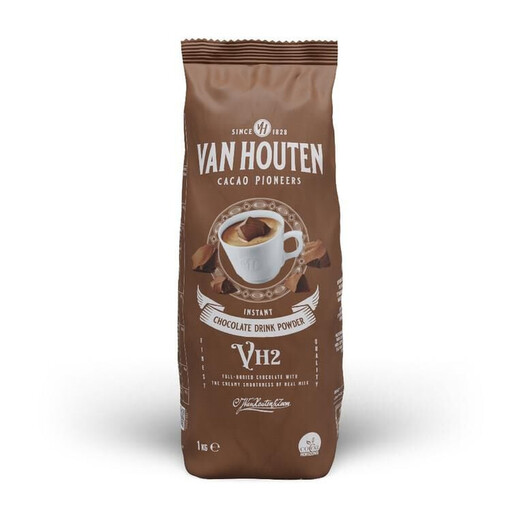 Image unavailable
VAN HOUTEN VH2 34%, 1 kg pack
This 1 kg pack may appeal to a household that often makes chocolate drinks.
- Before comparing the cocoa content, check exactly what the “34%” on the packaging refers to.
- Read the ingredients and allergen information if you need to avoid milk or nuts.
- Check the recommended amount for your chosen preparation method.
View on Joybuy
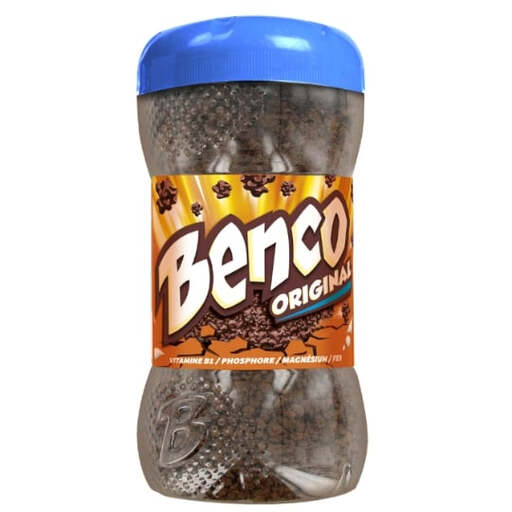 Image unavailable
BENCO Original chocolate granules, 800 g
This 800 g pack is another option to consider if a 1 kg pack does not suit the way you use it.
- This product comes in granule form.
- To compare prepared mugs, check the recommended serving on the packaging.
- Check the full ingredients list and allergen information before buying.
View on Joybuy
Frequently asked questions
Is the Nutri-Score compulsory on chocolate powder in France?
No. As the DGCCRF explains, displaying it is voluntary. However, most prepacked foods must have a nutrition declaration, so use the “of which sugars” figure to compare powders on a like-for-like basis.
How do you compare the sugars in two chocolate powders?
First, compare the “of which sugars” figure per 100 g of powder on each pack. Then check the amount used per mug: a figure per 100 g of powder cannot be directly compared with one for a drink already made with milk.
Can you serve hot chocolate with a savoury breakfast?
Yes, it can be served alongside savoury foods, but it is not itself a savoury food. If you want to decide whether to add sugar to the drink, consider unsweetened cocoa and check the ingredients you plan to add.
What should you check if someone in your household avoids gluten or soya?
Before buying, read the ingredients and trace warnings for the exact product. Carrefour’s product pages list wheat and barley in Banania Original, and soya in Nesquik and Super Poulain. Check the label of any different recipe separately.


