Households sharing breakfast
If several people regularly make a chocolate drink, a larger pack can mean fewer trips to restock. However, check that the packaging and your storage space will allow you to keep it as directed on the label.


A pack of 800 g to 1 kg is best suited to a household that regularly makes several chocolate drinks and can keep the powder dry in a tightly sealed container. Before choosing, compare the recipe, sugar content on a like-for-like basis, serving suggestion and allergens. Pack size alone won’t tell you any of these things.
If several people regularly make a chocolate drink, a larger pack can mean fewer trips to restock. However, check that the packaging and your storage space will allow you to keep it as directed on the label.
The ingredients list and nutritional information let you compare sugar content and ingredients. Check whether the figures are for 100 g of powder or for a drink made with milk: these are not the same basis for comparison.
Soya, milk and cereals containing gluten appear differently across the recipes reviewed. If you have a dietary requirement, check the label on the exact product and variant you’re buying rather than relying on the brand name alone.
For regular use, start with how much your household gets through, then compare recipes and check the allergens for each product.
| What to consider | What to check | Who is it for? |
|---|---|---|
| Pack size and storage | Net weight, best-before date, and instructions for sealing and storage. | When I make several bowls each week, I want a pack that lasts without being open for too long. Around 42% of consumers put a pack size that suits their household’s routine first. |
| Recipe and sugar content | Ingredients, sugar per 100 g and recommended serving size; distinguish between the powder on its own and the prepared drink. | If the recipes on offer are different, I want to compare their sugar content on the same basis before deciding. Around 33% of consumers prioritise comparing the ingredients and composition. |
| Allergens | Allergens listed and any ‘may contain’ warnings on the packaging of the variant you choose. | If someone in my household needs to avoid an ingredient, I need to check the exact product before using it. Around 25% of consumers would make recipe suitability their top priority. |
According to the DGCCRF and the French Ministry of the Economy, displaying the Nutri-Score is voluntary in France, while a nutrition declaration is mandatory for prepacked foods. So, if the logo is absent, you should still check the nutritional information.
Compare sugar and other values on a like-for-like basis, then check the ingredients list. If a Nutri-Score is shown, treat it as extra information, not as a definitive answer for your personal choice.
Article 1613 ter of the French General Tax Code, published on Légifrance, applies to drinks and liquid drink preparations that meet its conditions. The fact that a dry powder contains sugar is not, on its own, enough to conclude that it is subject to this levy.
When choosing chocolate powder, base your decision on its ingredients and the sugar content shown on the label, rather than on this tax assumption.
Listed ingredients vary between products: some of the preparations reviewed contain soya, Banania Original contains cereals with gluten, and milk-related warnings differ from one product to another.
Check the ingredients, allergens and ‘may contain’ warnings on the pack you plan to use, including whenever you switch to a different variant.
Nesquik instant chocolate powder is available in a 1 kg tub, among other sizes. The Nestlé Professional product information gives serving guidance for a drink made with semi-skimmed milk.
Banania Original is available from the brand in 250 g, 400 g and 1 kg packs, with a recipe combining cocoa, cereals, banana and honey.
Super Poulain is listed in a 1 kg tub; Auchan’s product information recommends preparing a drink with 15 g of powder and milk.
Carrefour Classic' chocolate powder is available in an 800 g container, alongside several other recipes sold under the same label.
The range includes Cao Kido, a sweetened chocolate drink powder in a 1 kg pack, and unsweetened cocoa in a 250 g pack. They are different products for different uses.
These 800 g or 1 kg chocolate powders are suited to a household that regularly makes drinks at breakfast. Check the recipe and preparation instructions for each product; unsweetened cocoa that you measure yourself is for a different use.
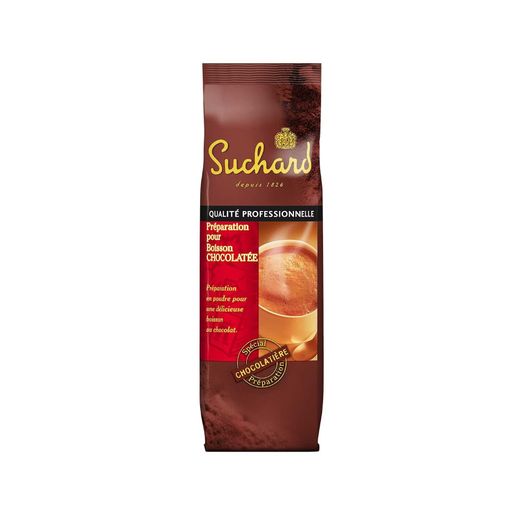 Image unavailable
If you regularly make chocolate drinks, this 1 kg pack is worth comparing with how much your household gets through. The product name states 20% cocoa; check the ingredients, allergens and serving instructions on the packaging before choosing it.
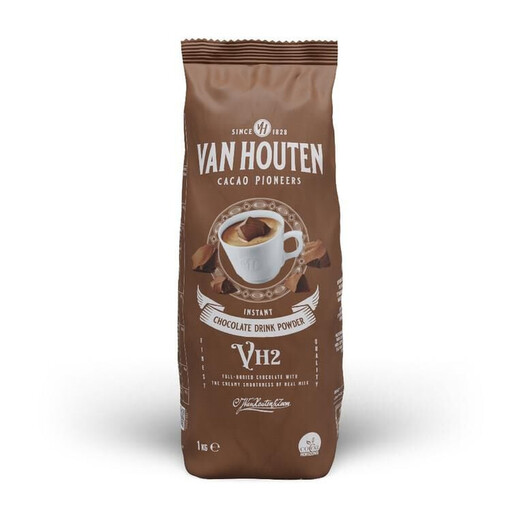 Image unavailable
The 1 kg pack is worth considering if you regularly drink chocolate drinks. The product name states ‘34%’; check the ingredients on the packaging to find out exactly what this refers to and to check for allergens.
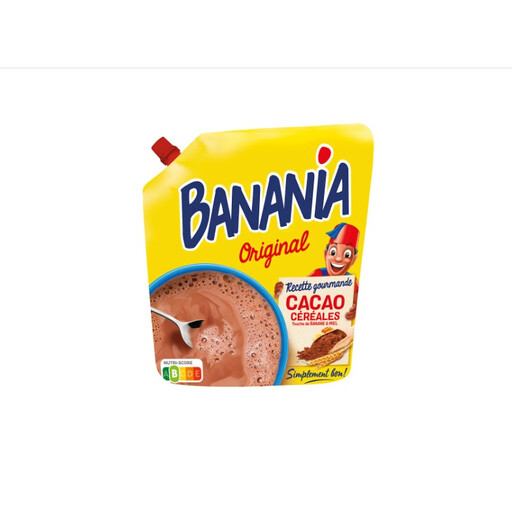 Image unavailable
This 1 kg pack is for households that use chocolate powder often. Check the brand and variant on the packaging before applying information about Banania Original. Also check for cereals containing gluten if this matters to your household.
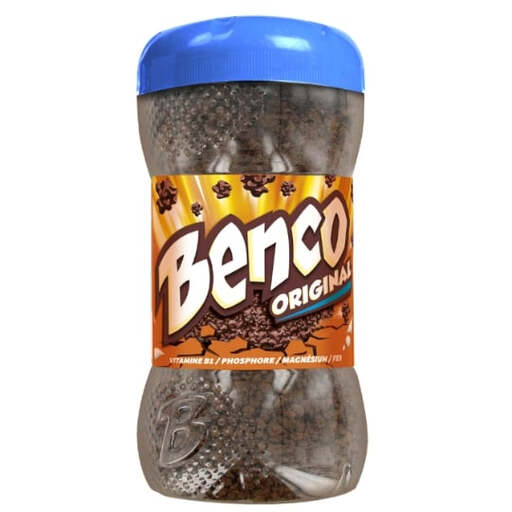 Image unavailable
The 800 g container is a family-sized option that’s smaller than the 1 kg packs in this selection. The product name specifies granules; check the packaging for ingredients, allergens and storage instructions.
No. According to the French Ministry of the Economy and the DGCCRF, displaying it is voluntary. A nutrition declaration is compulsory for prepacked foods, however, so you can compare sugar and fat content on a common basis, usually per 100 g.
No. The sugar content of a powder alone is not enough to draw that conclusion. Article 1613 ter of the French General Tax Code, published on Légifrance, defines the levy for drinks and liquid drink preparations that meet specific conditions; it does not automatically classify a dry powder as falling within its scope.
Check the net quantity, ingredients, allergens, nutritional information, best-before date and storage instructions. To compare two recipes, distinguish the figures per 100 g of powder from those for a prepared drink, then take into account how much powder you’ll use.
Follow the instructions on the packaging. The products reviewed include instructions to keep them away from heat and moisture, and some say to close the container securely. Choose a quantity that suits your household’s consumption and check the best-before date when you buy it.