Anyone preparing lunchboxes or snacks to share
If you’re dividing a multipack between several people, check how many bars it contains and make sure each one is individually wrapped if you need to take them with you.


To divide a snack between lunchboxes, choose a multipack with a number of bars, weight per bar and packaging that suit your needs. For sharing, mini bars or an assortment can offer smaller portions and a choice of flavours. Before exercising, compare the portion you plan to eat with the product’s sugar, fat and allergen information. A multipack format alone doesn’t tell you whether a bar is suitable for your activity.
If you’re dividing a multipack between several people, check how many bars it contains and make sure each one is individually wrapped if you need to take them with you.
For a snack before exercising, compare the amount you plan to eat with the nutritional information, rather than relying on an “energy” claim.
An assortment contains several different recipes. The ingredients list and allergen information on the specific pack matter more than the brand name alone.
When choosing a multipack for a snack before an activity, a lunchbox or sharing, start with what matters most to you, then check the details of the specific product.
| What to consider | What to check | Who it matters to |
|---|---|---|
| Portioning | Number of bars, weight of each bar and individual packaging. | If I’m preparing several lunchboxes without cutting the bars up, I look for units that are easy to divide between them. Around 30% of consumers put portioning first. |
| Allergens | Ingredients and allergens for each recipe on the pack you’re buying. | If someone needs to avoid an ingredient, a variety of recipes isn’t enough to help me decide. Avoiding allergens is the main priority for around 30% of consumers. |
| Ingredients and portion size | Nutritional values per 100 g and the amount you’ll actually eat, particularly the sugar and fat content. | Before an activity, I want to know what’s in my portion rather than judging the multipack by its size. This is the main consideration for around 20% of consumers. |
| Variety and local availability | Recipes included in the assortment and whether the format is available at your chosen shop. | When sharing with people who have different tastes, I prefer an assortment I can actually buy near home. This is the priority for around 20% of consumers. |
The French provisions set out by Légifrance in Articles 1613 ter to 1615 cover drinks and liquid preparations for drinks, subject to the conditions in those provisions. They do not cover solid chocolate bars.
When choosing between two multipacks, compare their portion sizes, ingredients and nutritional information instead.
Santé publique France explains that displaying Nutri-Score is voluntary. The European Commission, however, says that a nutrition declaration is required for the vast majority of prepacked foods.
Compare values on the same basis, particularly per 100 g, then consider the amount you plan to eat. If Nutri-Score appears on the pack, use it as additional information.
KitKat lists gluten, milk, peanuts and hazelnuts, among other allergens, for its Mini Mix of five recipes. So, if you need to avoid a particular allergen, check each recipe carefully.
Read the ingredients and allergen information on the multipack you’re buying, including the details for each recipe.
A product shown on a retailer’s website may not be available at the shop or at the time you want it.
Check local availability and the exact format before planning how to divide up the bars.
Carrefour lists a multipack of 12 Mars chocolate bars, each weighing 45 g.
Snickers is one of the recipes in an assortment of mini bars listed by Carrefour.
Twix France lists a multipack of 12 biscuit, caramel and chocolate bars, each weighing 50 g.
KitKat offers a Mini Mix, among other options, featuring five chocolate wafer recipes.
E.Leclerc lists a 200 g bag of 16 mini milk-filled chocolate bars.
These multipacks contain full-size or mini bars, so consider which best suits the number of portions you want. If you need to put one bar in each lunchbox, check the packaging for the specific product you choose.
 Image unavailable
This pack of three 100 g bars could suit you if you want to divide up units of the same weight. Check that each bar is individually wrapped if you plan to carry them separately. For a portion of less than 100 g, refer to the nutritional information on the pack.
 Image unavailable
The nine individually wrapped mini bars are handy if you want small portions to share. Before choosing this recipe for a snack, check the sugar, saturated fat and allergen information on the exact pack.
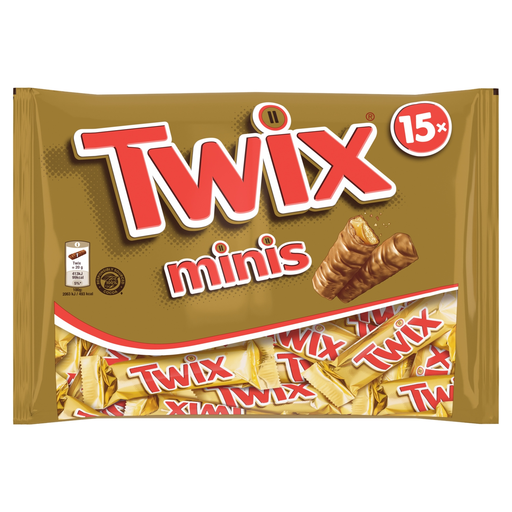 Image unavailable
This pack of 15 mini bars is worth considering if you want small portions to share. If you’re planning to put one in each lunchbox, check that they’re individually wrapped. Values per 100 g don’t tell you the nutritional content of a single mini bar.
 Image unavailable
Three 50 g bars give you same-weight portions to share. Check whether each bar is individually wrapped if you want to hand them out separately, and refer to the nutrition declaration for the amount you’ll eat.
 Image unavailable
This pack of 11 bars could suit you if you need several portions of the same recipe. Before dividing them between lunchboxes, check whether they’re individually wrapped. Refer to the pack to match the nutritional information to the amount you’ll eat.
No. Solid chocolate bars don’t fall into the category of drinks and liquid preparations for drinks covered by the French provisions set out by Légifrance in Articles 1613 ter to 1615. You should still check the sugar content in the nutritional information, regardless of this tax.
No. Santé publique France says that producers can choose whether to display it. The European Commission says that a nutrition declaration is required for the vast majority of prepacked foods. This lets you check the sugar and fat content, even when there’s no Nutri-Score.
First compare their nutritional values on the same basis, such as per 100 g, then check the weight of the amount you plan to eat. The number of bars in a pack isn’t enough to compare portion sizes.
No. Different recipes may contain different allergens. KitKat lists gluten, milk, peanuts and hazelnuts, among other allergens, for its Mini Mix. Check the ingredients and allergen information on the assortment you’re buying.
No. The packaging alone can’t tell you whether a bar is suitable for a particular activity, exercise duration or time of day. If you’re considering one as a snack, check the portion size and nutritional information for the recipe you’ve chosen. Don’t mistake it for a sports nutrition product.