People who prepare snacks for the gym
If you’re slipping a bar into your bag, check its weight and packaging rather than looking only at the total weight of the multipack. You can keep a large selection at home and take just the bar you’ve chosen.


To divide chocolate bars between your gym bag and lunchboxes, start with a pack of two or three 100 g bars. The number of bars and their individual weight are easy to plan for, without assuming that one bar is a single serving. A larger multipack or selection is better suited to sharing or keeping a supply at home. In every case, check which varieties are included, the sugar content per 100 g and the allergens before choosing.
If you’re slipping a bar into your bag, check its weight and packaging rather than looking only at the total weight of the multipack. You can keep a large selection at home and take just the bar you’ve chosen.
If you’re dividing a multipack over several days, check how many bars it contains and how much you plan to put in each lunchbox. Read the ingredients and allergen information for each variety you’ll be using.
A selection could be a good choice if several people want different varieties. Check which products are included: their ingredients, nutritional values and weights may vary.
For snacks on the go, start by checking the weight of each bar and how you’d like to divide up the multipack. Then look at the label for the variety you plan to take with you.
| What matters | What to check | Who is this for? |
|---|---|---|
| Taking bars with you and sharing them out | The number of bars, the weight of each one and the packaging before putting them in a bag. | When preparing several snacks or lunchboxes, I want to know exactly which bar to take, without mistaking a multipack for ready-portioned snacks. Around 42% of consumers rank this as their main need. |
| Variety label | Sugar per 100 g, ingredients and allergens; check the Nutri-Score only if it appears on the product. | If I’m comparing varieties or choosing for someone with an allergy, I need to read the information for the bar I’ve selected. This is the top priority for around 33% of consumers. |
| Sharing and keeping a supply | Varieties included, number of bars and the weight of each one in the selection. | At home, I’m mainly looking for several bars to share or a range of varieties, rather than a small multipack to take with me every day. Around 25% of consumers prioritise sharing or keeping a supply. |
The French Ministry of the Economy describes this French levy as applying to sugary drinks, not chocolate bars as such.
When comparing two bars, set this consideration aside and check their weight and sugar content per 100 g instead.
According to the DGCCRF, displaying it is voluntary in France. It doesn’t replace checking the ingredients, allergens and nutritional values.
Use it as extra information when it appears, then check the nutrition declaration for each variety you’re interested in.
A pack of 2 × 100 g or 3 × 100 g tells you the number and weight of the bars, not how much you’ll want to eat on each occasion.
Check the weight and packaging of each bar, then decide how you’ll divide it up before putting it in a lunchbox or bag.
The Nestlé Dessert product featured by Carrefour is intended for baking. So a multipack of several bars doesn’t tell you whether it’s suitable for the use you have in mind.
If you’re looking for a snack to take with you, check the variety and the product’s stated use rather than relying on the number of bars alone.
In its French range, Carrefour offers multipacks of chocolate bars, including 2 × 100 g and 3 × 100 g packs.
Lindt France offers multipacks of chocolate bars as well as selections featuring several varieties.
Nestlé France says its Dessert range includes multipacks of two, three or five bars.
Carrefour lists a Côte d’Or product containing two dark chocolate bars, each weighing 200 g.
Each of these three multipacks contains two or three 100 g bars. They make it easier to plan which bar to take with you or keep in the cupboard; the pack size alone doesn’t determine a single serving.
 Image unavailable
This pack of three milk chocolate bars can help you plan for several occasions. Each bar weighs 100 g: check its packaging if you plan to carry it separately, and check the sugar content per 100 g and the allergens for this variety.
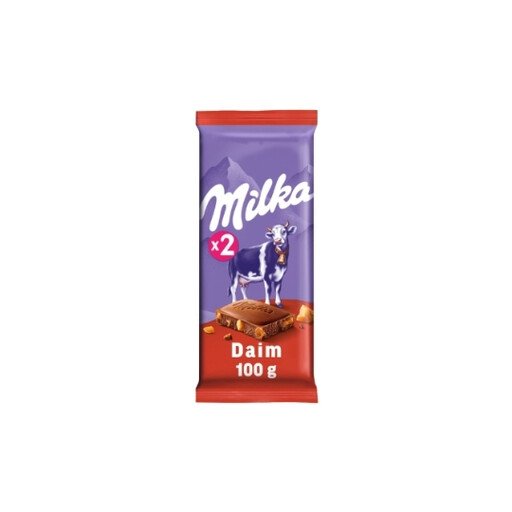 Image unavailable
With two milk chocolate bars, this pack could suit you if you want to take one with you and keep the other in reserve. Each weighs 100 g; check the packaging before planning how to carry it, and read the ingredients and allergen information on the wrapper.
 Image unavailable
This pack of three dark chocolate bars can be shared between several occasions or people. Each bar weighs 100 g; for a snack on the go, check the packaging, sugar content per 100 g and the full list of ingredients and allergens.
No, not to chocolate bars as such. The French Ministry of the Economy says the so-called “soda tax” applies to sugary drinks. When choosing a chocolate bar, check its nutrition declaration instead, particularly the sugar content per 100 g.
No. The DGCCRF confirms that displaying it is voluntary in France. The European Commission says a nutrition declaration is required for the vast majority of prepacked foods. It includes energy, fat, carbohydrates, sugars, protein and salt.
Read the label for each variety you plan to use rather than assuming they all have the same ingredients or nutritional values. The DGCCRF says that allergenic ingredients in prepacked foods must be highlighted in the ingredients list. Depending on your needs, also take account of any “may contain” warnings.
Not necessarily: being good for sharing doesn’t tell you how much the bar you put in the lunchbox weighs. Check the number of bars, the weight of each one and the varieties included before choosing between a selection and a smaller multipack.