If you’re making several batches of crêpes, choose a multipack with the right type of chocolate for your recipe and enough total weight for the amount you need. If you’re mainly planning to share the bars after your meal, individually wrapped bars let you open one at a time. Either way, check the ingredients and allergens for the exact multipack.
Who are these multipacks for?
Anyone making several batches
If you’re using the chocolate for crêpes, a sauce or other desserts, check the total net weight and type of chocolate before counting the bars. A larger multipack may suit your needs, as long as its recipe works for the dishes you have in mind.
Households who want to share some and save the rest
If you want to serve chocolate after your crêpes without opening the whole multipack, several separate bars can be handy. However, a 100 g bar is still a bar to share, not an individual portion for a lunchbox.
Shoppers who check the ingredients
If a recipe needs to avoid a particular ingredient or allergen, start by checking the label for the exact variety. The brand, the chocolate’s colour and the multipack size aren’t enough to tell you what it contains.
What should you check before choosing?
First decide whether you’ll use the chocolate for cooking, serve it after your crêpes or open it over several occasions. Then check the weight, the type of chocolate and the ingredients to narrow down your choice.
| What to consider |
What to check |
Who is it for? |
| Total quantity |
Compare the multipack’s net weight with the weight of each bar. A pack of 3 × 200 g contains 600 g, compared with 300 g in a pack of 3 × 100 g. |
When making several fillings and serving guests, I want enough for the occasion without relying on the number of bars alone; around 36% of consumers put total quantity at the top of their list. |
| Type of chocolate |
Read the product description, cocoa content and ingredients, then compare them with your recipe or the flavour you’re looking for. |
If I’m melting the chocolate or serving it as it is, I want to choose a recipe that suits its purpose; around 29% of consumers prioritise the type of chocolate. |
| Ingredients and allergens |
Check the ingredients list, highlighted allergens and any ‘may contain’ warnings on the exact multipack. |
If a guest needs to avoid an ingredient, I need to know what’s in the chocolate before deciding on the format; around 21% of consumers put this compatibility first. |
| Opening one bar at a time |
Check how many separate bars there are, their weight, the storage instructions and the best-before date. |
If I’m spreading the chocolate over several occasions, I’d rather not open the whole multipack at once; around 14% of consumers prioritise this option. |
Mistakes to avoid
-
Counting the bars without checking their weight
Three 100 g bars and three 200 g bars won’t provide the same amount for your recipes. The number of bars alone doesn’t tell you how much chocolate is in the multipack.
Work out the total weight from the weight of each bar, then compare it with what you plan to make or serve.
-
Assuming one variety’s ingredients apply to the whole brand
Ingredients and warnings about possible traces vary between recipes. If someone needs to avoid an allergen, a milk chocolate multipack and one with inclusions shouldn’t be treated as the same product.
Read the label for the exact multipack before ordering and serving it. The Ministry of the Economy states that allergens in prepacked foods must be highlighted in the ingredients list.
-
Assuming every bar carries a Nutri-Score
According to Public Health France, displaying the Nutri-Score is voluntary for producers. Whether it appears or not, you should still check the nutritional information and ingredients.
If a Nutri-Score is displayed, consider it alongside the nutrition declaration, including the values per 100 g, and the product’s ingredients.
-
Using a snacking bar without checking the recipe
Whether you choose milk chocolate, dark chocolate or chocolate labelled for baking depends on the recipe and flavour you’re after. A multipack label alone doesn’t guarantee that the chocolate will work as a filling or in a particular bake.
Start with the recipe you have in mind, then check the type of chocolate, its cocoa content and its ingredients.
Brands and formats to know
These examples relate to specific multipacks; they don’t describe every recipe from each brand.
TABLETTE D’OR / Marque Repère E.Leclerc
E.Leclerc offers, among other products, a 3 × 200 g multipack of dark baking chocolate and 3 × 100 g multipacks of milk chocolate bars.
- The dark baking chocolate multipack weighs 600 g, making it worth considering if you’re planning several recipes.
- Choose between the dark baking chocolate and milk chocolate recipes to suit your needs; the different formats don’t make them interchangeable.
Côte d’Or
Carrefour’s L’Original multipack contains two 200 g milk chocolate bars, giving you 400 g in total.
- The two large bars are a good option for sharing at the table.
- The recipe listed contains milk and soya and warns that it may contain nuts: check the multipack before serving it to anyone who needs to avoid these ingredients.
Lindt
Monoprix offers a Lait Extra Fin multipack containing three 100 g bars.
- The separate bars mean you can open one at a time.
- The recipe listed contains milk, soya and barley; also check that it’s suitable if your recipe calls for dark or baking chocolate.
Milka
Joybuy offers multipacks of milk chocolate bars, including 2 × 100 g and 3 × 100 g formats, for sharing and enjoying.
- Choose between a pack of two or three bars depending on how much you want to open.
- Check the ingredients and allergen warnings for the exact variety; don’t assume what’s in it from the Milka name alone.
Nestlé
Carrefour’s range of chocolate bars includes a 3 × 100 g Noir Dessert multipack.
- Its product description and format make it worth considering for recipes that call for dark baking chocolate.
- Before using it, check the ingredients list and allergens on the product page or the packaging of the multipack you choose.
Chocolate bar multipacks available on Joybuy
These two Milka multipacks contain milk chocolate bars to enjoy and share after your crêpes, or open on different occasions. If your recipe calls for baking chocolate, check that either multipack is suitable before choosing.
 Image unavailable
MILKA Alpine Milk, 3 × 100 g
For sharing after your crêpes and opening the bars one at a time, this multipack contains three 100 g milk chocolate bars, giving you 300 g in total. They’re described as individually wrapped, but aren’t individual portions suitable for a lunchbox. The recipe lists milk, hazelnut and soya, and warns that it may contain traces of other nuts and wheat. If anyone needs to avoid an allergen, check the label on the exact multipack.
View on Joybuy
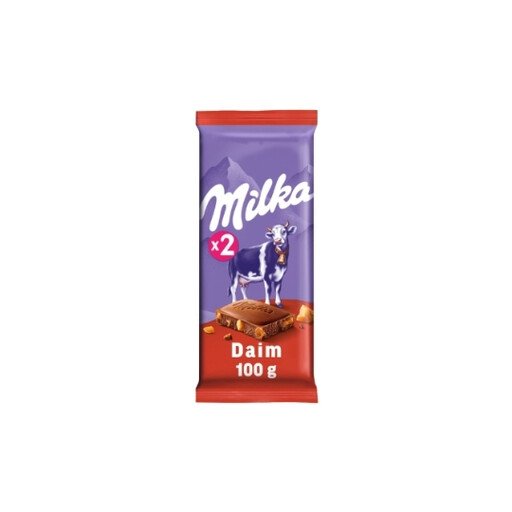 Image unavailable
MILKA I737, milk chocolate 2 × 100 g
If you’d like to serve a smaller amount after your crêpes, this multipack contains two 100 g milk chocolate bars, giving you 200 g in total. Don’t assume that each bar has its own wrapper suitable for a lunchbox. The ingredients include hazelnut, milk and soya; check the label on the exact multipack if a guest needs to avoid any of these ingredients.
View on Joybuy
Frequently asked questions
Is the Nutri-Score compulsory on chocolate bars in France?
No. Public Health France explains that producers can choose whether to display the Nutri-Score. Its absence doesn’t, by itself, mean a bar is non-compliant. Check the nutrition declaration, ingredients and allergens when comparing products.
What should I check if a guest needs to avoid certain allergens?
Read the label on the exact multipack before serving it. The Ministry of the Economy states that allergens must be highlighted in the ingredients list on prepacked foods. Also check any ‘may contain’ warnings, as ingredients can vary between recipes.
How should I store any bars left after Candlemas?
Follow the storage instructions on the packaging and reseal any opened bar as directed. The Ministry of the Economy explains that the best-before date indicates how long a product is expected to retain its flavour and aroma; it shouldn’t be confused with a use-by date.


