What should you check first?
First decide how many bars you want to open during the get-together and how many you’d like to save for later. Then choose the recipe and check its label for each multipack you’re considering.
| What to consider |
What to check |
Who is it for? |
| Amount to share |
The number of bars and the weight of each one, for example 3 × 100 g or 2 × 200 g. |
If several people will be helping themselves, I want to know what I can open without using up the whole multipack. Around 45% of consumers prioritise the amount available to share. |
| Bars to save |
The number of individually wrapped bars; also have something ready to protect any pieces destined for lunchboxes. |
If some of the chocolate needs to be saved for lunchboxes, I’d rather be able to put unopened bars aside. This is the priority for around 33% of consumers. |
| Recipe and label |
Sugars per 100 g, ingredients and allergen information for the exact recipe. |
Before serving several recipes, I need to be able to compare their nutritional information and check allergens for anyone affected. This is the top priority for around 22% of consumers. |
When choosing between smaller and larger bars, don’t confuse the amount of chocolate with how easily you can portion it out. A 2 × 200 g multipack contains fewer individually wrapped bars than a 3 × 100 g multipack, even though each larger bar contains more chocolate. On the other hand, if you’re making a dessert to share, keeping several bars unopened may be less important.
The DGCCRF states that prepacked food must include a nutrition declaration. When comparing two recipes, look in particular at their sugars per 100 g rather than the total weight of the multipack. You can also check any Nutri-Score shown, but it doesn’t replace reading the nutrition information and ingredients.
Brands to consider
These format examples are useful for comparing different uses; a brand’s appearance here doesn’t indicate what your local shop stocks.
Milka
Carrefour lists a Milka Alpine Milk multipack containing 5 × 100 g bars, among other options.
- Five separate bars mean you can open one and save the others for another occasion.
- Check the recipe and allergen information for the multipack you choose before serving it.
Lindt
Carrefour’s range includes Lindt Dessert 70% in a 2 × 200 g multipack and Maître Chocolatiers milk chocolate with hazelnuts in a 3 × 110 g multipack.
- The Dessert format is presented as suitable for baking, while the three-bar multipack gives you a different way to portion it out.
- These recipes aren’t interchangeable: choose one that suits how you plan to use it and check its ingredients.
Nestlé
Carrefour lists a Nestlé Dessert dark chocolate multipack containing 2 × 205 g bars.
- Its two large bars may suit you if the chocolate is mainly for a recipe or to share with a group.
- With two bars weighing 410 g in total, this format gives you fewer unopened bars to divide between several lunchboxes.
Côte d’Or
Carrefour lists L’Original milk chocolate in multipacks of 2 × 200 g and 3 × 100 g.
- These two pack sizes let you choose between larger bars and more individually wrapped bars.
- Check the format of the offer you choose: the two multipacks are portioned out differently.
Carrefour
The Carrefour Classic’ range includes milk chocolate multipacks of 2 × 100 g and 3 × 100 g, among other options.
- Choose the number of bars to suit what you plan to open at Christmas and save for later.
- A 100 g bar will still need to be broken up if you only want to put some of it in a lunchbox.
Leclerc
E.Leclerc lists Tablette d’Or milk chocolate multipacks containing 3 × 100 g bars, including a range of different recipes.
- Three separate bars make it easier to divide the multipack between the get-together and another use.
- For a filled or hazelnut recipe, check the ingredients and allergens for that specific product.
Chocolate bar multipacks on Joybuy
These multipacks of two or three 100 g bars are suited to a get-together where you want to open some of the chocolate and keep other bars unopened for later.
 Image unavailable
Milka Alpine Milk, 3 × 100 g
Three milk chocolate bars to share at Christmas or save for another occasion. Break up a 100 g bar for a lunchbox, and check the ingredients and allergens on the packaging before serving.
View on Joybuy
 Image unavailable
Poulain Extra Dark, 3 × 100 g
Three dark chocolate bars, ideal for serving as a different recipe or saving some for after the get-together. Break each bar up to suit how you plan to use it, and read all the allergen information on the packaging before offering it to guests.
View on Joybuy
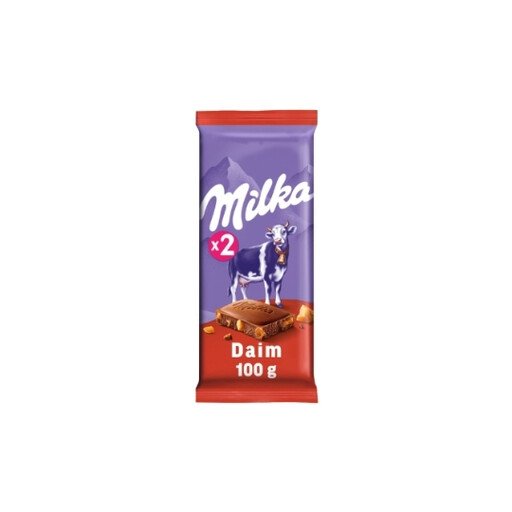 Image unavailable
Milka Milk I737, 2 × 100 g
Two milk chocolate bars, so you can open one and keep the other unopened. This multipack has one fewer bar than the three-bar options. For a lunchbox, break off part of a bar and check the allergen information on the product you receive.
View on Joybuy
Frequently asked questions
Does the ‘soda tax’ apply to chocolate bars in France?
No, not to solid chocolate bars: Article 1613 ter of the French General Tax Code, published on Légifrance, applies to drinks and liquid preparations for drinks. To compare chocolate bars, look instead at the ‘sugars’ value in their nutrition information.
How do you compare the sugar content of two multipacks of different weights?
Compare the ‘sugars’ value per 100 g for each recipe, then take into account how much you’ll actually serve. The nutrition declaration for prepacked food, as described by the DGCCRF, lets you compare these values on the same basis; the total weight of the multipack isn’t a substitute for this comparison.
Can you put a 100 g bar straight into a lunchbox?
No: 100 g is the weight of the bar, not an individual portion. Break off the amount you want, wrap the pieces, and keep the original packaging handy so you can check the ingredients and allergens.
What should you check before serving guests several different recipes?
Check the ingredients, allergens and any ‘may contain’ warnings on each pack. The chocolate bar examples listed by Carrefour include different recipes, including milk chocolate and hazelnut varieties. Don’t assume you know what a bar contains from its brand or the colour of the chocolate alone.


