Anyone making desserts for a group
You’re planning crêpes, waffles or several Valentine’s Day desserts and are looking for a 750 g to 1 kg jar to use in your recipes.


A 750 g to 1 kg jar could be a good choice if you’re planning to use the spread in several Valentine’s Day treats, such as crêpes, waffles or desserts. Choose a size that suits the quantities you have in mind, then check the ingredients, allergens and storage instructions on the specific jar. A 3 kg format is best suited to much higher usage.
You’re planning crêpes, waffles or several Valentine’s Day desserts and are looking for a 750 g to 1 kg jar to use in your recipes.
You’re comparing family-sized jars to make sure you buy enough spread without ending up with a jar that’s too large for the desserts you’ll be serving.
You want to check the stated hazelnut content, whether the spread contains palm oil and any allergen information before choosing a recipe to share.
For a brunch or several Valentine’s Day desserts, start by working out how much you’ll need. Then compare recipes by their nutritional information, ingredients and suitability for your guests.
| What to consider | What to check | Who is this for? |
|---|---|---|
| How much you need | Plan your recipes and number of guests before choosing between 750 g, 1 kg and a larger jar. | If I’m making several batches of crêpes, I want enough spread without being left with an excess that’s difficult to use. Around 36% of shoppers would put choosing the right quantity first. |
| Nutritional information | Compare the per-100 g values of spreads intended for the same use, and check the Nutri-Score if one is shown. | To choose between two recipes, I need to compare their nutritional values on the same basis. This would be the top priority for around 29% of shoppers. |
| Allergens and ingredients | Check the ingredient list, declared allergens and any ‘may contain’ statements on the specific jar. | Before serving several people, I need to know whether the recipe meets my guests’ dietary requirements. Around 21% of shoppers would put this first. |
| Recipe and presentation | Decide whether you’ll use the spread for spreading, filling or decorating, then check the recipe and storage instructions after opening. | If I’m making a dessert to share, I’d choose a recipe that suits the dish rather than a larger jar. Around 14% of shoppers would put this first. |
In France, the provisions cited by Légifrance apply to drinks and liquid preparations for drinks, not to a jar of solid spread.
When choosing your jar, focus on how much you need and the information on its label.
Santé publique France says that displaying the Nutri-Score is voluntary. The absence of a logo isn’t enough, on its own, to judge a recipe.
If the score is shown on the product, use it to compare similar spreads, and check their nutritional values per 100 g too.
A 3 kg jar could leave you with a lot over after a small event. Even a 750 g to 1 kg format should match the recipes you have planned.
Estimate how much you’ll serve and check the storage instructions for the chosen product after opening.
A claim such as ‘palm oil free’ doesn’t tell you, on its own, whether the spread contains milk, hazelnuts or other allergens.
Before serving the spread, check the ingredients and warnings on the packaging of the specific jar.
Carrefour lists a 1 kg jar of Nutella, which could work for several recipes if its ingredients are suitable for your guests.
Carrefour lists a 1 kg jar of Classic' hazelnut spread.
E.Leclerc lists a 1 kg jar of Nustikao, from the Marque Repère range.
ALDI France lists Tartichoc in a 750 g jar, a mid-sized option for the recipes you have planned.
These jars include two Nutella sizes, 750 g and 1 kg, for making several treats; a 750 g BANANIA cocoa and banana spread; and a 3 kg jar of Nutella for when you need a much larger quantity. Check the recipe and jar size before choosing.
 Image unavailable
A 1 kg jar is suitable for several recipes if that amount is right for your desserts. Carrefour states that this product contains 13% hazelnuts and lists milk and soya lecithins. Check the label on the jar before serving.
 Image unavailable
Consider a 750 g jar for several slices of toast or baking recipes when you don’t need a full kilogram. Check the allergens and after-opening instructions on the packaging of the product you buy.
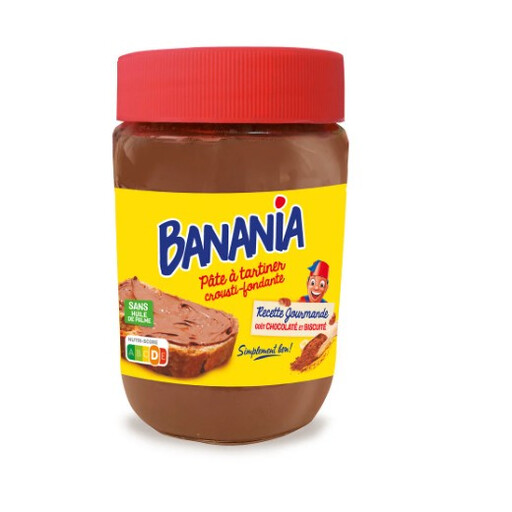 Image unavailable
The 750 g size could be used for several slices of toast or desserts if your guests enjoy the cocoa and banana recipe. It isn’t the same as a classic chocolate and hazelnut spread, so check the allergens on the label of the specific jar.
 Image unavailable
A 3 kg jar is worth considering for a large gathering or regular use, rather than just a few desserts. Estimate how much you’ll use after the event, and check the allergens and storage instructions on the jar you buy.
No. The provisions cited by Légifrance apply to drinks and liquid preparations for drinks intended for human consumption, not to a jar of solid spread.
No. Santé publique France says that displaying the Nutri-Score is voluntary. When shown, it can help you compare products in the same category. Check the nutritional values per 100 g and the ingredients list as well.
Read the information on the specific jar before serving it. Carrefour’s product listing for 1 kg Nutella states that it contains hazelnuts, milk and soya lecithins; other recipes may carry warnings about peanuts or other tree nuts.
Follow the instructions for the product you’ve bought, as they may differ from one recipe to another. Auchan’s product listing for Jardin Bio 300 g recommends using it within a month of opening, if possible, and advises against refrigerating it.