Anyone looking for a size to share
You’re planning to serve several people at breakfast or as an afternoon snack, and want to choose an amount that will actually get used.


Whether you’re giving chocolate and hazelnut spread as a gift or sharing it, choose a size that the recipients will use and a recipe they’ll enjoy. A higher hazelnut content alone doesn’t tell you everything about a product: check the allergens, ingredient list and nutritional information per 100 g too.
You’re planning to serve several people at breakfast or as an afternoon snack, and want to choose an amount that will actually get used.
You want to compare the hazelnut content, the oils used and the nutritional information for the exact product.
Before giving or serving the jar, you need to read the label and check for ingredients such as tree nuts, milk or soya.
When choosing chocolate and hazelnut spread as a gift or to share, start with how it will be used, then compare the recipes. If someone needs to avoid an allergen, check the label on the exact jar before deciding on the size or flavour.
| Criteria | What to check | Who is it for? |
|---|---|---|
| Size for sharing | Check the net weight and choose an amount that suits how much you expect to use. | If several people will be using the same jar, I want to avoid choosing one that’s too small or buying more than we’ll use; around 36% of consumers make this their top priority. |
| Nutritional information | Compare sugars, saturated fat and salt per 100 g; check the Nutri-Score if one is displayed. | Before choosing a recipe, I want to compare like-for-like values rather than rely on a single claim on the packaging; this comes first for around 29% of consumers. |
| Recipe and flavour | Read the ingredient list and check the hazelnut content, if it’s stated. | For toast or a dessert to share, I’m mainly looking for a recipe that suits everyone’s tastes; around 21% of consumers prioritise this criterion. |
| Allergens | Check the allergens highlighted in the ingredients list and any ‘may contain’ warnings on the exact jar. | If I’m giving the product to someone with dietary requirements, I need to be able to check the ingredients before serving it; this check is a priority for around 14% of consumers. |
A family-sized jar is only suitable for sharing if there’s enough of a reason for everyone who’ll be eating it to use that much.
Check the net weight and storage instructions on the jar before choosing a size.
Nutri-Score labelling is optional in France, while the nutritional declaration is required on the relevant prepacked foods, according to the DGCCRF.
Compare the values per 100 g and the ingredients list; use the Nutri-Score as an additional guide when it’s shown.
A claim such as ‘no palm oil’ doesn’t tell you whether the product contains hazelnuts, milk or soya.
Before giving or serving the spread, read the ingredients list and any ‘may contain’ warnings on the exact jar.
E.Leclerc’s product with 35% hazelnuts also has a Nutri-Score of E and contains 47.3 g of sugars per 100 g.
Consider the ingredients and nutritional information together, rather than drawing conclusions from one percentage alone.
E.Leclerc lists Nustikao jars in 400 g, 600 g and 1 kg sizes.
Carrefour lists this hazelnut spread in 400 g and 750 g jars, among other sizes.
Aldi lists Tartichoc as a hazelnut spread in a 750 g jar.
Auchan lists a 750 g cocoa and hazelnut spread made without palm oil.
Nutella hazelnut and cocoa spread is available in several sizes.
The Nutella jars below come in different sizes for sharing hazelnut and cocoa spread. The BANANIA jar is a different recipe made with cocoa and banana: choose it only if that flavour profile will suit the recipients.
 Image unavailable
A size to consider if several people will be using the jar. Joybuy’s product information for this item states that it contains 13% hazelnuts; check the allergens and nutritional information on the jar you receive.
 Image unavailable
This large size means you’ll need to plan for using that much spread and have somewhere to store it. Before sharing, check the ingredients and allergens on the exact jar.
 Image unavailable
This size may suit a shared afternoon snack if it’s the right amount for how you plan to use it. Read the label to check the recipe and allergens before giving it as a gift.
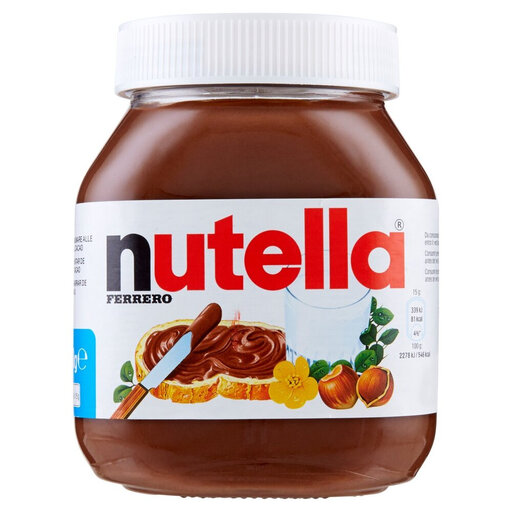 Image unavailable
This jar offers a mid-sized amount for sharing. Check the ingredients, allergens and nutritional information for this item before choosing it.
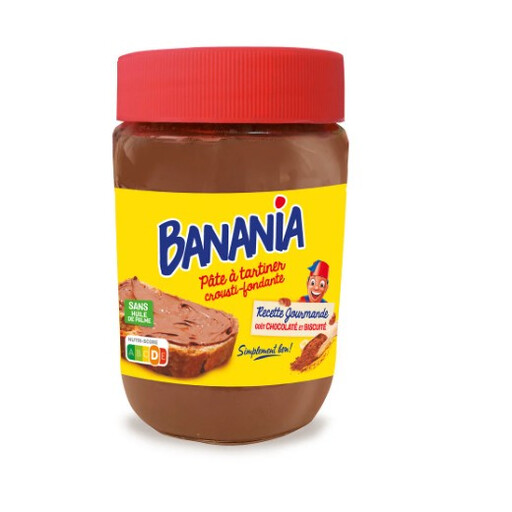 Image unavailable
This cocoa and banana recipe is for anyone looking for that flavour rather than a classic chocolate and hazelnut spread. The ‘no palm oil’ claim doesn’t tell you about allergens, so check the label before serving.
No. Nutri-Score labelling is optional in France, according to the DGCCRF. The nutritional declaration on relevant prepacked foods lets you compare values per 100 g, even when no Nutri-Score is shown.
First check the ingredients and allergens listed on the exact jar, especially if you don’t know about the person’s dietary requirements. Then check the net weight, the date shown and the nutritional information. The chocolate and hazelnut recipes reviewed here list hazelnuts and milk, among other ingredients, and some also contain soya.
The ‘no palm oil’ claim describes an ingredient choice, but it isn’t enough to tell you about the product’s overall nutritional profile. Compare sugars, saturated fat and salt per 100 g across the products you’re considering.