For a quick breakfast, first choose a spread whose glass jar is clearly identified, then compare recipes according to what matters most to you: sugar content, ingredients or the flavour you’re looking for. Also check the quantity, allergens and storage instructions after opening. The jar itself tells you nothing about the nutritional values.
Who is this guide for?
Anyone in a hurry in the morning
If you quickly prepare toast or pancakes, check the jar size and its storage instructions after opening. A large jar is only practical if you expect to use it within the time and under the conditions stated on the label.
Anyone keeping an eye on sugar
Compare the ‘of which sugars’ figure per 100 g on the jars you’re considering. A recipe being organic or sold in a glass jar doesn’t necessarily mean it contains less sugar.
Anyone looking for a particular recipe
If you prefer an organic recipe, one without palm oil or one described as dairy-free, check that these claims apply to the specific version you choose. Read the allergen information separately from the description of the packaging.
What should you check?
For a quick breakfast, start with the jar and how you’ll use it day to day, then compare recipes using the information on their labels.
| Criteria |
What to check |
Who is it for? |
| Jar and storage |
Clear confirmation that the jar is glass, and storage instructions for after opening. |
If I’m making toast in a hurry, I want a container that suits my everyday routine. Around 36% of consumers would prioritise this convenience. |
| Sugar |
The ‘of which sugars’ figure per 100 g and the basis for any comparative claim. |
When comparing two recipes, I prefer to check their nutritional values on the same basis. This would be the top criterion for around 29% of consumers. |
| Ingredients and allergens |
The ingredients list and declared allergens for the exact version. |
If I’m looking for a particular recipe, I need to make sure it meets my dietary requirements. Around 21% of consumers would put this first. |
| Quantity and restocking |
The net weight and how much you’re likely to use after opening. |
If my household doesn’t use much spread, I’d prefer a suitable quantity rather than a jar that needs replacing too soon or stays open for a long time. This would be the priority for around 14% of consumers. |
Common misconceptions to avoid
-
Assuming the Nutri-Score is mandatory
According to Santé publique France, producers choose whether to display the Nutri-Score. If it’s not shown, you should still check the nutritional information and ingredients.
In particular, compare sugars per 100 g. If a Nutri-Score is displayed, consider it alongside the rest of the label.
-
Assuming every jar is made of glass
Nutella says its jar is made of glass, and Auchan describes the jars of the Jardin BiO étic® products mentioned here in the same way. This doesn’t confirm the material used for every size or recipe from a brand.
Before choosing another product on this basis, look for ‘glass’ on its product page or packaging.
-
Confusing ‘reduced sugar’ with ‘sugar-free’
A claimed reduction compares a recipe with a particular reference product. It doesn’t, on its own, tell you how much sugar is in the jar you’re buying.
Check the ‘of which sugars’ figure per 100 g for the specific version before comparing it with a standard recipe.
Brands to consider
These ranges give you recipes to compare, but you’ll need to check the packaging material for each product.
Nutella
An option if you’re specifically looking for Nutella spread in a glass jar.
- Nutella describes its jar as glass; the lid is plastic and the seal combines paper and aluminium.
- The Joybuy listing for the standard 630 g size states that it contains 56,3 g of sugars per 100 g, as well as hazelnuts, milk and soya. These details apply to this size, not every Nutella product.
Jardin BiO étic®
Two chocolate and hazelnut products described by Auchan as coming in glass jars with metal lids: a standard 300 g recipe and a 350 g version described as reduced in sugars.
- For the standard 300 g recipe, Auchan states that it contains 20% hazelnuts, is organic, is made without palm oil and has 50 g of sugars per 100 g.
- The 300 g recipe contains hazelnuts and milk. For the reduced-sugar version, check the nutritional information and allergens on the jar you choose rather than assuming it has the same ingredients as the standard recipe.
Rigoni di Asiago / Nocciolata
A cocoa and hazelnut range to consider if you’re looking for a recipe without palm oil or the L’Intense version, which is described as dairy-free.
- Rigoni di Asiago describes L’Originale as an organic recipe made without palm oil, and L’Intense as an organic recipe made without milk.
- L’Intense still contains hazelnuts. If glass is essential to your choice, check the packaging material for the specific version and size you’re considering.
Carrefour Bio
A 350 g hazelnut spread to compare with the recipes available from Carrefour.
- Carrefour describes it as an organic recipe made without palm oil, with 13% hazelnuts.
- The stated recipe contains milk. Check the packaging if you’re specifically looking for a glass jar.
Nustikao / Marque Repère
An E.Leclerc range to consider if the jar size is an important part of your choice.
- E.Leclerc offers 400 g, 600 g and 1 kg sizes.
- The 1 kg product listing states that it contains 13% hazelnuts, milk, and palm and rapeseed oils. Check the ingredients and packaging material for the size you’re considering.
A Joybuy pick for your toast
This 350 g version is worth considering for a quick breakfast if you’re looking for a plant-based recipe. Check the packaging and product details for the specific version before making your choice.
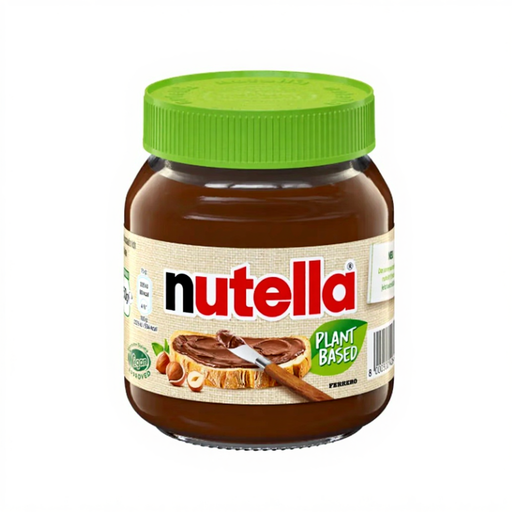 Image unavailable
Nutella Plant Based 350 g
A version to consider for morning toast if you’re looking for a plant-based recipe. Check the allergen information, sugars per 100 g and storage instructions on the product.
View on Joybuy
Frequently asked questions
Is the Nutri-Score mandatory on a jar of spread?
No. Santé publique France confirms that displaying it is voluntary. Check the nutritional information and ingredients list whether or not the logo is shown.
Should you refrigerate spread after opening?
Follow the instructions on the jar you’ve bought, as they can vary by recipe. For the two Jardin BiO étic® products featured by Auchan, the listings say not to refrigerate them. The listing for the standard recipe recommends consuming it within a month of opening, preferably.
What should you check on the label if you have dietary requirements?
Read the ingredients list and allergen information for the exact version. The Jardin BiO étic® recipes mentioned contain hazelnuts and milk; Nocciolata L’Intense, described by Rigoni di Asiago as milk-free, still contains hazelnuts.
Can you recycle a glass jar as one piece?
Not necessarily. Nutella describes its jar as glass, with a plastic lid and a seal made from paper and aluminium. Separate the components according to your local recycling guidance.


