Anyone looking for a glass jar
You use spread in a cake or filling and want to know what the container is made of. Even if a jar is confirmed as glass, don’t use it as a cake tin unless it’s explicitly stated to be oven-safe.


When baking a cake, choose a spread whose packaging and ingredients match your priorities. Check that the jar is made of glass if that matters to you, then compare sugars per 100 g, hazelnut content and allergens. Choose a size that suits the amount you need, but don’t use the jar as an ovenproof cake tin.
You use spread in a cake or filling and want to know what the container is made of. Even if a jar is confirmed as glass, don’t use it as a cake tin unless it’s explicitly stated to be oven-safe.
You want to compare different recipes on a like-for-like basis before choosing a spread to mix in or spread on top. The nutrition information per 100 g makes this possible. If a product claims to have reduced sugar, check what it’s being compared with.
Before sharing a cake, check the ingredients and any ‘may contain’ warnings on the jar you’re using, particularly for hazelnuts, milk or soya, depending on the product.
For a cake, start with the recipe and how much spread you’ll need, then check the label on the exact jar against your priorities. Each of the criteria below reflects a need that some shoppers put first.
| Criteria | What to check | Who is it important to? |
|---|---|---|
| Sugars and ingredients | Compare sugars per 100 g. If the product says ‘reduced sugar’, check the comparison stated on the label. | When measuring out a filling, I don’t want to rely on a single claim on the packaging. I want to compare recipes like for like; around 31% of consumers put sugar content first. |
| Jar and size | Check what the jar is made of and choose a net weight that suits your recipe. Separately check for any statement confirming that it’s oven-safe. | If I bake cakes regularly, I want packaging and a quantity that are practical for this use; around 31% of consumers put the jar and size first. |
| Allergens | Read the highlighted ingredients and any ‘may contain’ warnings on the exact product. | Before sharing a cake, I want to know which allergens are listed on the jar I’m using; around 23% of consumers prioritise this check. |
| Hazelnut content | Check the stated percentage of hazelnuts, but don’t use it to infer the sugar content or what the jar is made of. | For a chocolate and hazelnut filling, I prioritise the stated hazelnut content; around 15% of consumers put this first. |
In France, the Ministry of the Economy states that this logo is optional. Its absence doesn’t mean you can skip the nutrition declaration, which is compulsory for most prepacked foods according to the DGCCRF.
Compare the nutrition information per 100 g and the ingredients list. Take the Nutri-Score into account only when it’s displayed.
In France, the levy set out in Article 1613 ter of the General Tax Code applies to drinks and liquid preparations for drinks, not solid spreads.
To compare two jars for a cake, check the sugars per 100 g and how much the recipe calls for instead.
The fact that a jar is recyclable or reusable doesn’t mean it can withstand oven temperatures. Nutella’s published pound cake recipe uses a separate cake tin.
Mix the spread into the batter or use it as a filling, then bake the cake in a tin specified as oven-safe.
Hazelnut content varies between products, as do the ingredients and allergen warnings. The product name alone doesn’t tell you what it contains.
Check the stated percentage, then read the allergen information and any ‘may contain’ warnings on the jar you plan to use.
These products show a range of sizes and ingredients. Their features apply to the specific product, not necessarily to every product from the same brand.
Nutella offers several sizes, from 220 g to 1 kg, and describes its glass jars as recyclable. The brand also publishes a cake recipe baked in a separate tin.
Auchan’s 300 g hazelnut and chocolate product comes in a glass jar with a metal lid and contains 20% hazelnuts.
E.Leclerc’s 400 g spread contains 35% hazelnuts from Lot-et-Garonne.
ALDI offers TARTICHOC® hazelnut spread in a 750 g size.
These four Nutella sizes are for using chocolate and hazelnut spread in a cake or as a filling. The 630 g, 1 kg and 750 g sizes suit different needs; if you’re considering the 3 kg product and need a glass container, check what it’s made of.
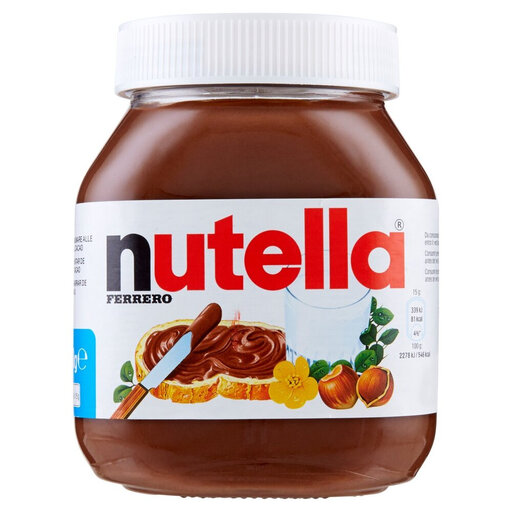 Image unavailable
The 630 g size may suit you if you use spread in several recipes. To compare sugar content, check the nutrition information on the jar you receive. Check the allergens too before sharing the cake.
Use an oven-safe cake tin for baking, not the jar.
 Image unavailable
The 1 kg size is suited to anyone planning to make several cakes or fillings and able to use this amount in line with the storage instructions on the jar.
Check the allergens on the exact product and bake your cake in a separate tin.
 Image unavailable
The 750 g size gives you another option to compare with your recipe and any plans to use the spread again.
Check the allergen and storage information on the exact jar. Bake the cake in an oven-safe tin.
 Image unavailable
The 3 kg pack is for larger batches or frequent use. Check that it’s the right amount for what you’ll be able to use and store.
If you specifically want a glass container, check what this product is made of. Don’t use it as a cake tin unless it’s explicitly stated to be oven-safe.
No. The levy set out in Article 1613 ter of the General Tax Code applies to drinks and liquid preparations for drinks, not solid spreads. When choosing between two recipes, compare their sugars per 100 g instead.
No. According to the French Ministry of the Economy, displaying it is optional in France. As the DGCCRF explains, a nutrition declaration is still compulsory for most prepacked foods. It shows, among other things, sugars and fat per 100 g.
Read the ingredients and any ‘may contain’ warnings on the jar you’re using. Depending on the product, the chocolate and hazelnut spreads featured here may list hazelnuts, milk or soya. ANSES reminds consumers that substances which can cause allergies must be highlighted in the ingredients list.
Don’t use a spread jar as a cake tin unless the manufacturer explicitly confirms that it’s oven-safe. Nutella’s published pound cake recipe calls for a separate cake tin; the jar’s recyclability doesn’t tell you whether it can withstand baking temperatures.
Follow the instructions for the product you’ve bought, as these can vary. For Jardin Bio Étic Noisette & Chocolat 300 g, Auchan’s product page recommends consuming it within a month of opening and advises against keeping it in the fridge.