Anyone hoping to reuse the jar
You want clear confirmation that the jar is made of glass so you can consider reusing it once the spread is finished, rather than trying to guess from a photo.


When choosing chocolate and hazelnut spread in a glass jar, first check that the material is specified for the exact product, then compare the ingredients, allergens and nutritional values per 100 g. Nutella confirms that its jar is made of glass, while product listings for some Jardin Bio étic products specify this material too. Neither the packaging nor a claim about sugar content is a substitute for checking the label.
You want clear confirmation that the jar is made of glass so you can consider reusing it once the spread is finished, rather than trying to guess from a photo.
You compare the nutritional information for different recipes to help choose what to have for breakfast, including products carrying a reduced-sugar claim.
You need to check the hazelnuts, milk, soya, possible traces of other nuts or the presence of sweeteners in the product you choose.
For a sweet breakfast, confirm the jar material for the exact product, then check its ingredients and nutritional information before choosing a size that suits how much you consume.
| What to check | Look for | Who is it for? |
|---|---|---|
| Glass jar and reuse | Look for the words “glass jar” on the product listing for your chosen product; check your local guidance for recycling the jar and lid. | I’d like to keep the container once I’ve finished the spread, without relying on how it looks online; around 21% of consumers put glass first. |
| Sugars and nutritional information | Compare sugars and saturates per 100 g, as well as any sweeteners. The Nutri-Score can be a useful additional guide when shown. | Before choosing a breakfast spread, I want to understand what its figures and claims mean; around 29% of consumers prioritise comparing nutritional information. |
| Ingredients and allergens | Read the ingredients list and any trace warnings on the exact jar, particularly for hazelnuts, milk, soya and other nuts. | An organic recipe or glass jar doesn’t tell me whether the ingredients meet my needs; around 29% of consumers prioritise the ingredients list. |
| Size | Check the net weight and choose an amount that suits how often you eat it; follow the storage instructions for that product. | If I only eat this spread occasionally, I prefer to think about how much I’m buying; size comes first for around 21% of consumers. |
According to Santé publique France, displaying it is voluntary. The European Commission explains that a nutrition declaration is compulsory for most relevant pre-packed foods.
Compare the nutritional information per 100 g, even if there’s no Nutri-Score on the jar.
The scope of the levy described by Légifrance covers drinks and liquid preparations for drinks, not solid spreads.
To compare two spreads, check their nutritional information and ingredients list instead.
You can’t tell what a container is made of just by its shape. Nutella confirms that its jar is made of glass, and Carrefour and Auchan product listings specify this for the Jardin Bio étic products mentioned here.
If glass is essential for you, look for this information on the listing or label for the exact variant.
The Auchan listing for Gerblé spread with no added sugars gives 8.2 g of sugars and 36 g of polyols per 100 g.
If you’re looking for a recipe with sweeteners, check the “sugars” and “polyols” figures alongside the ingredients list.
The brand confirms that its jar is made of glass and suggests ways to reuse it once empty.
Carrefour and Auchan listings for the 300 g and 350 g chocolate and hazelnut products consulted specify a glass jar with a metal lid.
The 400 g organic cocoa and hazelnut product is listed on Auchan’s website, with details of its ingredients and nutritional values.
Auchan lists a 200 g hazelnut and cocoa spread with no added sugars and a sweetener.
This 350 g Nutella Plant Based product is worth considering for a sweet breakfast. If a glass jar is your priority, check that the packaging for the variant you order matches the product presentation.
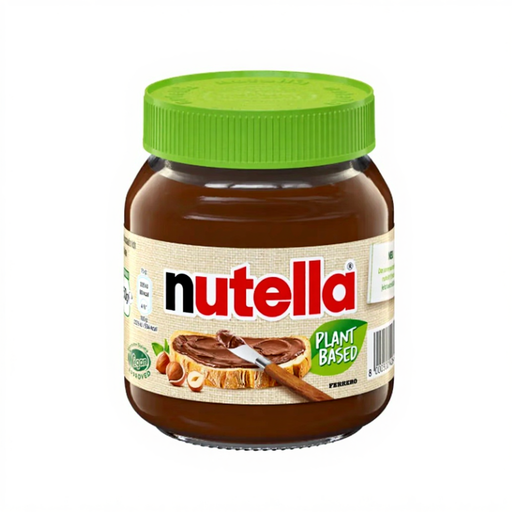 Image unavailable
A size to consider if you’re looking for a cocoa and hazelnut spread for breakfast and would like to reuse the jar. The product presentation describes a reusable glass jar; check the packaging for the variant you order and read its label for the sugar content and full ingredients list.
No. The scope described by Légifrance covers drinks and liquid preparations for drinks, not this type of solid product. To choose a spread, check its ingredients and nutritional information instead.
No. Santé publique France says that producers can choose whether to display it. A nutrition declaration, on the other hand, is required for most relevant pre-packed foods, as the European Commission explains.
Read the ingredients and trace warnings for the exact product: the material of the jar tells you nothing about the recipe. The chocolate and hazelnut products mentioned here may contain hazelnuts and milk, and some also list soya or traces of other nuts.
Follow the instructions on the jar you buy, as they can vary by recipe. The product listings consulted for Nutella 750 g and Jardin Bio étic reduced-sugar spread advise against refrigeration; don’t assume the same applies to another variant.
No. Collection options depend on local facilities. Nutella describes its glass jar as recyclable; check your local council’s recycling guidance, especially for the lid.