Who is each format best suited to?

Hosts serving breakfast to a group

If everyone needs to be able to help themselves without waiting, check how many bite-sized chocolates are in the bag and what flavours it contains. If you’re serving chocolate at the table, bars that you can break up are another option.

People comparing nutritional information

Compare the sugars, energy, fat and salt per 100 g before taking pack size into account. The DGCCRF states that Nutri-Score is voluntary in France, so if it’s missing, you’ll still need to check the nutrition declaration.

Households that need to check allergens

If everyone is sharing from the same table, check the ingredients and any ‘may contain’ information on the exact pack. This is especially important for an assortment containing several recipes.

What should you check before choosing?

Bag of bite-sized chocolates

Choose this if: guests will be helping themselves and you’d like to avoid preparing pieces of chocolate bar.

Bear in mind: with an assortment, you’ll need to check each recipe and its allergens.

Chocolate bar or multipack of bars

Choose this if: you want a specific recipe and would rather decide how many bars to open.

Bear in mind: you’ll need to break up and share out the chocolate when it’s time to serve.

What to consider What to check Who is it for?
Easy to share Check the stated number of bite-sized chocolates and whether there are different flavours. When several people are helping themselves, not having to break up and share out a bar makes serving easier. Around 33% of consumers would put ease of sharing first.
Sugars and other nutritional values Compare sugars and energy per 100 g, then consider how much you plan to serve. When comparing packs of different sizes, I want to start with the same amount of chocolate. Around 27% of consumers would prioritise comparing nutritional information.
Allergens Check the highlighted ingredients and any ‘may contain’ information for each product. If a guest needs to avoid an ingredient, the ingredients in each recipe matter more than the variety on offer. Around 20% of consumers would make this their priority.
How much to open Check the net weight and the number of bite-sized chocolates, bars or tablets. For a small group, I’d rather be able to adjust how much I open and plan for any leftovers. Around 20% of consumers would put this need first.

Common misconceptions to avoid

  • Ruling out chocolate because it has no Nutri-Score

    The DGCCRF states that Nutri-Score is voluntary in France. Its absence doesn’t, on its own, tell you what the chocolate contains.

    Compare the nutrition declaration per 100 g and the ingredients list. Use Nutri-Score as an additional guide if it appears on the pack.

  • Assuming the ‘soda tax’ applies to chocolate

    According to the French Ministry of the Economy, this levy applies to sugary drinks, not chocolate bars or bags.

    To compare these chocolates, check the sugars in their nutritional information instead.

  • Assuming an assortment is suitable for everyone

    A single bag may contain recipes with different ingredients. Lindt France lists milk, soya and hazelnuts, among other ingredients, in its 500 g LINDOR Assorted bag.

    Check the exact pack and have another product ready if one of the recipes isn’t suitable for a guest.

  • Comparing packs without checking what’s inside

    A multipack of bars and a bag of bite-sized chocolates offer different amounts to open and different ways to serve.

    Compare the net weight and number of pieces with the number of people you plan to serve.

Brands and formats to know

Lindt

Lindt France offers the 500 g LINDOR Assorted bag, containing 38 bite-sized chocolates in milk, dark, white and hazelnut recipes.

  • The number of bite-sized chocolates and range of flavours can help you plan for sharing with a group.
  • For this product, Lindt France lists 42 g of sugars per 100 g, as well as milk, lactose, soya and hazelnuts; other nuts may also be present.

Milka

Carrefour lists a 320 g bag of Milka Mini Délices among its sharing chocolates.

  • This bag gives you another quantity to consider for sharing with a group, compared with the 500 g LINDOR Assorted bag.
  • Check the exact Mini Délices pack to compare its nutritional values and check all allergens.

Carrefour

Carrefour’s chocolate range includes Carrefour Classic’ multipacks of 2 × 100 g and 3 × 100 g.

  • A multipack lets you choose how many bars to open for your group.
  • You’ll need to break up and serve the bars; a multipack doesn’t work in the same way as a bag of bite-sized chocolates.

Joybuy products for sharing

For breakfast with a group, these products include bags of chocolate confectionery, a multipack of bars and a multipack of chocolate bars. The bags shown aren’t necessarily assortments of different recipes.
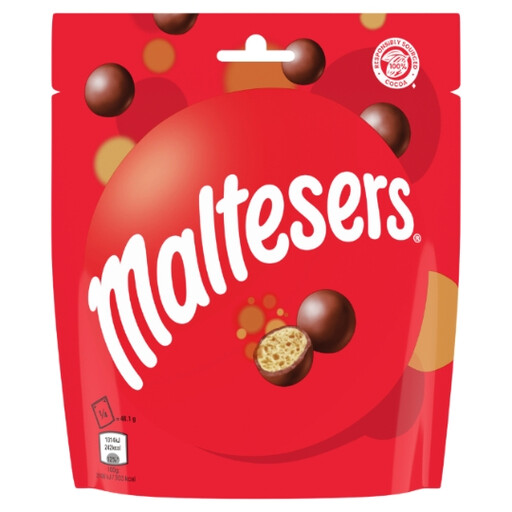
Bag of MALTESERS milk chocolate balls with a honeycomb centre

MALTESERS, 192,5 g bag of chocolate balls

A bag of milk chocolate balls to pour into a bowl for informal sharing.

The title states 192,5 g, while the description says 192 g, so check the weight on the exact pack. Also check the ingredients if any guests need to avoid milk, soya, barley or wheat.

View on Joybuy
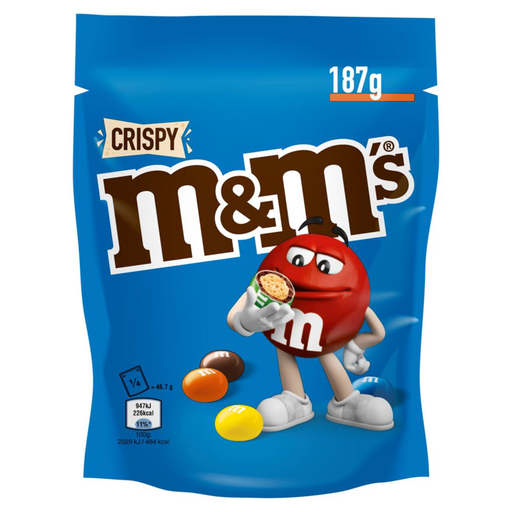
187 g bag of M&M's Crispy

M&M's Crispy, 187 g bag

This bag of crispy chocolate confectionery is ideal for serving when everyone can help themselves.

To compare sugars with another chocolate, check the values per 100 g on the exact pack. Also check the allergens and any ‘may contain’ information before serving to guests.

View on Joybuy
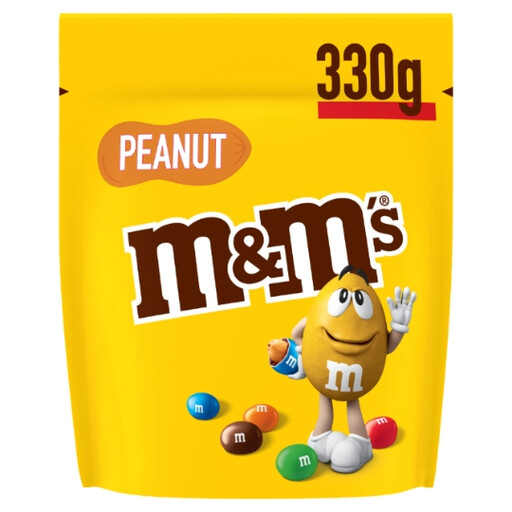
330 g bag of M&M'S PEANUT milk chocolate-coated peanuts

M&M'S PEANUT, 330 g bag

This bag of milk chocolate-coated peanuts can be shared with a group if its ingredients are suitable for everyone.

As it contains peanuts, check for allergies; also check the information about other nuts. To compare nutritional values, use the per 100 g information on the exact pack rather than an uncertain per-serving value.

View on Joybuy
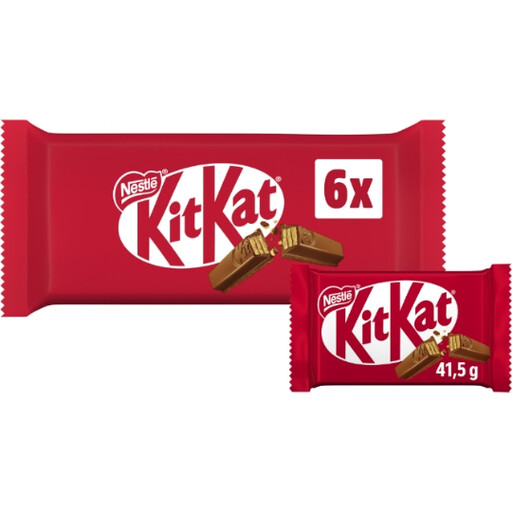
Multipack of six 41,5 g KitKat chocolate bars

KitKat, 6 chocolate bars, 41,5 g each

The six-bar multipack gives you a set number of portions to plan how you’ll serve at the table; it isn’t a bag of mini chocolates.

If individual wrapping matters to you, check the pack format. Also check the information about wheat, milk and any traces before serving.

View on Joybuy
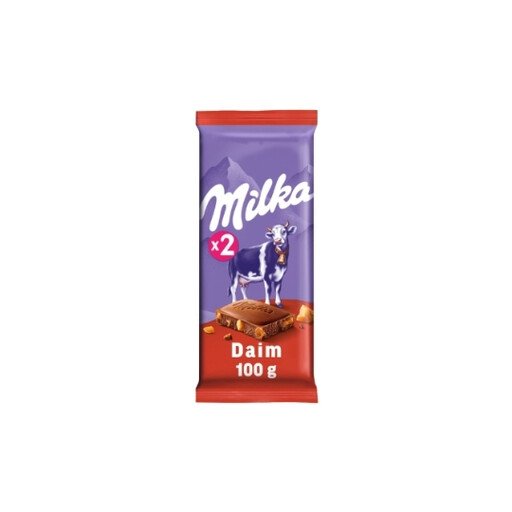
Multipack of two 100 g MILKA I737 milk chocolate bars

MILKA I737, 2 × 100 g milk chocolate bars

This multipack is a good fit if you’d rather open the bars as you go and serve the pieces yourself.

It contains two 100 g bars to break up and share out. Check the information about milk, hazelnuts, soya and any traces on the exact pack.

View on Joybuy

Frequently asked questions

Does the ‘soda tax’ apply to chocolate bars and bags?

No. The French Ministry of the Economy describes this levy as applying to sugary drinks. To choose between these chocolates, compare their sugars in the nutrition declaration instead.

Is Nutri-Score compulsory on chocolate sold in France?

No. According to the DGCCRF, Nutri-Score is voluntary in France. However, a nutrition declaration is required for most pre-packed foods, so check it even if the logo isn’t displayed.

How do you compare a chocolate bar with a bag of a different size?

Start by comparing their nutritional values per 100 g, the basis for presentation specified by the DGCCRF. Then check the net weight, number of pieces and how much you plan to serve.

What should you check if a guest has an allergy?

Read the ingredients and highlighted allergens on the exact pack, as well as any ‘may contain’ information. For an assortment, check every recipe rather than assuming they all contain the same ingredients.

What does ‘best before’ mean on an unopened pack?

This refers to a best-before date, known in France as a DDM, which is different from a use-by date. The DGCCRF states that a product doesn’t automatically become unfit to eat after its best-before date if the packaging is intact. Check the condition of the pack and the manufacturer’s instructions.