Hosts preparing melted chocolate
For a warm sauce or topping, look for a bar specifically intended for baking. Lindt, for example, recommends its DESSERT range for this purpose.


For topping crêpes with melted chocolate, choose a bar labelled for baking or desserts. If your guests would rather nibble at the table, a sharing bag of bites serves a different purpose: its format doesn’t guarantee that it’s suitable for melting. In either case, check the allergens on the specific product you buy, and compare the nutritional values per 100 g if that matters to you.
For a warm sauce or topping, look for a bar specifically intended for baking. Lindt, for example, recommends its DESSERT range for this purpose.
Individual bites can be put on the table and served without needing to melt them. A sharing bag is a handy extra with crêpes, but it’s not a substitute for chocolate intended as a topping.
Ingredients vary between bars and sharing bags. Before serving your guests, check the ingredients and allergen information on the packaging of every product you’ve chosen.
First decide whether you’ll melt the chocolate or serve it as it is. Then check the ingredients and choose a format that suits how you plan to use it.
| What to consider | What to check | Who is it for? |
|---|---|---|
| Cooking use | Look for a “baking” or “dessert” label, and check the recommended use for the product you choose. | If I’m making a warm topping, I need chocolate intended for cooking rather than bites to put on the table. Around 36% of consumers prioritise this culinary use. |
| Allergens | Read the ingredients and allergen information on the packaging, including any “may contain” warnings. | If a guest needs to avoid an ingredient, the composition of the product takes priority over its format or flavour. This is the main concern for around 29% of consumers. |
| Sharing with no preparation | Check the net weight and type of bites, then make sure the product is ready to serve as it is. | If I want everyone to be able to nibble during the evening, I prefer something ready to put on the table. Immediate sharing is the top priority for around 21% of consumers. |
| Nutritional information | Compare sugars and fat per 100 g between products intended for the same use; check the Nutri-Score if one is shown. | If I want to compare two products, using the same 100 g basis is more useful than looking only at pack sizes. Around 14% of consumers prioritise this nutritional information. |
A bag of bites is designed for serving at the table. It may not be suitable for the same uses as a baking bar, such as Lindt’s DESSERT range.
First choose between a melted topping and ready-to-serve bites, then check the stated use of the specific product.
According to Santé publique France, displaying the Nutri-Score is voluntary. Its absence is no reason to skip the nutritional information.
When comparing relevant pre-packed products, check the nutrition declaration per 100 g, particularly the sugars and fat.
Depending on the product, bars and bites may contain milk, soya, nuts or a warning relating to wheat. The brand or colour of the chocolate isn’t enough to tell you what it contains.
Ask your guests about any dietary restrictions, and keep the packaging handy so you can check the product being served.
Article 1613 ter of the French General Tax Code, published by Légifrance, applies to drinks and liquid preparations for drinks covered by this levy, not to solid chocolate bars and bags.
When choosing your chocolate, check its ingredients and nutritional values per 100 g instead.
Lindt presents its DESSERT Noir 51% and Noir Intense 70% bars, both 200 g, as chocolate for baking.
The range includes a 205 g Noir Dessert bar listed by Carrefour and a 170 g white baking chocolate bar featured on Joybuy.
Carrefour lists a 200 g Carrefour Original Noir Dessert chocolate bar.
E.Leclerc’s baking range includes a 200 g Noir Dessert bar and a multipack of 3 × 200 g bars.
Carrefour describes the 320 g Milka Mini Délices as an assortment of bites to share.
These products suit two ways of serving chocolate on crêpe night: a bag of bites to nibble on, and dessert or baking bars for preparing a topping.
 Image unavailable
Serve these ready-to-eat bites alongside your crêpes without having to prepare melted chocolate. The listed ingredients include milk, soya and wheat; check the allergens and net weight on the packaging of the product you buy.
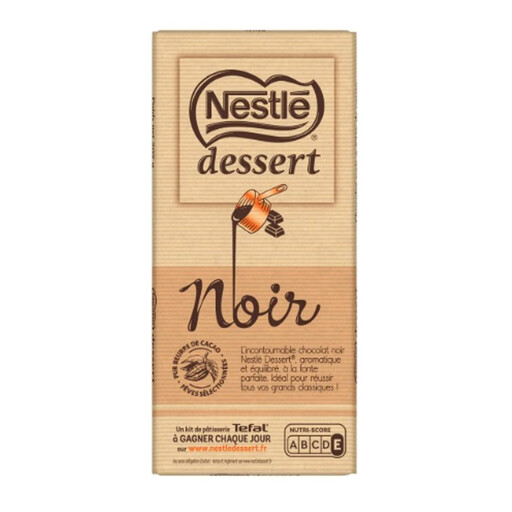 Image unavailable
Make a chocolate topping with a dessert bar rather than serving bites. This 205 g product may contain milk and nuts, so check the packaging if these allergens are a concern for your guests.
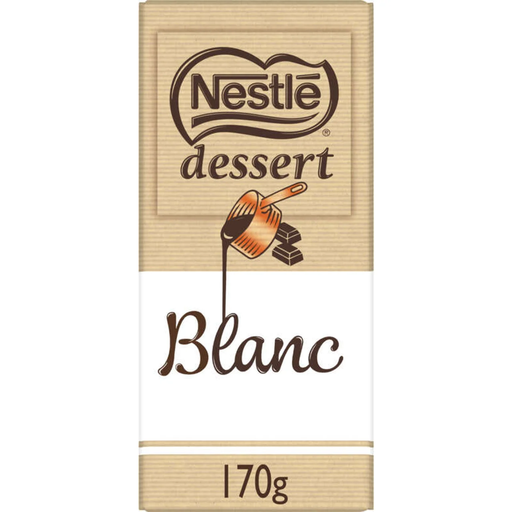 Image unavailable
For baking with white chocolate, rather than serving as sharing bites. This 170 g bar contains milk and may contain egg, gluten and nuts; check the packaging information before serving it.
It can go alongside your crêpes if you want chocolates to nibble on, but its format doesn’t guarantee that it’s suitable as a melted topping. For that, look for a bar labelled for baking or desserts.
Start by comparing bars intended for similar uses, then check their cocoa content, ingredients, allergens and nutritional values per 100 g. For example, Lindt describes its DESSERT Noir 51% as milder and its Noir Intense 70% as more full-bodied; these are the brand’s descriptions of these products.
Read the ingredients and allergen information on the packaging of every product you’re serving. According to the DGCCRF, allergenic ingredients must be emphasised in the ingredients list of relevant pre-packed foods. Don’t assume that another variety from the same brand has the same ingredients.
No. According to Santé publique France, displaying it is voluntary. For relevant pre-packed foods, the nutrition declaration lets you compare sugars and fat per 100 g, among other things, as explained by the DGCCRF.
No, not to the solid chocolate bars and bags discussed here. Article 1613 ter of the French General Tax Code, published by Légifrance, covers drinks and liquid preparations for drinks subject to this levy.