What should you check before choosing?
Start by considering how long you have before exercising and how much you plan to eat. Then compare the flavour you’re looking for and the labels on the bars you’re interested in.
| Factor |
What to check |
Who is this for? |
| Timing and tolerance |
Time before your session, the portion you plan to eat and the fat listed per 100 g. |
When my session is coming up, I want to avoid choosing a bar without considering how well I’ll digest it. Around 33% of consumers would put timing and tolerance first. |
| Cocoa flavour |
The chocolate description, the stated cocoa percentage and the ingredients. |
If I’m looking for a stronger cocoa flavour than white chocolate offers, I could consider a dark chocolate bar and accept its bitterness. Around 25% of consumers would prioritise flavour. |
| Ingredients and nutrition |
Sugars and fat per 100 g, the amount you’ll eat and any allergen information. |
To choose between two recipes, I want to know what my portion contains and spot any ingredients I need to avoid. Around 25% of consumers would prioritise checking the label. |
| Format and availability |
The pack size and whether it’s available when you shop. |
If I need a small amount that’s easy to take with me before a session, the format on offer and how easy the bar is to find will guide my choice. Around 17% of consumers would put access to their preferred format first. |
White and dark chocolate bars on Joybuy
These products let you compare white chocolate with dark chocolate bars labelled 70% or 85% cocoa. If you want a snack before exercising, choose based on timing, your tolerance and the recipe that suits you, rather than cocoa intensity alone.
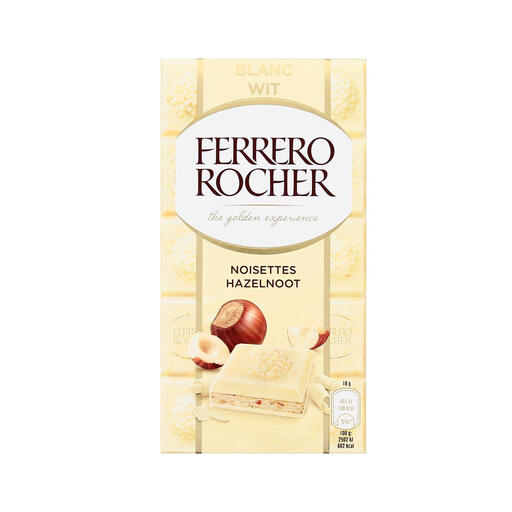 Image unavailable
Ferrero Rocher White Block, 90 g
Worth considering if you prefer white chocolate and want to look at a recipe with hazelnuts. Milk, hazelnuts and soya are listed for this product. Check the allergen information on the pack and adjust the amount to suit how long you have before your session.
View on Joybuy
 Image unavailable
Lindt EXCELLENCE 70% Dark, mini 35 g
The 35 g size may suit you if you’re looking for a small bar with a pronounced cocoa flavour. The product information warns that it may contain traces of nuts, milk and soya. A smaller size doesn’t guarantee that you’ll tolerate it well just before exercise.
View on Joybuy
 Image unavailable
Poulain Fine Dark 70%, 100 g
This bar may suit you if you’re looking for dark chocolate labelled 70% cocoa. The recipe contains maltitol and warns that excessive consumption may have a laxative effect. Bear this in mind, along with your own tolerance, if you’re thinking of eating some before training.
View on Joybuy
 Image unavailable
Lindt EXCELLENCE 85% Dark, 100 g
Consider this if your main priority is a stated cocoa content of 85%. That figure alone isn’t enough to judge whether it’s a suitable pre-exercise snack: check the nutrition information, how much you’ll eat and how long you have before your session.
View on Joybuy
Frequently asked questions
Does the tax on sugary drinks apply to a chocolate bar in France?
No. Article 1613 ter of the General Tax Code, published on Légifrance, applies to drinks and liquid preparations for drinks under the conditions it sets out. It does not apply to a solid chocolate bar. To find out how much sugar a bar contains, check its nutrition information.
Is Nutri-Score compulsory on chocolate?
No. According to Santé publique France, producers display Nutri-Score voluntarily. The European Commission says that nutrition declarations are required for the vast majority of pre-packed foods. Check them for information such as fat, carbohydrates and sugars, and don’t draw conclusions based only on whether the logo is present.
What should I look at if I eat chocolate before training?
First, consider how long you have before your session, how much you plan to eat and how well you tolerate it. In its report on diet and exercise, the European Commission’s Scientific Committee on Food describes a pre-exercise meal eaten no later than 2 to 3 hours beforehand as easy to digest and rich in carbohydrates. Cocoa percentage alone doesn’t tell you whether these criteria are met.
Which allergens should I check in white or dark chocolate?
Read the ingredients and any ‘may contain’ warnings on each pack. The products featured here may contain milk, hazelnuts or other nuts, depending on the product. Don’t guess the allergens from the colour of the chocolate.


