If you fancy a treat to enjoy on your own while shopping for a drinks party, start by checking the bar size: a smaller pack means you won’t have to open a bar and then find somewhere to store the rest. If you’re planning to serve a few squares or offer a choice of flavours, a larger bar gives you more flexibility. Just check the ingredients, allergens and nutrition information per 100 g for the exact product.
Which size is right for you?
For a single serving
If you want to enjoy some chocolate without opening a large bar, look for smaller individual packs. Carrefour, for example, stocks a 25 g Milka milk chocolate bar. Its weight is quite different from that of a standard bar you break into squares.
For comparing dark chocolate
If you’re happy to break off a few squares and keep the rest, compare the cocoa percentage, ingredients, and the sugars and fat listed per 100 g. Lindt’s EXCELLENCE Dark range includes 100 g bars with 78% and 90% cocoa.
For a varied tasting selection
If you want to offer different textures after savoury food, check the recipes and bar sizes before planning how to serve them. Nestlé’s Les Recettes de l’Atelier range includes products with nuts, caramel, candied fruit or biscuits. Check the ingredients for each recipe if any guests need to avoid particular allergens.
What should you look for in store?
For a treat just for you, start with the net weight. Then compare the taste and ingredients of bars in a size that suits how you plan to serve them.
| What to consider |
What to check |
Who is it for? |
| Individual portion |
The net weight and number of bars in the pack: a 25 g bar isn’t served in the same way as a 100 g bar. |
If I want a treat to enjoy on my own while shopping, I’d rather not open a bigger bar than I need. Around 40% of consumers prioritise having an individual portion. |
| Taste and sharing |
The type of chocolate, stated cocoa percentage, inclusions and whether the bar can be broken into squares. |
If I want to round off the drinks party by offering a few squares, I’m mainly looking for a recipe and texture that suit the occasion. Taste or sharing is the priority for around 30% of consumers. |
| Ingredients and allergens |
The ingredients, any “may contain” statements, and the sugars and saturated fat per 100 g for the products you’re comparing. |
If a guest needs to avoid an ingredient, or I want to compare the sugars in two recipes, the label on each bar is key. Around 30% of consumers prioritise ingredients or allergens. |
The cocoa percentage doesn’t tell you everything about a recipe’s nutritional values. For one product-specific example, Lindt France lists 7 g of sugars and 30 g of saturated fat per 100 g for its 100 g EXCELLENCE Dark 90% bar. When comparing it with another bar, use the figures on the other product’s label, on the same per-100 g basis.
Common mix-ups to avoid
-
Assuming every bar is an individual portion
The sizes listed by Carrefour and E.Leclerc range from a 25 g Milka bar to bars weighing 80 g, 100 g or 200 g. With a larger bar, you’ll need to decide how many squares to serve and what to do with the rest.
If you’re looking for a single portion that’s ready to eat, check the net weight and the number of bars in the pack.
-
Assuming you can tell the allergens from the chocolate’s colour
Dark chocolate isn’t necessarily free from milk, soya or nuts. Lindt France’s product information for EXCELLENCE Dark 90% notes that it may contain traces of these ingredients.
Read the ingredients and any “may contain” statements on the packaging of the recipe you choose, even if you already know the brand.
-
Expecting every chocolate bar to carry a Nutri-Score
According to Santé publique France, producers display the Nutri-Score on a voluntary basis. If the logo isn’t there, you’ll still need to check the nutrition information.
If it is shown on the pack, consider it alongside the ingredients list and figures per 100 g, rather than using it as your only guide.
-
Assuming the soft drinks tax applies to chocolate
The French Ministry of the Economy describes this levy as applying to sugary drinks, not chocolate bars.
To compare two bars, check the sugars per 100 g rather than using a rule designed for drinks.
Brands and ranges to know
These examples show the different sizes and recipes available. A brand name alone isn’t a substitute for checking the specific bar you’re buying.
Milka
Carrefour stocks a 25 g Milka milk chocolate bar, which is smaller than the brand’s larger formats.
- The 25 g size is a good option if you’re looking for a small portion to enjoy on your own.
- Carrefour’s product information lists milk, soya and hazelnuts, and notes that the bar may contain traces of other nuts and wheat.
Lindt
The EXCELLENCE range offers 100 g dark chocolate bars to compare, including varieties with 78% and 90% cocoa, according to Lindt France.
- The product information for EXCELLENCE Dark 90% gives sugar and saturated fat figures per 100 g, which you can use to compare labels.
- This 100 g bar isn’t an individual portion. Lindt also notes that it may contain traces of nuts, milk and soya.
Nestlé
Nestlé describes Les Recettes de l’Atelier as a range of bars featuring, depending on the recipe, nuts, caramel, candied fruit or biscuits.
- These recipes offer different textures to consider if you’re putting together a tasting selection for a group.
- The weight and ingredients vary by recipe, so check the packaging of the one you choose before planning portions or checking for allergens.
Côte d’Or
Carrefour stocks Côte d’Or Noir L’Original in 100 g and 200 g sizes, as well as a 90 g organic 70% dark chocolate bar.
- The stated weights make it easier to choose a bar to break into portions for the number of people you’re serving.
- Carrefour’s product information for the 100 g Noir L’Original lists soya and skimmed milk powder, and notes that it may contain traces of nuts.
Carrefour
The retailer offers bars under its own ranges, including Selection dark chocolate bars with different cocoa percentages.
- Carrefour’s range lets you compare different recipes and sizes, including 80 g Selection bars.
- A supermarket own-brand bar isn’t automatically a small portion, so check the weight of the product you choose.
Leclerc
E.Leclerc’s Marque Repère range includes 100 g Equador dark chocolate bars with 72% or 85% cocoa.
- These bars give you two cocoa percentages to compare in the same 100 g size.
- You’ll need to break up the 100 g bar if you only want a small amount. Check the label for the exact recipe.
Chocolate bars to consider on Joybuy
These options include a small dark chocolate bar for a treat on your own, as well as larger bars to break into squares, including one with hazelnuts. Choose according to how much you plan to serve, and check the label of the product you select.
 Image unavailable
Lindt Excellence Dark 70%, 35 g
Worth considering if you’re looking for a small bar to take with you for a treat on your own. The product name indicates 70% cocoa and a weight of 35 g. If you need to avoid an allergen, check the ingredients and any trace warnings on the packaging.
View on Joybuy
 Image unavailable
Lindt Excellence Dark 85%, 100 g
Worth considering if you’d rather serve a few squares and keep the rest than choose a small individual bar. The product name indicates 85% cocoa and a weight of 100 g. Check the ingredients list and allergen statements on the exact packaging.
View on Joybuy
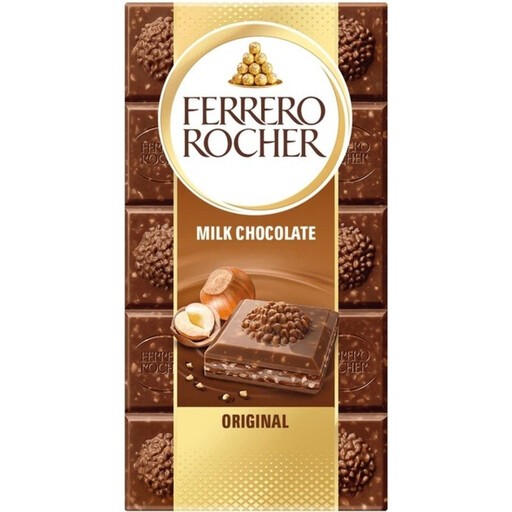 Image unavailable
Ferrero Rocher Original, 90 g bar
Worth considering if you’d like to offer a bar with hazelnuts to break into portions, rather than a pre-portioned individual treat. The product name indicates a weight of 90 g. Check the label if milk, hazelnuts, soya or other nuts need to be avoided.
View on Joybuy
Frequently asked questions
Is Nutri-Score compulsory on chocolate bars in France?
No. Santé publique France says that producers display the Nutri-Score on a voluntary basis. If the logo isn’t shown, check the nutrition information and ingredients on the pack.
Does the soft drinks tax apply to chocolate bars?
No: the levy described by the French Ministry of the Economy applies to sugary drinks. For a chocolate bar, you can compare the sugar content shown on its label with that of another recipe.
How should I choose a bar if a guest needs to avoid certain allergens?
Read the ingredients and any “may contain” statements on the packaging of the exact product. For example, Carrefour says its 25 g Milka milk chocolate bar contains milk, soya and hazelnuts, and may contain other nuts and wheat. This information doesn’t apply to every Milka bar.
Is 25 g or 100 g better for a treat on your own?
Choose a small bar if you want an individual portion without opening a larger one. A 100 g bar works if you’d like to serve a few squares or compare a wider choice of recipes, as long as you plan to store the rest according to the packaging instructions.


