People sharing an afternoon treat
If you need to cater for different tastes, look at the number of chocolates and the recipes included rather than the size of the box alone.


For sharing at afternoon tea, choose an assortment if your guests would like a choice of different recipes. If they have more specific tastes, opt for a box focused on hazelnut, praline or dark chocolate. First, check for any ingredients that guests need to avoid, then compare the sugars and fat per 100 g: the presentation of the box is no substitute for this information.
If you need to cater for different tastes, look at the number of chocolates and the recipes included rather than the size of the box alone.
To compare two products, check their ingredients and nutritional information per 100 g, particularly the sugars and fat.
Before choosing an assortment, check the ingredients for the exact product. Some chocolates contain milk, nuts, wheat or soya, for example.
First, decide whether your guests would like a variety of recipes or prefer a particular flavour. Then check the label on each box you’re considering.
Choose this: when several people would like different chocolates from the same box.
Bear in mind: recipes may have different ingredient lists. Check the whole box if anyone needs to avoid a particular ingredient.
Choose this: if your guests are particularly keen on these flavours or would like a chocolate with a wafer, such as the Ferrero Rocher product described by Carrefour.
Check: this product contains milk, hazelnuts, wheat and soya, among other ingredients.
Choose this: if a clear preference for dark chocolate matters more than having a variety of chocolates.
Check: the word ‘dark’ alone doesn’t tell you about the sugars or allergens in the recipe.
| What to consider | What to check | Who is it for? |
|---|---|---|
| Nutritional information | Compare the sugars and fat per 100 g on the boxes you’re considering. | If I want to choose between two recipes without relying on their packaging, the nutritional information gives me a useful basis for comparison. Around 43% of consumers prioritise checking this information. |
| Ingredients to avoid | Read the ingredients list and allergen information for the exact product. | If a guest needs to avoid an ingredient, I need to be able to rule out the box before serving it. Avoiding an unsuitable ingredient would be the top priority for around 29% of consumers. |
| Size and variety | Check the net weight, the stated number of chocolates and the recipes included. | When serving several people with different tastes, I look for a suitable quantity and assortment. Finding the right option to share would come first for around 28% of consumers. |
In France, the Ministry of the Economy says that displaying Nutri-Score is voluntary. Its absence does not mean that nutritional information is missing.
Check the nutrition declaration, which the DGCCRF says is compulsory for most pre-packed foods, and compare products per 100 g.
Smart packaging and a wide choice of recipes don’t tell you how much sugar or fat the chocolates contain.
Compare the nutritional information for the boxes you’re actually planning to buy, then choose how much to serve for your afternoon tea.
Different chocolates in the same box may contain different ingredients. The Ferrero Rocher product information provided by Carrefour lists milk, hazelnuts, wheat and soya, among other ingredients.
Check the label on the exact box, even if you’re already familiar with another size or assortment from the same brand.
The Ministry of the Economy describes this French levy as applying to sugary drinks, not boxes of chocolates.
To find out how much sugar a box contains, check its nutrition declaration instead.
LINDOR and Champs-Élysées gift boxes are designed for sharing, with several recipes available depending on the product.
The Ferrero Rocher product described by Carrefour combines milk chocolate, hazelnut and wafer.
The retailer offers boxes of chocolates and chocolate clusters, including an EQUADOR assortment.
Carrefour is a retailer whose product information can help you check branded products, including Ferrero.
The retailer offers gift boxes from several brands, so you can compare their sizes.
These two assorted options are ideal if you’re looking for chocolates to share at afternoon tea. The second contains both chocolates and toffees, so bear this in mind if you’re looking for chocolates only.
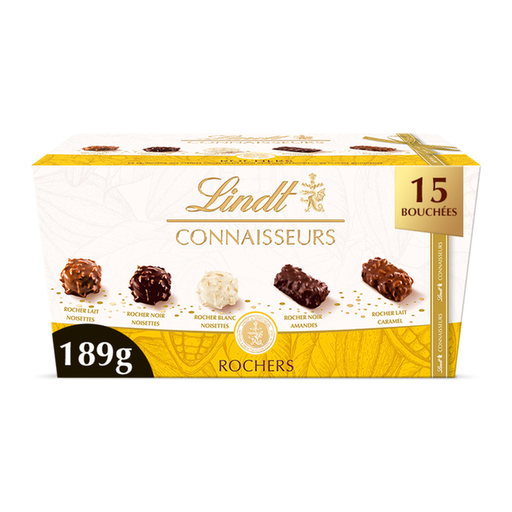 Image unavailable
This box of assorted rochers is a good choice if you’d like to serve a selection of chocolates at afternoon tea. It contains 189 g. Check the number of chocolates and the ingredients on the exact box to help you plan how to share them and take account of any ingredients that need to be avoided.
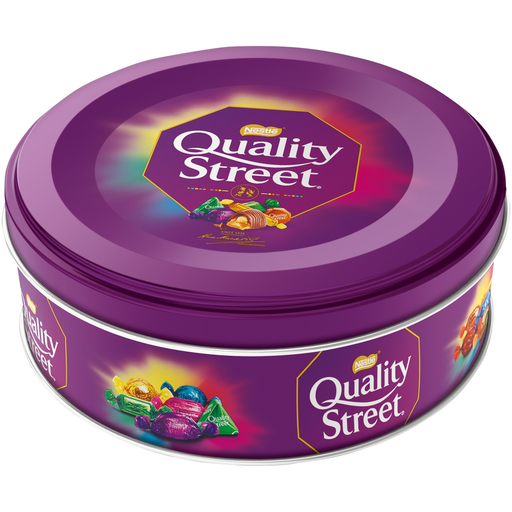 Image unavailable
This 400 g tin is a good choice for afternoon tea if you’re happy to serve chocolates and toffees together. If you’re looking for chocolates only, or a guest needs to avoid certain ingredients, check the contents and label for this product before choosing it.
No. In France, the levy known as the ‘soda tax’ applies to sugary drinks, as the Ministry of the Economy explains. It doesn’t apply to a box of chocolates. To compare the sugar content of two boxes, check their nutritional values per 100 g.
No. According to the Ministry of the Economy, displaying Nutri-Score is voluntary in France. The DGCCRF says that a nutrition declaration is compulsory for most pre-packed foods, however. It’s the best place to start when comparing the sugars and fat per 100 g.
Before buying, read the ingredients and allergen information on the exact box. Recipes vary: for example, Carrefour’s Ferrero Rocher product information lists milk, hazelnuts, wheat and soya.
Follow the storage instructions on the packaging of the product you’ve bought. Pay particular attention to them if the box needs to be kept for several days before serving.