Those who want a coated biscuit
If an outer layer of chocolate matters more to you than a filling, look for a product description that confirms the biscuit is coated. Then check the pack weight to help you choose how much to serve.


For a night in front of the TV, choose a biscuit described as coated if you want chocolate around the outside of the biscuit or wafer. A filled biscuit is better suited to those who prefer a chocolate filling, but that doesn’t guarantee an outer coating. To compare products, check their descriptions, ingredients and allergen information, nutritional values per 100 g and pack weight.
If an outer layer of chocolate matters more to you than a filling, look for a product description that confirms the biscuit is coated. Then check the pack weight to help you choose how much to serve.
If you’re buying for several people, compare the net weight and, where stated, the number of biscuits or individual packs. A box and a multipack won’t necessarily divide up in the same way.
The ingredients list and allergen information apply to the specific recipe. Compare nutritional information per 100 g; if a Nutri-Score is shown, you can use it as an additional guide.
First, distinguish between a coating, a topping and a filling. Then compare the labels and pack sizes of products that match your preference.
| What to consider | What to check | Who is it for? |
|---|---|---|
| Coating | The product description and whether it confirms the biscuit has a chocolate coating. | I want chocolate on the outside, not just a filling: around 31% of consumers make the coating their top priority. |
| Ingredients | Sugars and fat per 100 g, as well as the ingredients and allergen information for the specific product. | If any guests need to avoid certain ingredients, I check the label before serving. For around 31% of consumers, ingredients are the priority. |
| Quantity | The net weight and, where stated, the number of biscuits or individual packs. | I’m putting together a selection for several people and want to know how much is in each pack; around 23% of consumers prioritise this. |
| Serving | The shape of the biscuits and whether they come in individual wrappers. | When handing biscuits round in front of the TV, I prefer a format that’s easy to share; around 15% of consumers put ease of serving first. |
A filling is inside the biscuit, while a coating is on the outside. A topped biscuit, meanwhile, may have chocolate on only part of its surface.
If you’re looking for a coating, check that it’s confirmed in the product description, then read the ingredients.
In France, the DGCCRF describes Nutri-Score as a voluntary label. It doesn’t replace detailed nutritional information or allergen checks.
Compare the nutritional information per 100 g and the ingredients list. Use Nutri-Score as an additional guide when it’s shown.
The levy described by BOFiP-Impôts applies to non-alcoholic drinks, including those with added sugars; it isn’t a factor when choosing these biscuits.
To compare two recipes, look at the sugars and other nutritional values shown on their packaging instead.
The packaging alone doesn’t tell you how many biscuits you’ll be able to serve. Carrefour, Auchan and E.Leclerc sell products in a range of weights and formats.
Check the net weight and, where stated, the number of biscuits or individual packs.
Carrefour describes LU Petits Cœurs Choco'Croc as milk chocolate-coated biscuits, in a 90 g box.
Carrefour lists Choco Suprême milk chocolate-coated wafers in a 180 g pack.
BN offers ranges including chocolate-filled biscuits, making them useful for comparing a filling with a coating.
The retailer’s biscuit range includes milk chocolate-coated wafers.
E.Leclerc offers P'TIT DELI milk chocolate-coated biscuit sticks, alongside other chocolate biscuits.
Auchan lists a 150 g product of chocolate-filled and coated wafers.
These products let you choose between chocolate-coated wafers, chocolate biscuits and a biscuit topped with a layer of white chocolate. If you want a full coating, make sure it’s not just a layer on top of the biscuit.
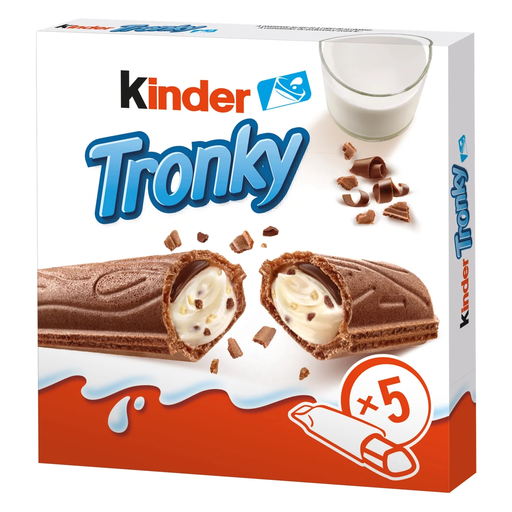 Image unavailable
For anyone who likes a wafer coated in milk chocolate. The pack is listed as 90 g; check the ingredients and allergen information on the packaging before sharing.
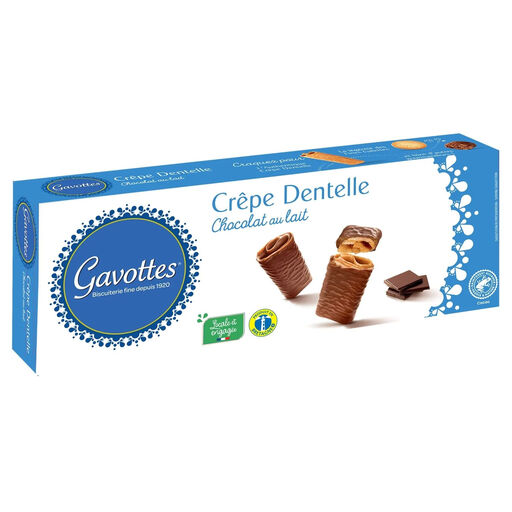 Image unavailable
For anyone who prefers a crisp crêpe dentelle wafer coated in milk chocolate. The title lists a pack of 6 with a weight of 90 g; check the exact pack contents and allergen information before planning how to serve them.
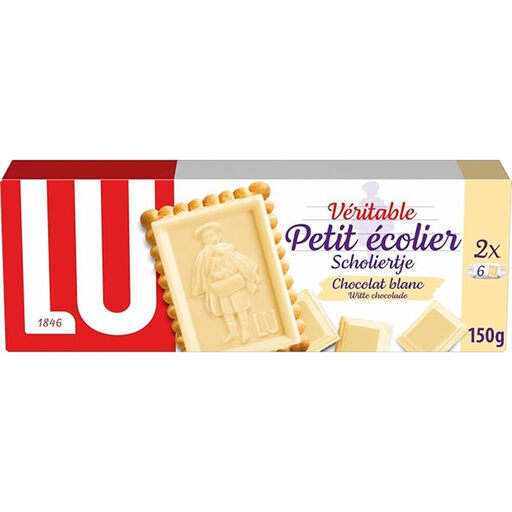 Image unavailable
For anyone looking for a biscuit topped with a layer of white chocolate. This description doesn’t confirm a full coating, so check that it matches the texture you want. The pack is listed as 150 g.
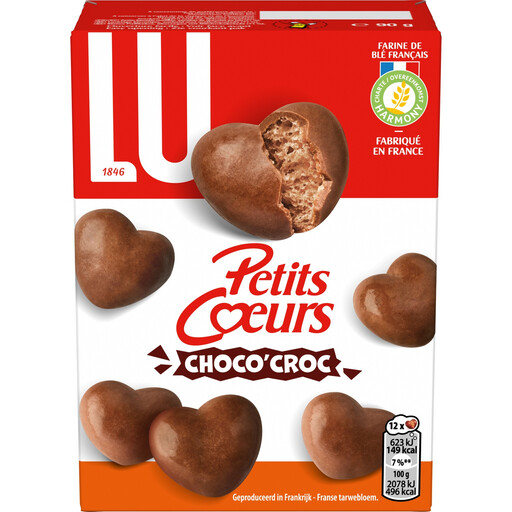 Image unavailable
For anyone looking for a biscuit coated in milk chocolate in a smaller pack. The pack is listed as 90 g; if you’re serving several guests, check whether that’s enough and read the allergen information.
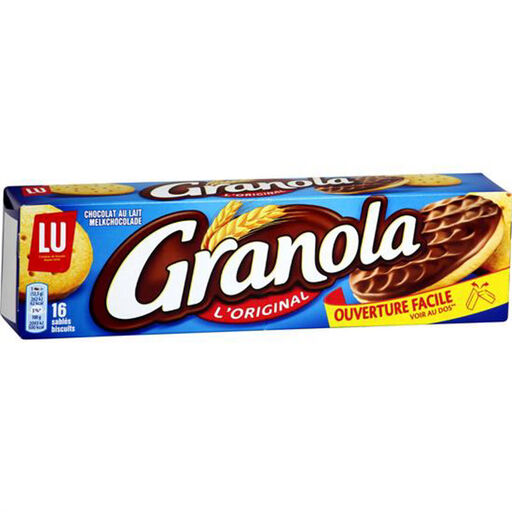 Image unavailable
For anyone who prefers a shortbread biscuit coated in milk chocolate. The pack is listed as 200 g; if you’re planning to serve one to everyone, check how many biscuits it contains and read the allergen information on the packaging.
No. The levy described by BOFiP-Impôts applies to non-alcoholic drinks, including those with added sugars, not biscuits. To compare biscuits, look at their nutritional information instead.
No. The DGCCRF says that Nutri-Score is voluntary. However, nutritional declarations are compulsory for most prepacked foods. Compare values per 100 g, and check the ingredients and allergen information separately.
Read the ingredients and allergen information on the packaging of the product you’re going to serve. Recipes vary, so don’t assume that information for one biscuit, wafer or other format applies to the one you’re buying.
Follow the storage instructions on the packaging of the product you’ve bought, including any guidance for after opening.