People keeping an eye on added sugars
If you’re adding biscuits to a dessert, distinguish between the claim ‘no added sugars’ and the amount of sugars shown in the nutritional information. One doesn’t replace the other.


To limit added sugars in a homemade dessert, you could consider a chocolate biscuit labelled ‘no added sugars’. However, this doesn’t mean it is sugar-free or lower in calories. Compare the sugars and other nutritional values per 100 g, then check the ingredients and allergens for the product you’ve chosen. According to Santé publique France, Nutri-Score is voluntary. If it appears on the pack, it can help you make your comparison, but it shouldn’t replace checking the full nutritional information.
If you’re adding biscuits to a dessert, distinguish between the claim ‘no added sugars’ and the amount of sugars shown in the nutritional information. One doesn’t replace the other.
Before serving a dessert to a group, check the ingredients list, any allergens highlighted on the pack and any ‘may contain’ warnings for the product you’re using.
For a base, filling or decoration, check the exact product and its ingredients. Nutritional information or a Nutri-Score rating alone won’t tell you what texture it will give your recipe.
First, choose a biscuit that suits the way you’ll use it in your baking, then compare the labels of the products you’re considering. The French Directorate-General for Competition Policy, Consumer Affairs and Fraud Control (DGCCRF) notes that nutritional values per 100 g make it easier to compare products.
| What matters to you | What to check | Who this is relevant to |
|---|---|---|
| Added sugars | The exact claim on the pack and the ‘sugars’ figure per 100 g; check the energy value too. | If I want to add a biscuit to a dessert while limiting added sugars, I need to understand what its claim actually guarantees. Around 36% of consumers make this their top priority. |
| Ingredients and allergens | The ingredients list, any allergens highlighted and any ‘may contain’ warnings. | If the dessert is for someone who needs to avoid an ingredient, I need to check the biscuit before adding it to the recipe. This is the top priority for around 29% of consumers. |
| How it works in the recipe | The product’s shape, texture and ingredients; try it out if you’re switching biscuits. | If I’m making a base or decoration again, I’m looking for a biscuit whose flavour and texture suit my recipe. Around 21% of consumers prioritise this. |
| Nutritional information | The nutritional information per 100 g; use Nutri-Score as an additional guide, if shown. | When comparing two packs, I want to be able to read their nutritional values rather than rely on the logo on the front alone. This is the main priority for around 14% of consumers. |
The claim alone doesn’t tell you how much sugar or energy the biscuit contains. For example, the product information for a GERBLÉ chocolate biscuit listed by Carrefour includes maltitol in its ingredients.
For the products you’re considering, compare the sugars, energy and fat per 100 g, then read the ingredients list.
According to Santé publique France, displaying Nutri-Score is voluntary. The DGCCRF distinguishes this guide from the nutritional declaration required for prepacked foods.
Use Nutri-Score if it’s shown, but base your comparison on the nutritional values and ingredients list.
A claim about sugars won’t tell you anything about allergens. This is especially important when a dessert will be shared.
Read the allergens highlighted on the pack and check for any ‘may contain’ warnings on the biscuit you’re going to use.
Carrefour lists a 126 g GERBLÉ soft dark chocolate biscuit labelled ‘no added sugars’.
LU is a biscuit brand to consider if your recipe calls for a chocolate biscuit in a format you already know.
Carrefour includes cereal biscuits with chocolate chips from Carrefour SENSATION in its nutrition-focused biscuit range.
These chocolate biscuits and chocolate wafer are worth considering for home baking, depending on the shape and texture you’re after. If you’re trying to reduce sugars, compare the label for each product before choosing. The product name alone doesn’t tell you whether it contains less sugar.
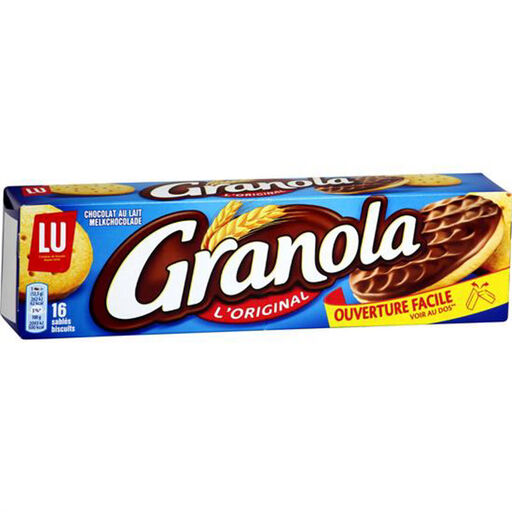 Image unavailable
Worth considering if you want to add a shortbread biscuit coated in milk chocolate to your recipe. Check the sugars per 100 g and the allergens on the pack before using it.
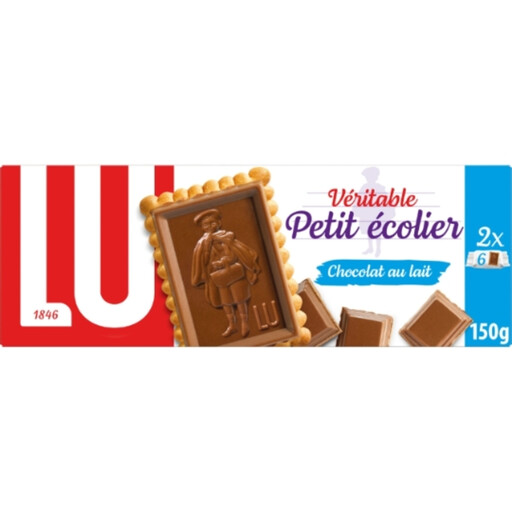 Image unavailable
This coated butter biscuit could work if your recipe calls for whole biscuits or pieces. To compare its ingredients with another product, read the ingredients list and nutritional values per 100 g.
 Image unavailable
Choose this product if your recipe calls for a wafer rather than a shortbread biscuit. Try it first if how well it holds together in the dessert matters. Check the sugars per 100 g and allergens on the pack.
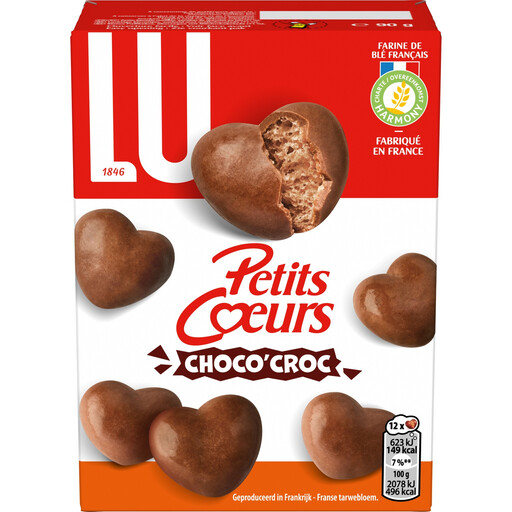 Image unavailable
The heart shape could make these a good choice if you want to use whole biscuits as decoration. If you’re crumbling them, check that their ingredients and texture suit your recipe.
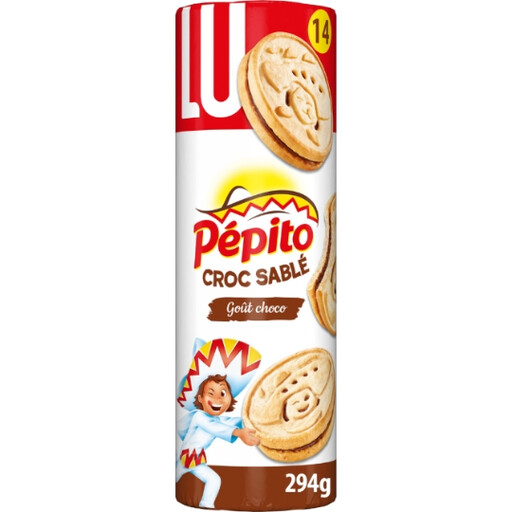 Image unavailable
This shortbread biscuit filled with milk chocolate is an option if you’re after this texture for biscuit pieces in a dessert. The 294 g pack makes it easier to plan quantities; compare the sugars per 100 g separately using the label.
No. According to Santé publique France, producers choose whether to display Nutri-Score. The DGCCRF explains that the nutritional declaration on prepacked foods helps you compare their values per 100 g. If Nutri-Score isn’t shown, you should still check this information.
Compare the sugars, energy and fat per 100 g, then check the ingredients and allergens. If you’re making a base or decoration, also make sure the biscuit’s shape and texture suit the way you plan to use it.
No. On the product information for the GERBLÉ chocolate biscuit listed by Carrefour, this claim relates to added sugars, not the absence of all sugars. Check the ‘sugars’ figure in the nutritional information for the product you buy.
Check the full ingredients list and nutritional values rather than judging the biscuit on this ingredient alone. If you’re replacing a biscuit you usually use in a recipe, try it out first to see if you like the flavour and texture.