If you’re looking for a chocolate-coated biscuit while doing a local shop, start by distinguishing a chocolate bar or coating from a chocolate filling or chocolate-flavoured icing. They won’t satisfy the same craving. To compare products, check the sugars per 100 g, the portion you’ll actually eat, the allergens and the pack format. Nutri-Score can provide an additional point of reference if it appears on the pack; according to Santé publique France, its use is voluntary in France.
Who is this guide for?
People comparing sugar content
When choosing between chocolate biscuits, check the sugars and energy per 100 g, then compare those figures with the amount you plan to eat. A per-biscuit figure is only useful for comparison if the portion size is stated.
People packing a snack to take out
For a break or a walk, the pack’s weight alone doesn’t tell you how practical it is. Check how many biscuits are inside and whether they come in individual wrappers if you don’t want to open the whole pack.
People who need to avoid certain allergens
Recipes and precautionary allergen warnings can vary between biscuits, even within the same brand. Check the ingredients and allergen information on the exact pack before you choose.
What should you look at first?
For a local shop, first decide what type of biscuit you want, then check the label and pack format that suit your needs.
| Criterion |
What to check |
Who it matters to |
| Sugars and nutritional information |
Sugars per 100 g and, if stated, the amount per portion; check Nutri-Score only if it appears on the pack. |
If I’m comparing several biscuits for a break, I want to be able to compare their sugar content on the same basis before choosing my portion. Around 36% of consumers would put this nutritional indicator first. |
| Portioning and portability |
Net weight, the number of biscuits and whether individual wrappers are included. |
If I’m taking a few biscuits with me or sharing the pack, I want packaging that suits my needs without assuming each biscuit is individually wrapped. Around 29% of consumers would put this need first. |
| Allergens and ingredients |
The ingredients, listed allergens and precautionary warnings on the exact pack. |
When I’m buying for someone who needs to avoid an ingredient, the exact recipe matters more than the brand name. Around 21% of consumers would prioritise this check. |
| Type of chocolate and texture |
The product description and, where stated, the proportions of biscuit, chocolate, filling or icing. |
If I want a chocolate bar on a biscuit, a simple filling or chocolate-flavoured icing might not be what I’m looking for. The type of coating would be the top priority for around 14% of consumers. |
What mix-ups should you avoid?
-
Confusing filled biscuits with coated biscuits
A chocolate centre, a chocolate bar on top of a biscuit and chocolate-flavoured icing are three different things. So a filled biscuit won’t necessarily meet your craving for a chocolate coating.
Check the product description and the proportions of the components, if stated, then choose the texture you’re really after.
-
Assuming Nutri-Score is compulsory
According to Santé publique France, producers choose whether to display Nutri-Score in France. If it’s not on the pack, you’ll still need to check the nutritional information and ingredients.
If it’s displayed, use it as an additional guide; also compare the figures per 100 g and check the allergens.
-
Guessing allergens from the biscuit’s name
The products described by Carrefour and Auchan list ingredients including wheat, milk or soya, depending on the recipe, as well as different possible traces. Dark chocolate or an organic recipe doesn’t guarantee that a product is free from allergens.
If you have an allergy or need to avoid an ingredient, check the information on the exact pack every time you buy it.
-
Using the soft drinks tax as a guide to biscuits
The French Ministry of the Economy describes the so-called ‘soft drinks tax’ as a measure that applies to sugary drinks. It can’t be used to compare the sugar content of biscuits.
Instead, check the ‘of which sugars’ line per 100 g and, if available, per biscuit or portion.
Brands and ranges to know
These examples help you tell the recipes apart. The details below apply to the specific products described, not every product made by each brand.
LU
The Petit Écolier range pairs a petit-beurre biscuit with a chocolate bar or coating.
- For the milk chocolate product described by Carrefour, the stated proportions are 52% petit-beurre and 48% milk chocolate.
- This product contains wheat, milk and soya, and may contain nuts. Check the variant you choose.
BN
The chocolate-filled product described by Auchan is a good fit if you’re after a chocolate centre, but not necessarily a chocolate coating.
- Auchan states that a 285 g pack contains 16 biscuits, with 5.4 g of sugars per 18.1 g biscuit.
- This product is listed as having no individual wrappers. It contains cereals with gluten and milk, and may contain nuts.
Oreo
The product described by Auchan layers a cocoa biscuit, a filling and milk chocolate-flavoured icing.
- Its stated composition distinguishes between 38% cocoa biscuit, 19% filling and 43% milk chocolate-flavoured icing.
- Auchan lists 49 g of sugars per 100 g for this product, which contains wheat, milk and soya, among other ingredients. Chocolate-flavoured icing shouldn’t be confused with a chocolate bar.
Carrefour Bio
The organic dark chocolate petit-beurre product described by Carrefour gives you another biscuit-and-chocolate recipe to consider.
- Carrefour states that this product contains 48% dark chocolate.
- It contains milk and wheat and may also contain soya, eggs, nuts, sesame and mustard. Organic labelling doesn’t tell you whether a product is suitable for an elimination diet.
Chocolate-coated biscuits on Joybuy
This selection on Joybuy includes biscuits with chocolate on a biscuit base, as well as sticks described as coated. To choose between a pack to take out and one to share, compare the packaging and the label for the variant you’re interested in.
 Image unavailable
Mikado Dark Chocolate, 75 g
If you want dark chocolate-coated sticks to take with you, the Joybuy listing describes individually wrapped sticks and gives an approximate weight of 7.5 g per stick, including 2.4 g of sugars. It lists wheat, milk and soya, as well as possible traces of nuts. If you have an allergy, check the exact packaging.
View on Joybuy
 Image unavailable
Petit Écolier Dark Chocolate, 150 g
If you’re looking for a dark chocolate bar on a biscuit, the Joybuy listing states that it contains 45% chocolate and 55% biscuit base. It provides nutritional information per 100 g and per 25 g portion. The ingredients include wheat, milk and soya; check the information on the exact pack.
View on Joybuy
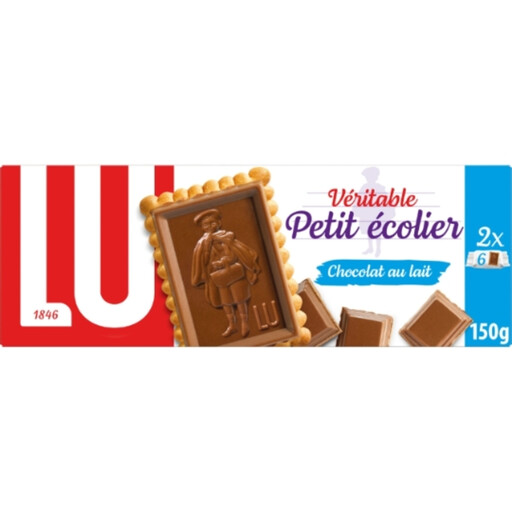 Image unavailable
LU Petit Écolier Milk Chocolate, 150 g
If you’re after a petit-beurre biscuit covered in milk chocolate, the Joybuy listing states that it contains 52% biscuit and 48% chocolate. It gives a sugar content of 39 g per 100 g, but not a figure per biscuit. The recipe includes wheat, milk and soya; also check the pack for any possible traces.
View on Joybuy
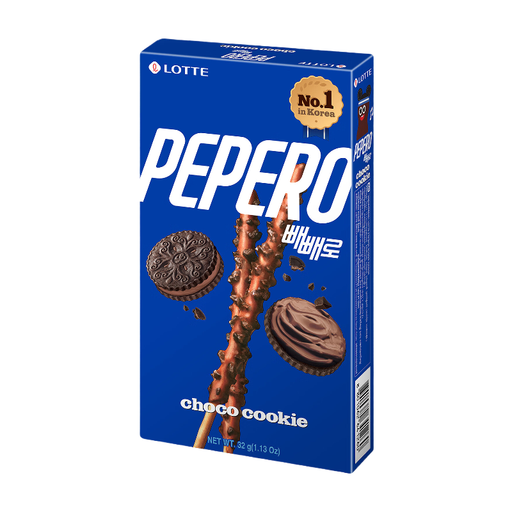 Image unavailable
LOTTE PEPERO Chocolate Cookie, 32 g
This small pack of chocolate-coated biscuit sticks is a good choice if you’re after a smaller format. The Joybuy listing gives a sugar content of 32.8 g per 100 g; this isn’t a figure per stick. It lists wheat, milk, almonds, peanuts and soya, as well as possible traces of eggs. Check the exact packaging.
View on Joybuy
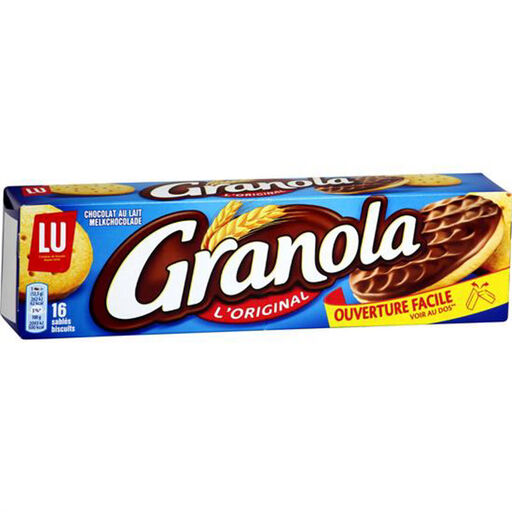 Image unavailable
LU Granola Milk Chocolate Shortbread, 200 g
If you prefer shortbread covered in milk chocolate, this product comes in a 200 g pack. The Joybuy listing gives a sugar content of 28 g per 100 g, but doesn’t specify the proportion of chocolate or the amount per biscuit here. It lists wheat, milk and soya, as well as possible traces of nuts. If you have an allergy, check the exact pack.
View on Joybuy
Frequently asked questions
Does the soft drinks tax apply to chocolate-coated biscuits in France?
No. The so-called ‘soft drinks tax’ described by the French Ministry of the Economy applies to sugary drinks, not biscuits under this measure. To compare biscuits, check the sugar content per 100 g on their labels.
Do biscuits sold in France have to display Nutri-Score?
No. According to Santé publique France, producers choose whether to display Nutri-Score. If it appears, you can use it as a guide, but also check the nutritional information, ingredients and allergens for the product you choose.
How should you store biscuits after buying them?
Follow the instructions on the pack. The biscuit listings described by Auchan recommend storing them away from heat and humidity, or in a cool, dry place. Check the instructions for the specific product you’ve bought.


