To choose a chocolate-coated biscuit for an evening treat, compare similar recipes: check the Nutri-Score if shown, the nutritional information per 100 g, how much you plan to eat and the allergens. In France, displaying the Nutri-Score is optional, according to Santé publique France, so its absence is no guide to a product’s nutritional quality. Manger Bouger recommends limiting products with a D or E rating, but neither texture nor the recipe name alone is enough to distinguish between other products.
Who is this guide for?
People who compare nutrition labels
You’d like to keep an evening chocolate biscuit as an option, while comparing the figures per 100 g and, when it appears on the pack, the Nutri-Score. Santé publique France confirms that displaying this logo is voluntary.
Fans of crunchy chocolate-coated biscuits
You’re looking for a crisp biscuit covered in chocolate rather than a filled biscuit or a soft cake. The product name and ingredients list can help you tell these recipes apart, even when they’re all described as chocolate-flavoured.
People who need to check for allergens
Check the ingredients on the exact pack before you choose. Wheat, milk, soya, hazelnuts and egg are among the ingredients listed for some of the products reviewed, but their presence varies by recipe.
What should you look at first?
For an evening snack, start with the type of recipe you fancy, then compare similar products and the amount you plan to eat.
| What matters to you |
What to check |
Who is it for? |
| Comparing nutritional information |
The Nutri-Score letter, if shown, followed by the nutritional information per 100 g for similar recipes. If there’s no logo, don’t assume a score. |
I want to compare two chocolate-coated biscuits without assuming the one without a logo has a good rating; around 46% of consumers put nutritional comparisons at the top of their needs. |
| How much you eat in the evening |
Energy and sugars per 100 g, then the pack size and how much you plan to eat. |
If I open a pack late in the evening, I want to know how much I’m actually going to eat, rather than relying on the size of one biscuit. Managing portion size is the priority for around 27% of consumers. |
| Recipe and allergens |
The description of the coating or icing, the ingredients list and any allergens highlighted on the packaging. |
I’m looking for a particular texture or need to avoid certain ingredients, so the exact recipe matters more to me than the name on the front of the pack. Around 27% of consumers prioritise ingredients and allergens. |
What mistakes should you avoid?
-
Assuming every pack has to display a Nutri-Score
France’s Directorate General for Competition Policy, Consumer Affairs and Fraud Control (DGCCRF) describes the Nutri-Score as a voluntary label in France. If it’s missing, that doesn’t tell you the biscuit’s score.
Check the letter if it’s there; otherwise, compare the nutritional information and ingredients of the products you’re interested in.
-
Assuming milk chocolate and chocolate-flavoured icing are the same
Product descriptions don’t necessarily indicate the same ingredients: Auchan describes one OREO product as having milk chocolate-flavoured icing, while E.Leclerc describes its P'TIT DELI sticks as coated in milk chocolate.
Read the product description and ingredients list before choosing a texture or type of coating.
-
Judging a biscuit’s nutritional content by its small size
The size of one biscuit doesn’t tell you how much you’ll eat. For specific products, Carrefour gives 496 kcal per 100 g for LU Petits Cœurs Choco'Croc, while E.Leclerc gives 508 kcal per 100 g for P'TIT DELI sticks; these figures don’t apply to all chocolate-coated biscuits.
Compare the figures per 100 g, then check the pack weight and how many biscuits you plan to eat.
-
Relying on the brand to check for allergens
Allergens depend on the recipe. L’Atelier St Michel lists gluten, milk, hazelnuts, soya and egg among the allergens in its chocolate madeleinettes with praline pieces; this doesn’t describe the brand’s other products.
Check the allergens highlighted on the packaging of the product you’re buying, even if you already know the brand.
Brands to know when comparing recipes
LU
A brand to consider for crisp chocolate-coated biscuits: Carrefour describes Petits Cœurs Choco'Croc as crunchy biscuits coated in milk chocolate.
- Carrefour gives 496 kcal per 100 g for this specific product.
- If you’re choosing by Nutri-Score, check the letter on the pack in question; the energy value alone won’t tell you what it is.
St Michel
Worth considering if you prefer a soft cake topped with chocolate to a crisp, coated biscuit.
- L’Atelier St Michel offers a chocolate madeleinette with praline pieces: it’s a different type of product.
- The brand lists gluten, milk, hazelnuts, soya and egg for this madeleinette. Check the ingredients if you need to avoid any of them.
BN
A name to look out for when comparing chocolate-filled biscuits, which are different from biscuits coated on the outside.
- BN Biscuits includes a chocolate-filled snack biscuit in its range.
- If you’re after a coated biscuit, check the description and recipe of the specific BN product rather than relying on the brand name.
Biscuits and other chocolate treats on Joybuy
This selection includes crisp biscuits covered in milk chocolate, chocolate-coated lace crêpes and a chocolate wafer. If you’re specifically looking for a crisp, coated biscuit, check the format before comparing the labels.
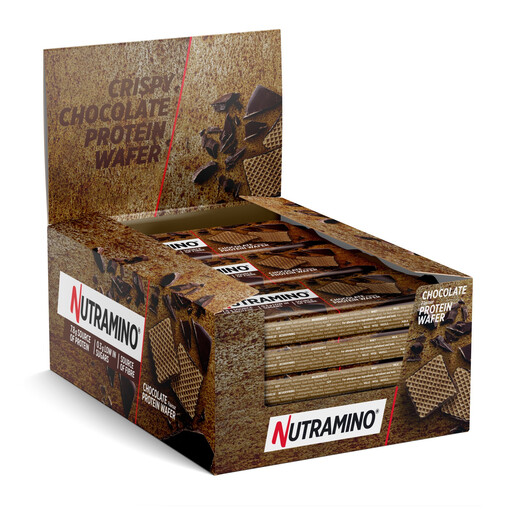 Image unavailable
Nutramino Protein Wafer Chocolate 12 × 39 g
Worth considering if you’re after a chocolate wafer rather than a shortbread-style biscuit: the recipe described combines wafer and milk chocolate.
Before choosing it for an evening snack, check how much you plan to eat and the Nutri-Score if it appears on the packaging. If you need to avoid wheat, milk, soya or hazelnuts, check the ingredients list on the pack.
View on Joybuy
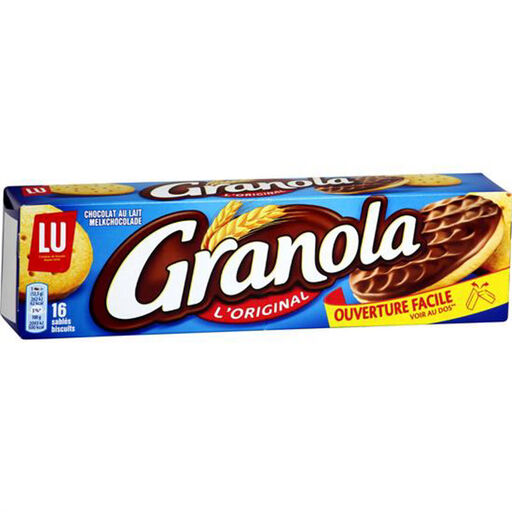 Image unavailable
LU Granola shortbread biscuits covered in milk chocolate 200 g
A format to consider if you’d like a shortbread biscuit covered in milk chocolate rather than a wafer or a filled biscuit.
Compare the nutritional information per 100 g with other coated shortbread biscuits, then decide how much to have. The recipe listed contains wheat, milk and soya and may contain nuts: check the label if this is relevant to you.
View on Joybuy
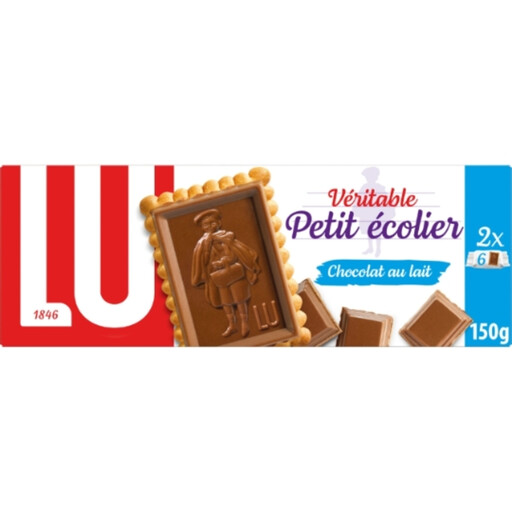 Image unavailable
LU Petit Écolier butter biscuit with milk chocolate 150 g
Compare it with other crisp biscuits if you prefer a butter biscuit topped with milk chocolate; it’s made differently from a fully coated biscuit.
Check the nutritional information and how much you plan to have as a snack. If you need to avoid wheat, milk or soya, check the ingredients on the exact pack.
View on Joybuy
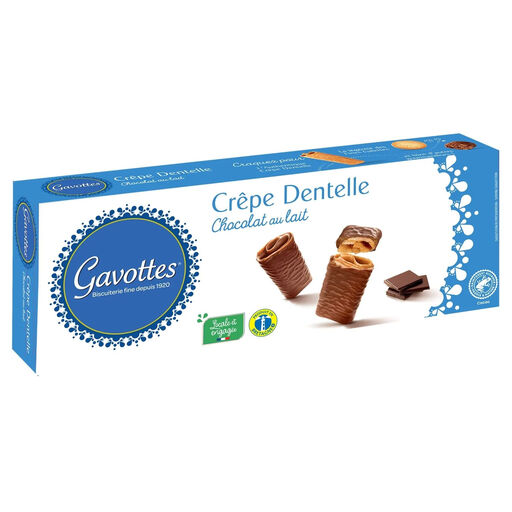 Image unavailable
Gavottes milk chocolate lace crêpes 90 g, pack of 6
This is a crisp lace crêpe coated in milk chocolate, rather than a shortbread biscuit.
To compare it with other chocolate treats, start with the figures per 100 g and how much you’ll eat. Also check the ingredients on the pack if you need to avoid wheat, milk or soya.
View on Joybuy
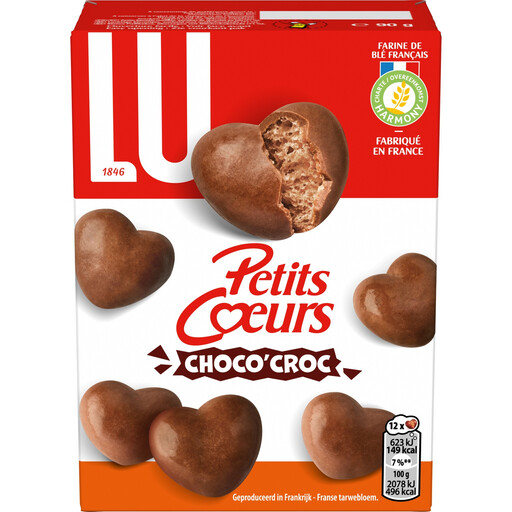 Image unavailable
LU Petits Cœurs Choco'Croc with milk chocolate 90 g
This product fits the bill if you’re looking for a crunchy biscuit coated in milk chocolate. Carrefour gives 496 kcal per 100 g for Petits Cœurs Choco'Croc, but this figure alone isn’t enough to determine its Nutri-Score.
Check the letter if it appears on your pack, along with the other nutritional information and how much you eat. Check the ingredients if you need to avoid wheat, milk or soya.
View on Joybuy
Frequently asked questions
Is the Nutri-Score compulsory on chocolate-coated biscuits in France?
No. According to Santé publique France and the DGCCRF, displaying it is voluntary; it’s not the same as the nutritional information required on pre-packed foods. If there’s no letter on the pack, check the product’s nutritional information rather than assuming a rating.
How should I compare two chocolate biscuits for an evening snack?
First compare similar types of recipe, then check their Nutri-Score if displayed, their nutritional information per 100 g and how much you plan to eat. Manger Bouger recommends limiting products with a Nutri-Score of D or E; if there’s no letter, you can’t use it to rate the biscuit.
What should I check if I need to avoid an allergen?
Read the ingredients list and check the allergens highlighted on the packaging of the exact product. The DGCCRF sets out the labelling rules for pre-packed foods; the ingredients in a chocolate-coated biscuit, a filled biscuit and a madeleinette may differ, even if they’re all chocolate-flavoured.


