For a secondary school pupil’s lunchbox, choose a chocolate digestive-style biscuit only if the label on the exact product meets your requirements for allergens, transport and ingredients; the word ‘digestive’ does not guarantee any of these. A cereal biscuit, filled biscuit or chocolate-coated biscuit may suit a different preference, provided you check the school’s rules, the packaging and the nutrition information per 100 g.
Who is this choice for?
Parents who need to avoid an allergen
If an ingredient must be avoided, check the recipe on the pack you intend to put in the lunchbox, as well as the school’s rules. The DGCCRF says that allergens present in the ingredients of pre-packed foods must be highlighted.
Parents looking for an easy-to-carry option
An individually wrapped portion can make lunchbox preparation easier, but it doesn’t tell you what the product contains. Monoprix Courses describes LU BelVita Chocolat as individually wrapped; also check that the biscuit will be protected from being crushed.
Parents comparing recipes
If you’re choosing between a digestive, a cereal biscuit, a filled biscuit and a chocolate-coated one, compare the exact products rather than relying on their names. Nutrition information per 100 g gives you a common basis for comparison, as the DGCCRF explains. If the pack displays a Nutri-Score, treat it as an additional guide.
What should you look for?
Start with allergens and the school’s rules, then consider how well the biscuit will travel in the lunchbox. You can then compare ingredients and texture to choose between the products that meet your requirements.
| Criteria |
What to check |
Who it matters to |
| Allergens and school rules |
Read the highlighted allergens, ‘may contain’ statements and any written instructions that apply to the pupil. |
If an ingredient needs to be avoided, I need to be able to rule out the biscuit before preparing the lunchbox. Around 36% of consumers rank this check as their top priority. |
| Transport |
Check the packaging and storage advice; use a container that will prevent the biscuit from being crushed. |
For a bag that will be carried all day, I’m looking for a portion that’s easy to pack and protect. This is the top priority for around 29% of consumers. |
| Ingredients |
Compare the sugar, saturated fat, fibre and salt content per 100 g of the products you’re considering. |
If several chocolate biscuit recipes meet the lunchbox requirements, I want to be able to compare them on the same basis. Around 21% of consumers prioritise this comparison. |
| Texture and chocolate flavour |
Choose between a plain biscuit, a filled one and a chocolate-coated one, then check the ingredients of the variant you’ve selected. |
If the main priority is a particular filling or coating, texture matters when I’m choosing. It’s the top criterion for around 14% of consumers. |
Mistakes to avoid
-
Assuming a ‘digestive’ biscuit has a better nutritional profile
The name doesn’t replace the nutrition information or ingredients list for the chocolate variant you’re buying. A digestive-style biscuit is also different from a cereal biscuit or a filled biscuit.
Compare two or three exact products per 100 g and check their allergens before choosing your preferred texture.
-
Expecting every pack to display a Nutri-Score
According to the French Ministry of the Economy, displaying a Nutri-Score is optional. The DGCCRF says that most pre-packed foods must carry nutrition information, with values shown per 100 g or 100 ml.
If the logo is displayed, consider it alongside the nutrition information and ingredients. Don’t rely on it alone to decide whether a biscuit is right for a lunchbox.
-
Checking only for gluten
The products listed by Monoprix Courses and Carrefour France show that, depending on the biscuit, ingredients and ‘may contain’ statements can also relate to milk, soya, eggs, nuts or sesame.
Check each ingredient that needs to be avoided against the label on the exact pack, and follow the school’s written instructions where applicable.
-
Applying the levy on drinks to biscuits
The levy described by Légifrance applies to drinks and liquid preparations for drinks, not solid biscuits. It therefore can’t be used to compare chocolate biscuits.
To compare their sugar content, check the nutrition information per 100 g.
Brands to compare by product
The details below apply to the specific biscuits named, not to the brands’ full ranges. They can help you spot the differences to check on the pack you’re buying.
LU / BelVita
Monoprix Courses describes BelVita Chocolat as a cereal biscuit option for anyone looking for individually wrapped portions.
- This product is described as individually wrapped.
- The product described contains cereals with gluten, soya and milk. If an allergen needs to be avoided, check the ‘may contain’ statements too.
BN
BN Fourrés Chocolat 285 g is a filled biscuit option rather than a plain digestive.
- For this product, Monoprix Courses lists 30 g of sugars and 8,6 g of saturated fat per 100 g. Compare these figures with other biscuits on the same basis.
- Its ingredients include cereals containing gluten and milk; the product information also mentions a possible presence of nuts.
Milka
Choco Pause is a chocolate-filled biscuit for anyone who prefers a soft centre.
- For this product, Monoprix Courses lists 35 g of sugars and 12 g of saturated fat per 100 g, making it possible to compare with other labels.
- This recipe contains wheat, milk and soya, among other ingredients; these details don’t apply to all Milka biscuits.
Carrefour Classic'
Carrefour Classic' chocolate biscuits are another recipe to consider when comparing the ingredients of different products.
- Carrefour France’s product information lists wheat flour, eggs and hazelnuts, among other ingredients.
- These ingredients may rule this product out of a lunchbox where the corresponding restrictions apply; don’t assume they’re present in other Carrefour biscuits.
Chocolate biscuits selected on Joybuy
This selection includes pocket-sized packs and packs of chocolate-filled or chocolate-coated biscuits for a secondary school lunchbox. If you’d prefer a chocolate digestive, carry out the same checks on the label of the product you’re considering.
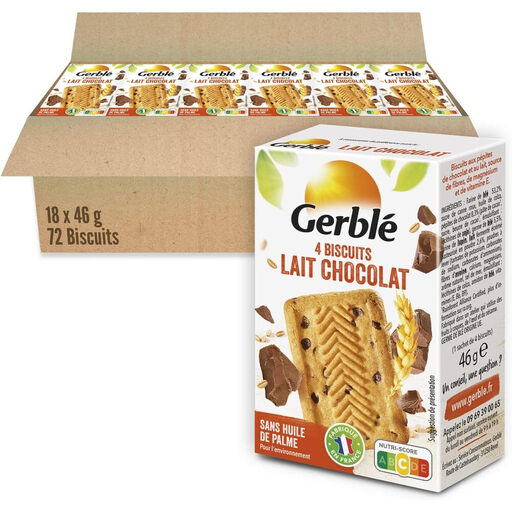 Image unavailable
GERBLE Pocket milk chocolate biscuit 46 g
The 46 g pocket-sized pack is a handy option if you’re looking for a small pack to pop in a lunchbox. Check whether its packaging suits the way you prepare the portion.
The product information lists wheat, milk, soya and lupin flour. Check the allergens on the packaging before taking it to school.
View on Joybuy
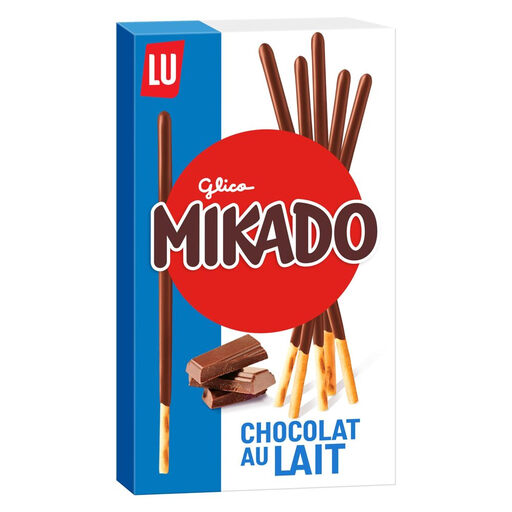 Image unavailable
Mikado Pocket milk chocolate-coated biscuit sticks 39 g
This 39 g pocket-sized pack is a good choice if you prefer coated biscuit sticks to a filled biscuit. Protect it from heat and being crushed in the school bag.
The product information lists wheat, milk and soya, and says it may contain nuts. Check these details on the pack intended for the pupil.
View on Joybuy
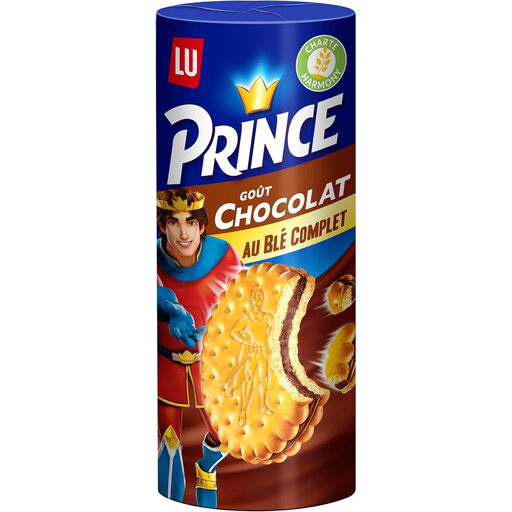 Image unavailable
LU Prince wholewheat biscuits filled with chocolate 300 g
This 300 g pack is a good choice if you prefer chocolate-filled biscuits made with wholewheat. Decide on the portion and its container before putting it in the lunchbox.
The product information lists wheat, milk and soya, and says it may contain eggs. Wholewheat doesn’t mean you can skip the allergen check.
View on Joybuy
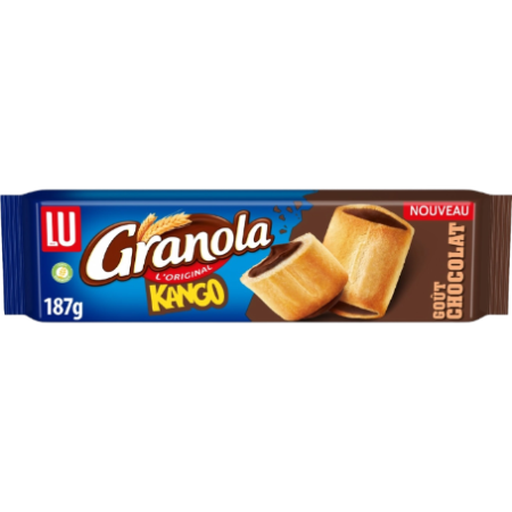 Image unavailable
GRANOLA Kango biscuits filled with chocolate 187 g
Choose this 187 g pack if you’re looking for the texture of a crumbly shortbread biscuit with a filling. For school, make sure you have suitable packaging for the portion you’re taking.
The product information lists wheat, milk, eggs and soya, and says it may contain sesame. Check the ingredients list on the exact pack.
View on Joybuy
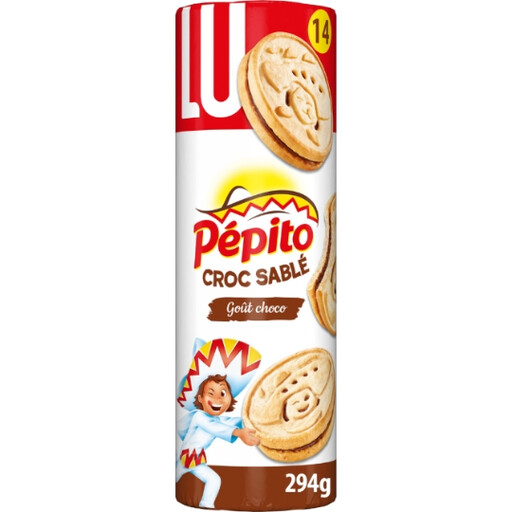 Image unavailable
LU PÉPITO Croc Sablé shortbread biscuits filled with milk chocolate 294 g
This 294 g pack is for anyone who prefers shortbread biscuits filled with milk chocolate. Prepare a portion that will stay protected during the journey.
The product information lists wheat, milk and soya. Check the allergens and any ‘may contain’ statements on the pack you’ll use for the lunchbox.
View on Joybuy
Frequently asked questions
Is a Nutri-Score required on chocolate biscuits in France?
No. The French Ministry of the Economy says that displaying a Nutri-Score is optional. However, for most pre-packed foods, nutrition information lets you compare the values per 100 g, as the DGCCRF explains.
Does the levy on sugary drinks apply to biscuits?
No. The legislation presented by Légifrance applies to drinks and liquid preparations for drinks, not solid biscuits. To compare the sugar content of two chocolate biscuits, check their nutrition information per 100 g instead.
How can you check for allergens before preparing a lunchbox?
Read the ingredients list and any ‘may contain’ statements on the pack you’ve chosen, then check them against the ingredients that need to be avoided and the school’s rules. The DGCCRF says that allergens present in the ingredients of pre-packed products must be highlighted. Cereals containing gluten include wheat, rye, barley and oats.


