What should you look for?
First decide how the biscuits will be served, then check the ingredients and storage instructions for each product. To weigh up other priorities, start with your service’s main needs.
| Criterion |
What to check |
Who it matters to |
| Allergens and information |
Read the ingredients, declared allergens and any ‘may contain’ statements for the product being served. Make sure the information is easy for customers to access. |
If I offer biscuits to customers with different dietary requirements, I need to be able to identify the ingredients in each one. Around 33% of consumers would make this their top priority. |
| Serving and storage |
Check the number of units, whether they are individually wrapped and the product’s storage instructions. |
For coffee served on request, I’m looking for a biscuit that’s easy to place beside a cup and store as directed. This would be the top priority for around 27% of consumers. |
| Quantity and replenishment |
Compare the weight, number of biscuits and pack format with how often you plan to replenish them. |
If the coffee corner is restocked several times a day, I want packaging that’s practical to open and replenish. Around 20% of consumers would prioritise this approach. |
| Shape and texture |
Distinguish between chocolate-coated sticks, coated wafers, shortbread biscuits and filled, chocolate-coated biscuits; check the exact product description. |
To offer some variety with coffee, I choose between a thin biscuit, a wafer and a thicker biscuit, depending on how I want to present them. Biscuit type would be the top criterion for around 13% of consumers. |
| Nutritional information |
Compare the nutritional values per 100 g, including sugars, and then consider the portion being served. Check the Nutri-Score only if it is displayed. |
When comparing two products, I want to understand their nutritional values rather than judge them by appearance alone. Around 7% of consumers would put this at the top of their list. |
Brands and ranges to know
These examples show different biscuit shapes. The features mentioned apply to the specific products named, not to every product from each brand or retailer.
LU
Mikado is a stick coated in milk chocolate, while Petit Cœur Choco’Croc is a coated biscuit in a different shape.
- Carrefour describes Mikado as a thin, crunchy stick, worth considering as a small treat beside a cup.
- The size of a box doesn’t confirm that each biscuit is individually wrapped. Check how the pack is presented.
BN
Choco Star is a shortbread biscuit topped with milk chocolate.
- An option to consider if you’d like to serve a shortbread biscuit rather than a stick or a wafer.
- The Auchan listing says to store it in a cool, dry place, away from light.
Milka
Choco Suprême is a wafer coated in milk chocolate, listed in the product information reviewed as a 300 g pack.
- This format is worth considering for a space where biscuits are offered for sharing.
- The Carrefour listing says it may contain traces of egg and nuts. Check all the statements on the packaging you’ll be serving.
Carrefour Extra
The product reviewed is a chocolate-coated wafer, sold in a 150 g pack.
- The Carrefour listing states that this specific product contains 40% chocolate.
- Don’t assume this percentage or the allergen information applies to another recipe in the range.
P’TIT DELI / Marque Repère
E.Leclerc sells milk chocolate-coated sticks under this brand.
- The listing for the 150 g sticks states that this product contains 48% milk chocolate.
- The Nutri-Score E shown on this listing applies to this product; it doesn’t represent all Marque Repère products.
Auchan
The retailer stocks filled, chocolate-coated Oreo biscuits, among other products; Auchan isn’t the manufacturer of this product.
- The listing identifies a filled, chocolate-coated biscuit, which is different from a wafer or chocolate-coated stick.
- For the Oreo product reviewed, the storage instructions say to keep it away from heat and moisture.
Chocolate biscuits available on Joybuy
This selection on Joybuy includes chocolate-coated shortbread and classic-shaped biscuits, coated lace crêpes and chocolate wafers. Choose the right presentation depending on whether the biscuits will be served with a cup or set out in a shared space.
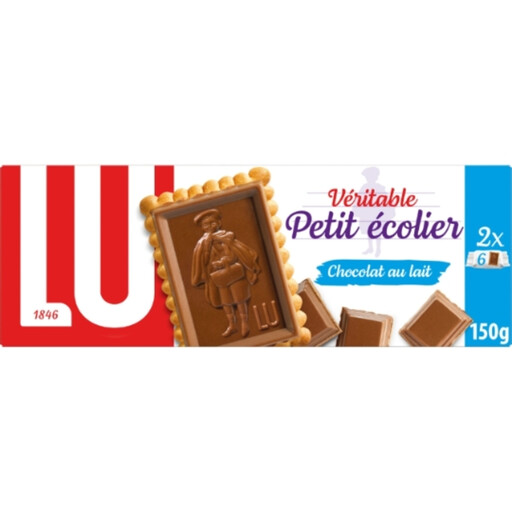 Image unavailable
LU Petit Écolier milk chocolate biscuits, 150 g
A buttery biscuit covered in milk chocolate, worth considering alongside a cup of coffee. Check how many biscuits are included and how they’re packaged before planning to serve them individually.
View on Joybuy
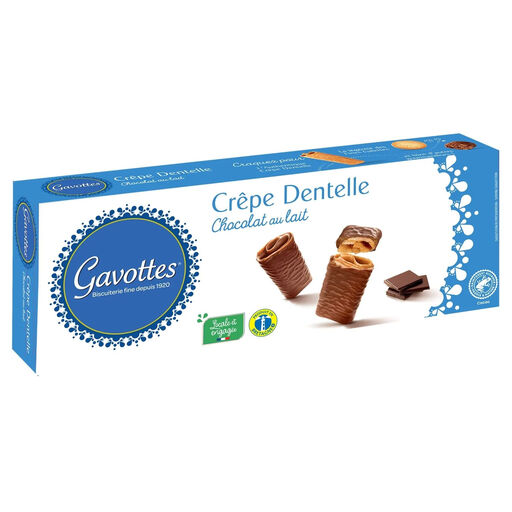 Image unavailable
Gavottes milk chocolate-coated lace crêpes, 90 g, pack of 6
The lace crêpe shape offers a different way to serve biscuits with coffee than shortbread does. The title lists 90 g and a pack of 6: check what’s in each unit and how the pack is presented before planning your service.
View on Joybuy
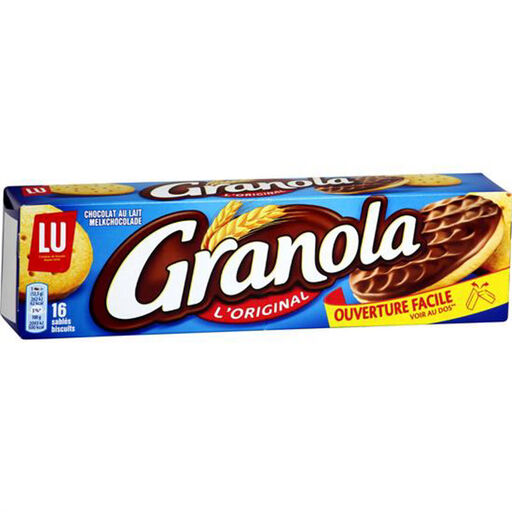 Image unavailable
LU Granola milk chocolate shortbread biscuits, 200 g
This shortbread biscuit coated in milk chocolate is a classic shape to add to your coffee-break selection. If you open the pack for shared service, follow the storage instructions on the product you receive.
View on Joybuy
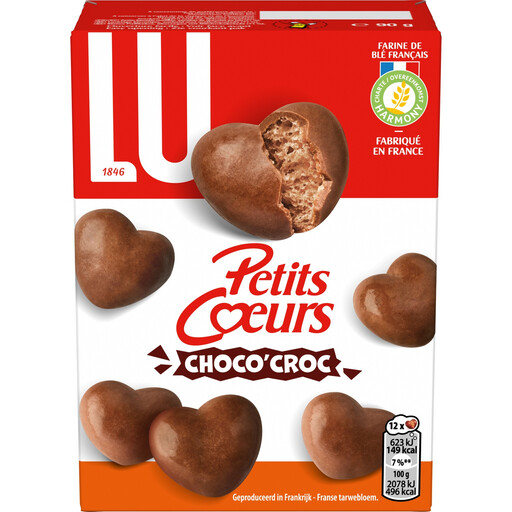 Image unavailable
LU Petit Cœur Choco’Croc milk chocolate biscuits, 90 g
This heart-shaped, chocolate-coated biscuit could make a charming little treat beside a coffee. The 90 g pack doesn’t confirm that the biscuits are individually wrapped, so check if this is important for your service. The Joybuy listing says to store in a cool, dry place, away from heat and moisture.
View on Joybuy
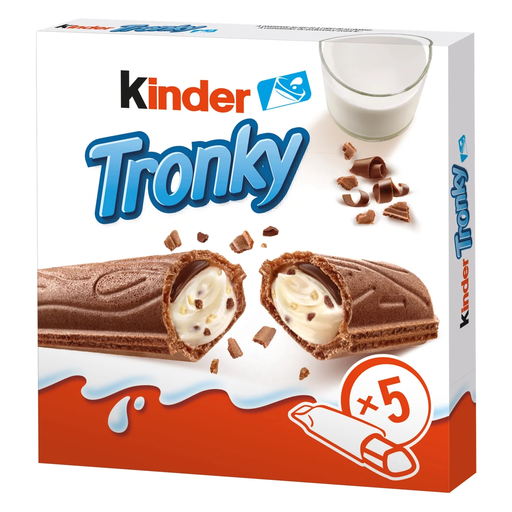 Image unavailable
Kinder Tronky milk chocolate wafers, 90 g
A chocolate wafer to consider if you prefer this type of biscuit with coffee to shortbread. Check the number of biscuits and how they’re packaged when the product arrives, then read its allergen information before serving.
View on Joybuy
Frequently asked questions
Does the ‘soda tax’ apply to these biscuits in France?
The contribution described by France’s Ministry of the Economy applies to sugary drinks, so it isn’t a factor when choosing chocolate-coated biscuits. Instead, compare the format, ingredients and nutritional information for each product.
Does Nutri-Score have to appear on the packaging?
No. France’s Ministry of Agriculture says that displaying Nutri-Score is voluntary in France. If it’s shown, consider it alongside the nutritional values for the biscuit in question, rather than using it as your only selection criterion.
How can you keep allergen information available for staff?
Keep the information for the specific product you’re serving on its packaging, or in an up-to-date sheet that staff can easily access. Service-Public.fr explains that allergens must be declared for relevant processed foods; you can’t tell what a biscuit contains just by looking at it.
Where should you store chocolate-coated biscuits before serving coffee?
Follow the instructions for the product you’ve bought. The listings for BN Choco Star at Auchan and LU Petit Cœur Choco’Croc on Joybuy, for example, say to store them in a cool, dry place. Also check each pack for instructions about light, heat and moisture.
Is a biscuit labelled ‘gluten-free’ free from other allergens?
No. ‘Gluten-free’ doesn’t describe all the ingredients or allergens in a product. If you add one of these biscuits to your coffee service, read all the allergen and ‘may contain’ statements on the exact packaging before offering it.


