People who prioritise fat content
When preparing office snacks, they compare the fat content per 100 g, then check the amount in the bar they plan to take, without assuming that a smaller size means it is lower in fat.


When choosing a chocolate bar to take to the office and looking for one lower in fat, first compare the figures per 100 g, then check the portion you plan to eat and the allergens. Also look at the sugars and energy: a lower fat content alone does not tell you everything about a product. A chocolate cereal bar may be worth comparing, but it is a different category from a classic chocolate bar.
When preparing office snacks, they compare the fat content per 100 g, then check the amount in the bar they plan to take, without assuming that a smaller size means it is lower in fat.
They want to make sure that looking for a lower-fat option does not mean overlooking the sugars. The nutrition table gives them a basis for comparing different products.
Before putting together a shared stash, they check the allergens listed for each product, including any ‘may contain’ statements on the packaging.
Comparing figures per 100 g puts different sizes on an equal footing. The amount you actually take and the allergens are also important for office snacking.
| Criteria | What to check | Who is this for? |
|---|---|---|
| Sugars and nutritional profile | Compare sugars, energy, fat and salt per 100 g. If the packaging displays a Nutri-Score, use it as an additional guide. | If I’m mainly watching my sugar intake, a ‘lower in fat’ indication alone does not meet my needs. Around 42% of consumers put sugars and nutritional profile at the top of their list. |
| Fat | Compare fat and saturated fatty acids per 100 g across products intended for the same use; check any claim on the packaging. | For my office breaks, I first want to compare bars by their fat content. This is the main criterion for around 33% of consumers. |
| Portion and allergens | Check the amount you plan to take, the allergens listed and any ‘may contain’ statements for the exact product. | If bars are taken to or shared at work, around 25% of consumers put size and allergens ahead of other criteria. |
In France, the Ministry of the Economy states that displaying a Nutri-Score is optional. Its absence is not enough on its own to judge a product.
For pre-packaged foods that must carry a nutrition declaration, compare the figures per 100 g shown in the table, as recommended by the DGCCRF.
The provisions cited by Légifrance apply to drinks and liquid preparations for drinks, not solid chocolate bars.
When comparing bars, look at their sugar content and the portion you plan to eat instead.
One characteristic alone does not sum up a recipe. KitKat France lists 45.7 g of sugars per 100 g for its Milk Chocolate bar; a Carrefour Bio chocolate cereal bar featured by Carrefour contains sugar and glucose syrup, among other ingredients.
Compare the nutrition figures for each product, and remember that a chocolate bar and a chocolate cereal bar are different things.
Allergens vary between recipes: KitKat France lists wheat and milk for its Milk Chocolate bar, while Carrefour’s product page for the Mars Protein bar lists milk, soya, egg and barley, among other allergens.
Keep the packaging for each product where anyone who might take a bar can check it.
The KitKat Milk Chocolate bar is a wafer coated in milk chocolate.
Carrefour features a 50 g Mars Protein chocolate bar, among other products. It is a different recipe from the brand’s other bars.
The Carrefour Bio chocolate cereal bar is a related category, but it should not be confused with a classic chocolate bar.
This selection features an individually wrapped chocolate bar to consider for an office break. Its inclusion here does not mean it carries a ‘reduced fat’ claim.
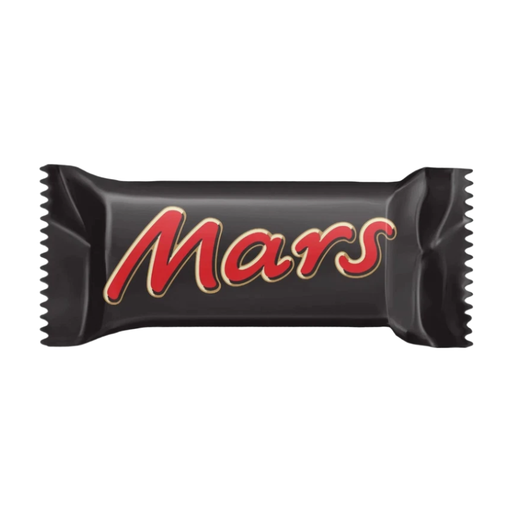 Image unavailable
The 51 g individual bar may suit an office break. If fat content is your priority, compare its nutrition table with those of other bars for the same occasion; check the allergens on the packaging too.
No. The Ministry of the Economy states that displaying it is optional. For the pre-packaged foods concerned, the nutrition declaration lets you compare figures per 100 g even when the logo is not shown.
No. The provisions published by Légifrance apply to drinks and liquid preparations for drinks, not solid bars. To choose a bar, compare its sugar content in the nutrition table.
Compare fat and saturated fatty acids per 100 g across products intended for the same use, then look at sugars, energy and portion size. If the packaging makes a reduction claim, check it rather than assuming it applies to the other nutritional values too.
Read the allergens and any ‘may contain’ statements on the packaging for each product. Recipes can vary, even between bars from the same brand, so keep the packaging with the shared snacks where everyone can check it.