Anyone planning several shared breaks
A multipack of chocolate bars gives you several to enjoy over a series of coffee breaks, without having to open them all at once.


For several coffee breaks to share, choose a multipack of chocolate bars if the same recipe suits everyone. Buy individual bars if you’d like to try different recipes. Snack bar multipacks are another option for lunchboxes, but check that each one is wrapped for carrying. In every case, compare the quantities and read the label for the recipe you’ve chosen.
A multipack of chocolate bars gives you several to enjoy over a series of coffee breaks, without having to open them all at once.
The number of units alone won’t tell you how easy they are to carry: a 100 g chocolate bar isn’t necessarily individually wrapped for one person.
The exact recipe matters more than the pack size when you’re comparing ingredients, sugars or allergens.
Choose this if: you want several bars of the same recipe for repeated or shared breaks.
Bear in mind: once opened, a bar will need to be stored according to the instructions on its packaging.
Choose this if: you’d like to put together an assortment of different recipes or cocoa percentages.
The trade-off: you put the selection together yourself rather than choosing a fixed multipack.
Consider this if: you’d prefer a smaller bar to take with you for a break away from home.
Keep in mind: a snack bar isn’t a chocolate bar to break up and share. Check its packaging before choosing it for a lunchbox.
| Criterion | What to check | Who is this for? |
|---|---|---|
| Format and sharing | Number of units, weight of each one, and the difference between a chocolate bar and a snack bar. | For several coffee breaks, I want to open the units gradually or share a chocolate bar. Around 42% of consumers put this format requirement first. |
| Ingredients and allergens | Ingredients list, allergens and sugars per 100 g for the exact recipe. | If ingredients or allergens determine my choice, two multipacks of the same weight aren’t interchangeable. Around 33% of consumers prioritise ingredients over other criteria. |
| How much to store | Net weight of the multipack, best-before date and storage instructions. | I’d rather buy an amount that suits my next few breaks than leave chocolate bars in the cupboard for too long. This is the top priority for around 25% of consumers. |
The 100 g chocolate bar multipacks featured by Carrefour and the snack bar multipacks mentioned by Nestlé are different formats. The number of units alone won’t tell you whether each one is suitable for a lunchbox.
For a shared break, check the number of chocolate bars and their weight. For taking them with you, check the format and packaging of each unit.
According to Santé publique France, displaying the Nutri-Score is voluntary. It doesn’t replace the ingredients list or allergen information.
If it’s displayed, use it as additional information when comparing similar products, then check the ingredients and nutritional information.
The Milka products featured by Carrefour have different ingredients. Check the allergen and ‘may contain’ information for each recipe.
Read the label on the multipack you’ve chosen, paying particular attention to highlighted allergens and ‘may contain’ statements.
If your breaks are spread out, the amount you buy and the best-before date matter just as much as the number of chocolate bars.
Check the date and follow the storage instructions on the packaging.
Carrefour features Milka multipacks of 2 × 100 g and 3 × 100 g, giving you two quantity options for coffee breaks.
The chocolate bars available from Lindt France let you put together your own selection of different recipes instead of choosing a fixed multipack.
Nestlé offers Les Recettes de l’Atelier chocolate bars and, in a different category, KitKat snack bar multipacks.
This selection includes chocolate multipacks with 100 g per unit for several breaks, as well as a Toblerone snack bar multipack with 50 g per unit if you prefer this different format. For a lunchbox, check the packaging of each unit before choosing.
 Image unavailable
For spreading your chocolate across several breaks, this multipack contains three 100 g bars. If you need to carry them separately, check their packaging. Also check the label for allergen information.
 Image unavailable
Keep several milk chocolate bars on hand for a series of breaks: this multipack contains three 100 g bars. Check the packaging of each one if you’re taking them with you, and check the multipack label for allergens and ‘may contain’ information.
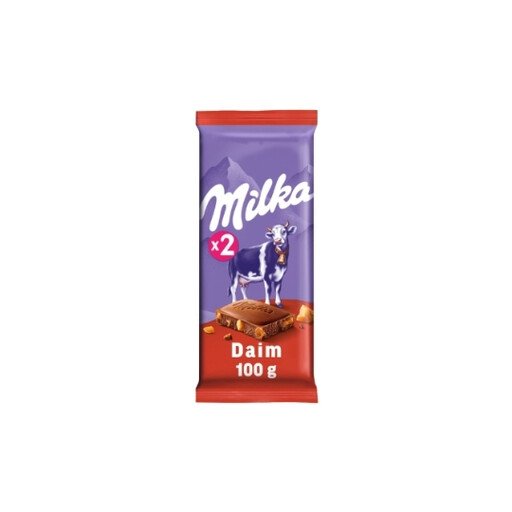 Image unavailable
If two bars are enough for your next few breaks, this multipack contains two 100 g bars. For a lunchbox, check their packaging. If allergens are important to your choice, read the label for this specific product.
 Image unavailable
Consider this if you prefer snack bars to classic chocolate bars: this multipack contains three 50 g bars. Check the packaging of each one before taking them with you, and check the ingredients list if you have an allergy.
No. Santé publique France explains that producers can choose whether to display it. When choosing a chocolate bar, also read its ingredients list, allergen information and nutritional information.
No: the levy described by the French Ministry of the Economy applies to sugary drinks, not chocolate bars. To compare chocolate bars, check the sugars per 100 g and the ingredients in each recipe.
Read the label on the product you’re buying, paying particular attention to allergens highlighted in the ingredients list and any ‘may contain’ statements. Don’t assume a multipack has the same ingredients as another multipack from the same brand.
Follow the instructions on the packaging and check the best-before date on each multipack. The European Food Safety Authority explains that this date relates to the product’s quality.