What should you check before buying?
For drinks on the patio, start with how you plan to serve the chocolate, then choose a quantity and recipe that suit your guests.
| What to consider |
What to check |
Who it matters to |
| Serving portions |
Tell the difference between separate bags, individually wrapped pieces and bites sold together in one container. The word ‘mini’ doesn’t tell you how they’re packaged. |
When the chocolate is left on the table, I prefer everyone to be able to take a portion without passing round a partly eaten bar. Around 36% of consumers prioritise ease of serving. |
| Quantity and leftovers |
Compare the net weight and, if stated, the number of bags or pieces. Check the storage instructions for the product you choose. |
For a larger group, I want to have enough chocolate; for a few guests, I’d rather not open an oversized pack. Getting the quantity right is the main concern for around 29% of consumers. |
| Nutritional information |
Look at sugars and fat per 100 g in particular, so you can compare recipes on a like-for-like basis. If shown, the Nutri-Score can provide additional context. |
If I’m choosing between several recipes, I want to compare their sugar and other nutritional values without confusing pack weight with what’s in the product. Around 21% of consumers put this comparison first. |
| Allergens |
Check the ingredients, highlighted allergens and any ‘may contain’ statements for the exact product. |
If I’m hosting someone with a known allergy, choosing a suitable recipe comes before thinking about the format. This check is a priority for around 14% of consumers. |
The DGCCRF explains that the Nutri-Score is voluntary in France, while nutritional information on pre-packed foods is generally required. A Nutri-Score label doesn’t replace checking the ingredients or nutritional values per 100 g.
Chocolates to share on Joybuy
This selection includes bagged chocolates, mini bars and a multipack of bars. If you’re serving them on the patio, distinguish between individually wrapped pieces and products intended to be served from a shared container.
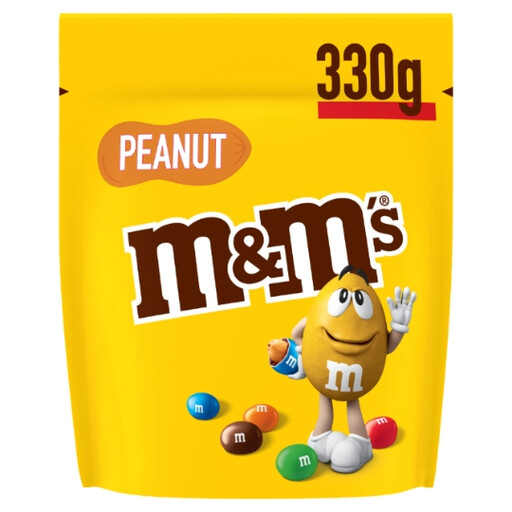 Image unavailable
M&M'S Peanut milk chocolate, 330 g
Put a bag of sweets out for guests to share. The pack states that it contains 330 g and seven portions. The recipe contains peanuts and milk, and may contain almonds and hazelnuts.
For a nutritional comparison, use the values per 100 g rather than per portion, as the portion information for this product is inconsistent.
View on Joybuy
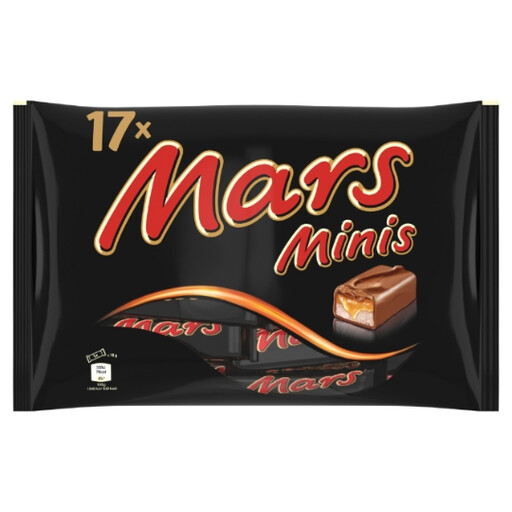 Image unavailable
MARS Minis, milk chocolate, caramel and nougat, 333 g
If you want to hand out mini bars without opening a shared container, the product description states that this 333 g bag contains around 17 individually wrapped pieces.
It contains 62 g of sugars per 100 g. The product may contain peanuts and nuts, so check the ingredients if any guests have dietary restrictions.
View on Joybuy
 Image unavailable
Toblerone Milk, 3 × 50 g
Use this multipack to prepare a plate or share out several bars. It contains three 50 g bars, 150 g in total. If you need each bar to stay in its own wrapper until serving, check this on the pack.
The recipe contains milk, soya and almonds.
View on Joybuy
 Image unavailable
Nestle KitKat Strawberry Short Cake, 9 pieces, 104,4 g
For individually wrapped portions, this pack contains nine mini bars and weighs 104,4 g. Check that this is enough for the number of guests.
The ingredients include milk, wheat and soya. To compare sugars and saturated fat with other recipes, check the values on the pack.
View on Joybuy
 Image unavailable
MALTESERS milk chocolate, 192,5 g bag
This bag of bites is intended to be served from a shared container. Check the packaging if you want individually wrapped pieces.
The title and description state 192,5 g, while another detail gives the weight as 192 g. Check the net weight on the pack. Ingredients include milk, soya and wheat, among others.
View on Joybuy
Frequently asked questions
Is the Nutri-Score compulsory on chocolate sold in France?
No. The DGCCRF states that the Nutri-Score is voluntary in France. Nutritional information on pre-packed foods is generally required, however, and lets you check details including energy, fat, sugars, protein and salt.
Does the ‘soda tax’ apply to chocolate bars and bags?
No. The levy mentioned by the Ministry for the Economy and Finance applies to non-alcoholic drinks, not chocolate bars or bites. When choosing between these products, look instead at their format, ingredients and nutritional information.
What should you check before serving chocolate to a group?
Check the packaging, quantity and ingredients of the product you choose. If any guests have known allergies, read the allergen information and ‘may contain’ statements. For example, the Côte d’Or milk praline bites featured by Carrefour contain hazelnuts, almonds, milk and soya, among other ingredients, and may contain wheat.
How can you compare two chocolates sold in different pack sizes?
Compare their nutritional values per 100 g, then check the net weight separately to work out how much to serve. The DGCCRF explains that nutritional information for pre-packed foods is given per 100 g or 100 ml.
How should you store chocolate before serving it on the patio?
First, follow the storage instructions for the product you’ve bought, and only take out as much as you need to serve. The product information for the Côte d’Or mini bites featured by Auchan recommends storing them away from heat and humidity.


