If you’re feeling peckish at university, compare the calories in the whole bar you plan to eat: a bar marketed as a snack doesn’t automatically replace lunch. If you’re looking for something to take with you as a meal, distinguish confectionery and protein bars from products explicitly designed as meal bars, then check the portion and suggested accompaniments for that product.
Who is this choice for?
Students keeping an eye on calories per bar
For a chocolatey break that’s easy to take with you, the useful figure is the calories in the portion you’ll eat. E.Leclerc and Carrefour list no more than 90 kcal per bar for the Milical chocolate variety, compared with 226 kcal for the 51 g Mars bar and 244 kcal for the 50 g Snickers bar featured here.
Students planning to have lunch between classes
If you’re not planning to eat anything else, don’t mistake the protein content of a snack for a meal-sized portion. For its chocolate meal bar, Gerlinéa recommends eating two bars with a piece of fruit or a dairy product, according to Carrefour’s product listing.
Students who pay attention to ingredients
Before choosing based on calories, check the ingredients, allergens and any sweeteners listed on the packaging. Whether or not a Nutri-Score is shown doesn’t replace checking these details.
Which criteria should you prioritise?
First decide whether the bar is for a quick snack or to stand in for lunch. Then compare the portion you’ll actually eat and check that the ingredients suit your needs.
| Criterion | What to check | Who is it for? |
|---|
| Calories per bar |
The kcal in the whole bar and its weight, rather than figures per 100 g alone. |
When I eat the whole bar, I want to know what that portion contains. Around 42% of consumers put calories per unit at the top of their list of criteria. |
| Suitable for lunch |
The difference between a snack and a meal bar; for the latter, check the recommended portion and accompaniments. |
Between classes, I’m looking for lunch rather than just a sweet treat. For around 25% of consumers, suitability as a meal is the top priority. |
| Ingredients |
Highlighted allergens, ‘may contain’ statements and any sweeteners. |
If certain ingredients don’t suit me, I need to be able to rule out a bar even if its portion matches what I’m looking for. Ingredient suitability comes first for around 17% of consumers. |
| Easy-to-carry format |
The weight of each bar and the number of bars in the pack. |
For a break on campus, I want to take a defined portion with me without confusing one bar with the whole pack. Around 16% of consumers prioritise this convenient format. |
Common misconceptions to avoid
-
Comparing calories per 100 g only
Two bars of different weights won’t necessarily contain the same number of calories when eaten whole.
Check the kcal per bar, or work it out from the kcal per 100 g and the weight of one bar.
-
Assuming ‘protein’ means it’s a meal
A bar’s protein content alone doesn’t mean it counts as lunch. A meal bar may, however, have a recommended portion and accompaniments specific to that product.
Check the product’s intended use; if you choose a meal bar, follow the manufacturer’s portion guidance.
-
Thinking Nutri-Score is compulsory
According to Santé publique France, displaying it is voluntary. So the logo’s absence isn’t enough on its own to judge a bar.
If the logo is on the packaging, compare products intended for the same use; also check the nutrition information and ingredients.
-
Overlooking allergens in a recipe
The chocolate bars featured here contain different ingredients, including milk, soya, wheat or peanuts, depending on the bar.
Check the packaging of the product you buy, including any ‘may contain’ statements that matter for your needs.
Brands to know
Milical
The chocolate variety reviewed is marketed as a snack, rather than a meal bar.
- E.Leclerc’s product listing gives an energy value of no more than 90 kcal per bar.
- The recipe includes wheat gluten, soya, milk, egg and sweeteners, among other ingredients; this snack portion doesn’t automatically count as lunch.
INSHAPE NUTRITION
The caramel and milk chocolate variety lets you compare a protein bar with other chocolate portions.
- Carrefour’s product listing gives 162 kcal and 15 g of protein for the 45 g bar.
- It contains milk, soya and maltitol, among other ingredients; its protein content alone doesn’t make it a meal bar.
Mars
The 51 g caramel and nougat bar is a useful reference for a single-serve confectionery bar.
- Carrefour lists 226 kcal for the whole bar.
- The recipe contains milk, barley and soya, among other ingredients, and may contain traces of peanuts and nuts.
Snickers
The 50 g variety combines chocolate, caramel and peanuts.
- Its Carrefour product listing gives 244 kcal for the whole bar.
- Peanuts are one of the ingredients; the recipe also contains milk, soya and egg.
KitKat
The 41.5 g milk chocolate variety is a chocolate-coated wafer bar, not a meal bar.
- Based on the 510 kcal per 100 g and the weight listed by Carrefour, the whole bar contains 211.65 kcal.
- The recipe contains wheat and milk, among other ingredients; check the portion if you’re taking a multipack with you.
Options for a break at university
These two chocolate or chocolate-coated bars are suitable for a snack on the go. Their format means they shouldn’t be presented as meal bars.
 Image unavailable
Andros Sport High-Protein Bar Chocolate Peanut 55 g
For a break between classes, this chocolate and peanut bar comes in a 55 g size. Check the ingredients on the packaging if peanuts or other ingredients in the recipe are a concern for you; don’t mistake it for a meal bar.
View on Joybuy
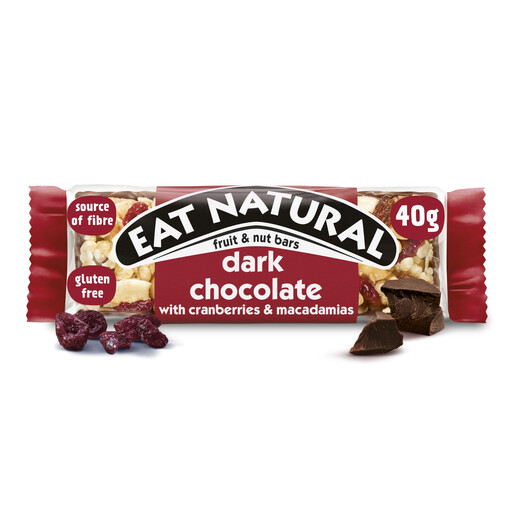 Image unavailable
Eat Natural Cranberry Dark Chocolate Bar 40 g
If you’re looking for a 40 g chocolatey portion to take with you, this bar contains cranberries and dark chocolate rather than being entirely covered in chocolate. Check the ingredients list on the pack before choosing it to suit your needs.
View on Joybuy
Frequently asked questions
Does the soda tax apply to chocolate bars?
No. According to the French Ministry of the Economy, the so-called ‘soda tax’ applies to sugary drinks; it isn’t a tax specifically on chocolate bars. To compare bars, check the ‘of which sugars’ line in their nutrition information, among other details.
Does a chocolate bar have to display Nutri-Score?
No. Santé publique France states that displaying Nutri-Score is voluntary. The DGCCRF distinguishes this logo from the nutrition declaration required for prepacked foods. To choose, read the figures shown and compare portions of similar products.
Is a standard chocolate bar enough for lunch at university?
A single-serve confectionery bar isn’t presented as a meal bar. If you’re looking for a product designed to replace a meal, check its specific guidance. For the Gerlinéa chocolate variety featured by Carrefour, the manufacturer recommends two bars with a piece of fruit or a dairy product.
What should you check on the label if you have an allergy?
Read the ingredients and check which allergens are highlighted on the packaging of the bar you buy. The DGCCRF sets out this labelling rule for allergenic ingredients; also check any ‘may contain’ statements that are relevant to you.


