What should you check before choosing?
For an evening followed by lunchboxes, first decide how many bars you want to keep unopened. Then compare the recipes on their labels, regardless of pack size.
| What matters |
What to check |
Who is this for? |
| Sharing some and keeping a bar in reserve |
Number of bars, weight of each bar and total weight. Carrefour listings include packs of 2 × 100 g and 3 × 100 g. |
If I serve chocolate tonight, I want to keep one bar unopened for another occasion rather than open the whole pack. This is the top priority for around 33% of consumers. |
| Comparing nutritional information |
Nutritional values per 100 g, particularly sugars and fat, including saturated fatty acids; minimum cocoa content stated on the label. Nutri-Score, where shown, is only an additional guide. |
To compare two recipes, I look at their values on the same basis rather than relying on the logo alone. Nutritional comparisons are the main concern for around 25% of consumers. |
| Checking allergens |
Highlighted allergenic ingredients and ‘may contain’ warnings for each product. |
When several people are helping themselves, I need to know what’s in the bar I’m offering. This check is a priority for around 25% of consumers. |
| Preparing lunchboxes |
Individual bars in the pack, best-before date and storage instructions on the packaging. |
If I’m saving chocolate for a lunchbox, I’d rather be able to set one bar aside without opening the others. This convenience is the main priority for around 17% of consumers. |
Chocolate bars and multipacks available on Joybuy
These products include a multipack of milk chocolate bars to split between the evening and later, a different-sized multipack of chocolate bars, and a single 200 g bar to share. The number of bars and how they’re packed are especially important if you’re also preparing lunchboxes.
 Image unavailable
Milka Alpine Milk, 3 × 100 g
This pack is a good choice if you want to serve one bar in the evening and keep the others unopened: it contains three 100 g bars, giving you 300 g in total. Before sharing, check the packaging for ingredients and information about milk, soya and tree nuts.
View on Joybuy
 Image unavailable
Toblerone Milk, 3 bars of 50 g
These three bars weigh 150 g in total, making them easy to share out, but they’re not 100 g chocolate bars. If you want to keep a bar unopened for a lunchbox, check whether each one has its own wrapper. The recipe listed includes honey and almonds; also check the information about milk and soya.
View on Joybuy
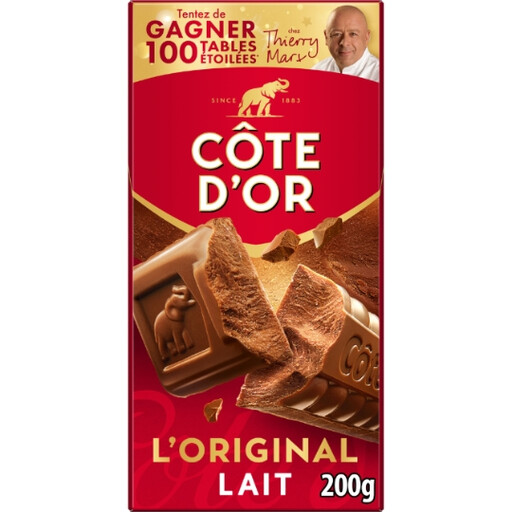 Image unavailable
Côte d’Or Classic Milk, 200 g bar
This single 200 g bar is suited to sharing during the evening, rather than setting aside several unopened bars. The description mentions milk and possible traces of tree nuts. Check the packaging before offering it to your guests.
View on Joybuy
Frequently asked questions
Does the tax on sugary drinks apply to chocolate bars?
No. The levy mentioned by the Ministry of the Economy and Finance applies to non-alcoholic drinks, not chocolate bars. To compare chocolate bars, look at the sugars listed in the nutritional information per 100 g.
Is Nutri-Score compulsory on a chocolate bar?
No. Public Health France describes Nutri-Score as a voluntary label. For the relevant pre-packed foods, the DGCCRF lists nutrition information as part of the required labelling; you can still check it even if Nutri-Score isn’t shown.
What should you check before offering several chocolate bars to guests?
Check the number of bars and their weight to plan how to share them, then read the highlighted allergenic ingredients and any ‘may contain’ warnings for each recipe. Don’t assume that two varieties from the same brand have the same ingredients.
How should you store a chocolate bar after opening?
Follow the storage instructions on the packaging and reseal it carefully. The Joybuy listings for the Côte d’Or and Milka products featured here recommend storing them in a cool, dry place. Also check the best-before date on the bar you’re keeping.
Does cocoa content help you choose between two recipes?
Yes. It lets you compare one characteristic of the chocolate: the Ministry of the Economy and Finance states that the minimum cocoa content appears on the label. Read it alongside the ingredients list, allergens and nutritional values rather than treating it as a verdict on the product.


