What should you look for first?
First decide whether you’ll serve the chocolate in squares, keep several bars in reserve or offer bite-sized pieces. For chocolate bars, you can then compare the quantity, recipe and nutritional information on the label.
Large bar
Choose this if: you can open it, break it up and lay out the squares for a small group.
Bear in mind: on its own, it won’t provide separate portions for everyone to help themselves.
Multipack of bars
Choose this if: you’d like to offer several bars or keep some sealed until it’s time to serve.
Check: the number of bars alone doesn’t tell you how much chocolate the pack contains.
Bag of bite-sized pieces
Choose this if: everyone should be able to help themselves to chocolate without breaking a bar.
Remember: this is a different format; check the quantity and ingredients of the assortment you choose.
| Criteria |
What to check |
Who is it for? |
| How it will be served |
A bar to break up, several bars or a bag of bite-sized pieces; whether you’ll be able to lay out the chocolate. |
If I’m sharing outdoors, I want to know how everyone will get a portion without having to improvise. Around 36% of consumers would put ease of sharing first. |
| Nutritional information |
Compare the sugar and fat content per 100 g in particular; check the Nutri-Score only if it’s displayed. |
When choosing between two recipes, I’d rather check their nutritional information than rely on how they’re presented. Around 29% of consumers would make this their priority. |
| Allergens |
Read the highlighted allergenic ingredients and precautionary statements on the exact product you’re considering. |
If someone in the group has an allergy, I need to check the recipe before offering them chocolate. Around 21% of consumers would put ingredient suitability first. |
| How much to buy |
Compare the total net weight and, for a multipack, the weight of each bar. |
If several people are coming, I want to check the total quantity rather than just count the packs. Around 14% of consumers would make quantity their main criterion. |
The DGCCRF says that nutrition information for a prepacked chocolate bar is generally given per 100 g, making it easier to compare different sizes. This doesn’t replace checking the ingredients or the amount you plan to serve.
Brands to know
These examples give you a few ideas for different sizes and recipes; always check the specific bar you’re thinking of buying.
Milka
Carrefour lists Mmmax milk chocolate bars with added ingredients, including Nussini at 270 g and Oreo at 300 g.
- These sizes may work well if you’re planning to break up a bar for a small group.
- The Nussini recipe lists milk, wheat, soya and hazelnuts, among other ingredients. Check the ingredients for the version you choose.
Lindt
Lindt France lists Les Grandes Lait Noisettes at 225 g, as well as other sizes of chocolate bars.
- The 225 g size gives you another option to consider for serving in squares.
- The Lait Noisettes recipe contains hazelnuts. Don’t choose it for a group that includes someone with a hazelnut allergy without checking everyone’s needs.
Côte d’Or
Carrefour’s selection includes Côte d’Or milk and dark chocolate bars, as well as bars with hazelnut pieces.
- These recipes give you options to suit the group’s preferences.
- Check the weight and ingredients for each product rather than assuming the recipes are interchangeable.
Marque Repère
E.Leclerc lists bars from its own-brand ranges, including a 200 g Tablette d’Or dark chocolate bar with whole hazelnuts.
- This product is an example of a 200 g bar you can compare with other sizes you’re considering.
- As it contains hazelnuts, check the label if anyone in the group has a tree nut allergy.
Chocolates to consider on Joybuy
These chocolate bars and this multipack are ready to eat and suitable for sharing. Their weights and recipes vary, so choose according to the number of people, how you’ll serve them and any ingredients you need to avoid.
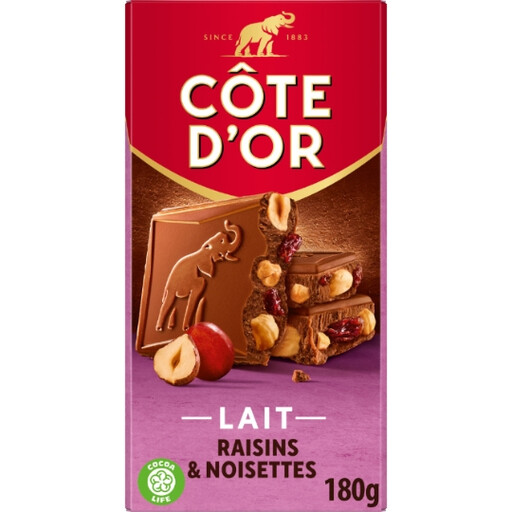 Image unavailable
Côte d’Or milk chocolate with raisins and hazelnuts, 180 g
Worth considering if you can break up and serve a 180 g bar. The name indicates that the recipe contains hazelnuts, so check the exact product label before sharing it with someone who has an allergy.
View on Joybuy
 Image unavailable
Toblerone milk chocolate, 3 × 50 g
The three 50 g bars let you keep some of the chocolate sealed until it’s time to serve. The multipack contains 150 g in total; check the recipe and allergens on the packaging before sharing.
View on Joybuy
 Image unavailable
Lindt Excellence 85% dark chocolate, 100 g
This 100 g bar is an option for sharing dark chocolate if the quantity is right for your group. The cocoa percentage in the name doesn’t replace checking the nutritional information and ingredients.
View on Joybuy
 Image unavailable
Poulain 70% dark chocolate, 100 g
Worth considering if your group would like to share a 100 g dark chocolate bar. The product details list maltitol and warn that excessive consumption may have a laxative effect; read the label before serving.
View on Joybuy
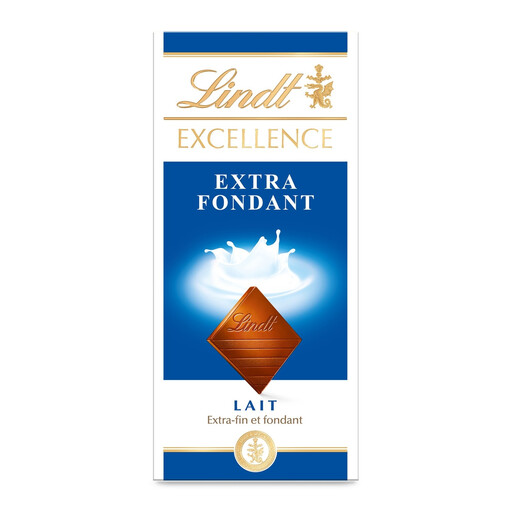 Image unavailable
Lindt Excellence Extra Creamy milk chocolate, 100 g
You can break this 100 g milk chocolate bar into pieces if there’s enough to go round. Before sharing it with anyone who has an allergy, check the ingredients and precautionary statements on the exact product.
View on Joybuy
Frequently asked questions
Does the tax on sugary drinks apply to chocolate bars?
No. The levy described by Légifrance applies to drinks and liquid drink preparations that meet the conditions set out in the legislation, not to chocolate bars. To compare two bars, check their nutritional information, particularly the sugar content per 100 g.
Does a chocolate bar sold in France have to display the Nutri-Score?
No. According to Santé publique France, displaying it is voluntary. The DGCCRF says that nutrition information is mandatory for most prepacked foods, so compare the figures per 100 g even if there’s no Nutri-Score on the pack.
How do I choose a chocolate bar if someone in the group has an allergy?
Check the highlighted allergenic ingredients and precautionary statements on the packaging of the exact bar you’re considering. According to the DGCCRF, allergens must be identified in the ingredients list. Don’t assume one recipe has the same ingredients as another, even if they’re from the same brand.
Should you throw away a bar as soon as its best-before date has passed?
Not necessarily. A best-before date, labelled “best before”, is not a use-by date. Check the condition of the packaging and the product, as well as the manufacturer’s guidance, before deciding whether to serve it.


