Parents looking to choose a portion size
If you’re preparing a lunchbox, the weight of each bar and the number you pack will help you compare the kcal in the planned snack.


For a secondary school lunchbox, compare the kcal in the amount you’ll actually pack, then check the sugars and allergens for the specific product you’re considering. A mini bar can reduce the amount you eat at each break without making it a ‘low energy’ product: the number of bars you add to the lunchbox matters just as much as their size.
If you’re preparing a lunchbox, the weight of each bar and the number you pack will help you compare the kcal in the planned snack.
Compare sugars per portion and per 100 g: a smaller bar doesn’t necessarily have a less sugary recipe.
Check the label for the exact product before putting a bar in the lunchbox, especially if certain ingredients or traces need to be avoided.
When comparing chocolate bars for a lunchbox, start with the portion you’ll pack, then check the ingredients and any storage or transport requirements.
| Criterion | What to check | Who is it for? |
|---|---|---|
| Kcal per portion | Weight of one bar, energy per portion and number of bars packed. | If you want to limit the kcal in your break-time snack, compare the amount that will actually be eaten. Around 31% of consumers put this need first. |
| Sugars and nutritional information | ‘Of which sugars’ per portion and per 100 g; Nutri-Score, if shown. | A small portion alone doesn’t tell you how much sugar it contains. For around 31% of consumers, comparing sugar content is the top priority. |
| Allergens | Highlighted allergenic ingredients and any ‘may contain’ statements on the product you’re buying. | If an ingredient or traces need to be avoided, check the exact recipe before preparing the lunchbox. This check comes before other criteria for around 19% of consumers. |
| Packable format | Weight of each bar, number of bars placed in the lunchbox and storage instructions. | If you’re looking for an amount that’s easy to plan and carry without accidentally adding several bars, around 19% of consumers prioritise managing the format first. |
Under the European regulation on nutrition claims, this phrase can only be used for solid foods containing no more than 40 kcal per 100 g. A small bar may contain fewer kcal per unit without meeting this requirement.
Compare the kcal per bar and per 100 g. Describe a smaller portion as such, without inferring a nutrition claim.
The French Ministry of the Economy describes the fizzy drinks tax as a levy on sugary drinks, while Santé publique France says that displaying Nutri-Score is voluntary. Neither means you can skip checking a chocolate bar’s label.
Check the nutritional information and allergens on the pack; use Nutri-Score as an additional guide if it’s shown.
Carrefour lists 550 kcal per 100 g for its 21 g milk chocolate bars, which works out at around 116 kcal per bar. Auchan lists 200 kcal for a 45 g Mars bar: the weight of each bar changes the energy in the portion you’re considering.
Check the weight and kcal of each bar, then take into account how many you’re putting in the lunchbox.
Ingredients and trace warnings apply to a specific recipe. For the Snickers product described, Carrefour lists peanuts, milk, soya and egg, as well as the possibility of tree nuts.
Check the label again whenever the product or format changes, and follow any individual guidance that applies in the case of an allergy.
Milk chocolate bars with caramel and nougat are available in different formats, so check the weight of the product you choose.
A milk chocolate bar with caramel, nougat and peanuts. Its ingredients list deserves particular attention if you need to avoid allergens.
Chocolate-coated wafer bars are available in several formats; compare the information for the exact variant you’re considering.
The milk chocolate bar product described by Carrefour contains 10 bars weighing 21 g each.
These Mars, KitKat and Kinder formats let you compare mini bars, 21 g bars and full portions for a lunchbox. Before choosing, compare the amount you plan to pack with the information on the packaging.
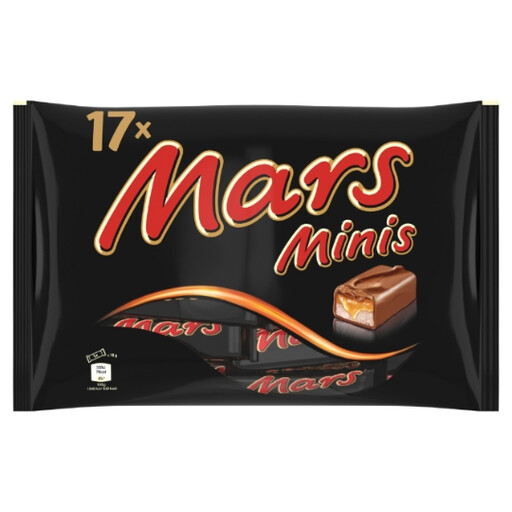 Image unavailable
The mini format lets you choose how many pieces to put in the lunchbox. The bag weighs 333 g; check the label for the weight and nutritional information of each mini bar before comparing portions.
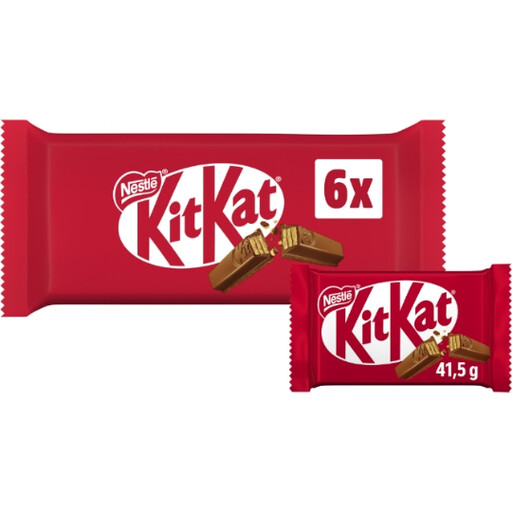 Image unavailable
This pack is useful for comparing a full 41.5 g bar. Joybuy lists 510 kcal per 100 g, which works out at around 212 kcal for this weight. Check the sugars and allergens on the pack you buy, too.
 Image unavailable
The pack of 11 bars makes it easy to plan how many you’ll take with you. Check the weight and nutritional information per bar, as well as the wrapping of each individual piece, before putting one in a lunchbox.
Not just because of its size. Under the European regulation on nutrition claims, the claim ‘low energy’, or wording with the same meaning, requires a solid food to contain no more than 40 kcal per 100 g. Instead, compare the kcal in the portion you plan to pack, without confusing a small portion with a property of the recipe.
No. The French Ministry of the Economy describes this levy as applying to sugary drinks, not chocolate bars. To compare chocolate bars, check the sugars and energy listed on the packaging.
No. Santé publique France says that producers display Nutri-Score voluntarily. If it isn’t shown, you can use the nutritional information on the pack to compare energy and sugars, taking the portion size into account.
Check the highlighted allergenic ingredients and any trace warnings on the exact product. The French Ministry of the Economy reminds businesses that allergens must be declared and highlighted in the ingredients list. Don’t assume a bar’s ingredients based on its brand alone.
Follow the instructions on the pack you buy and keep the labelling information to hand. For its 51 g Mars bar, Joybuy recommends storing it in a cool, dry place, away from direct sunlight and heat.