For a school fundraiser, first decide whether each buyer will receive a whole bar or an individually portioned piece. A segmented bar doesn’t guarantee that its pieces are wrapped individually. Keep the packaging for each product handy so you can share its ingredients, allergens and best-before date. Recipes with added ingredients need particular care when checking this information.
Who is this choice for?
Organisers who are mindful of allergens
You need to be able to show families the packaging for the product being sold, including its ingredients list, highlighted allergens and best-before date. The DGCCRF reminds sellers that allergens must be highlighted on the labels of prepacked foods.
Organisers buying several bars
You want to count the units to hand out without confusing a multipack of bars with individually portioned pieces. Check the number of units and their weight before organising the fundraiser.
Organisers looking to offer a variety of recipes
You might be considering praline, hazelnuts, almonds, biscuit or caramel. Nestlé Les Recettes de l’Atelier is one example of this variety, but you’ll need to share the ingredients and allergens for each product.
What should you check?
First decide whether each buyer will receive a whole bar or an individually portioned piece. The format you choose will determine how you count the units and keep the packaging information to hand.
Whole bar
Choose this if: you’re giving each buyer a prepacked bar, for example one weighing 100 g.
Keep in mind: its squares aren’t necessarily wrapped as individual portions.
Individually portioned piece
Choose this if: you need to hand out a small, separate unit rather than a whole bar; Carrefour, for example, sells a box of Côte d’Or mini chocolates.
Keep in mind: check the number of pieces and the information you’ll need to share for the product you choose.
| Criterion | What to check | Consumers’ priorities |
|---|
| Ingredients and allergens |
Keep the packaging for the batch to hand; check which allergens are highlighted in the ingredients list and whether there are any warnings about possible traces. |
When families ask what a bar contains, I want to be able to answer by checking its packaging, rather than assuming every recipe from the same brand is alike. Around 36% of consumers rank this information as their top priority. |
| Format and distribution |
Check the weight, number of units per multipack and how they’re packaged if you need to hand them out separately. |
When planning the distribution, I need to know how many separate bars or sticks I’ll be able to hand out. This is the main priority for around 29% of consumers. |
| Nutritional information |
Compare the nutritional values, particularly sugars, per 100 g; only refer to the Nutri-Score if it appears on the product. |
When comparing two recipes, I want to check their nutritional information on the same basis rather than relying on the product name alone. Around 21% of consumers put this information first. |
| Variety of recipes |
Check each product separately to distinguish plain bars from those with praline, nuts or biscuit. |
When offering a choice of flavours, I want to select different recipes while still being able to identify each one clearly. This is the top priority for around 14% of consumers. |
Mistakes to avoid
-
Assuming the Nutri-Score is compulsory
In France, Santé publique France says that displaying the Nutri-Score is voluntary. The DGCCRF distinguishes this logo from the nutrition declaration required for the relevant prepacked foods.
Compare the nutritional values per 100 g, whether or not the logo is displayed.
-
Assuming you know the allergens from the type of chocolate alone
A milk chocolate recipe and a praline recipe, even from the same brand, may list different ingredients or traces. The range name is no substitute for checking the label on the product being sold.
Keep the packaging for each product to hand and share the ingredients for each one separately.
-
Confusing a segmented bar with individually wrapped portions
A bar divided into squares doesn’t necessarily provide individually wrapped units. This affects how you hand them out and share their product information.
If you’re selling them individually, check how the portions are packaged before choosing a product.
Brands to consider for this type of fundraiser
Milka
Milka’s Alpine Milk bar is available in a 100 g format.
- A format to consider if you’re planning to hand out whole bars.
- Milka’s product information lists 58 g of sugars per 100 g for this product. Check the packaging for the batch to share its ingredients and allergens.
Lindt
Lindt describes L’Authentique Lait as a 100 g bar made in France.
- The product information lists 55 g of sugars per 100 g for this particular recipe.
- Lindt lists milk, soya and barley among the ingredients, and also notes that other nuts may be present. Don’t assume the same information applies to its other bars.
Nestlé
Les Recettes de l’Atelier includes a range of recipes, with ingredients such as almonds, hazelnuts, caramel or candied fruit depending on the bar.
- This range gives you the option of offering several different recipes.
- The praline bar listed by Auchan contains hazelnut paste; check the allergens for each variety.
Côte d’Or
Carrefour sells L’Original in a multipack of three 100 g bars; the brand also offers mini chocolates in a different format.
- The distinction between bars and mini chocolates helps you choose the type of unit to hand out.
- The milk chocolate bar’s product information lists milk and soya, and warns that nuts may be present.
Carrefour
Carrefour Classic’ offers a multipack of two 100 g milk chocolate bars.
- The multipack contains two bars, with the weight of each one listed separately.
- Carrefour’s product information lists milk and warns that traces of nuts and cereals containing gluten may be present.
Leclerc
E.Leclerc’s Tablette d’Or milk chocolate is sold in a multipack of three 100 g bars.
- The multipack makes it easy to count out three whole bars for distribution.
- This product contains hazelnut paste; E.Leclerc gives this particular product a Nutri-Score of E.
Chocolate bars and sticks available on Joybuy
These products are intended to be handed out as whole bars or sticks, with milk chocolate, dark chocolate and recipes with added ingredients. If you need to distribute individually wrapped pieces, check the packaging for the product you choose before ordering.
 Image unavailable
Milka Alpine Milk, 3 × 100 g
Worth considering if you’re planning to hand out whole bars: the product information describes three individually wrapped 100 g bars. It lists 58.5 g of sugars per 100 g and mentions ingredients including hazelnut paste, milk and soya, with possible traces of other nuts and wheat. Check the information on the packaging for the batch you’re handing out.
View on Joybuy
 Image unavailable
Lindt Excellence 85% cocoa, 100 g
This dark chocolate bar is suited to being handed out whole rather than as separate squares. Its product information lists 15 g of sugars per 100 g. Check the packaging for the batch for ingredients and allergens, and don’t interpret the product information’s allergen section as a guarantee that it’s allergen-free.
View on Joybuy
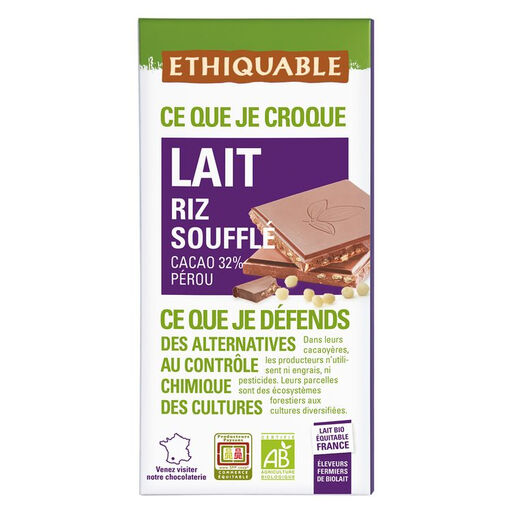 Image unavailable
ETHIQUABLE organic milk chocolate with puffed rice, 100 g
A puffed rice recipe to consider if you’d like to offer a variety of whole bars. The product information lists 8% puffed rice and 48 g of sugars per 100 g; it mentions milk and warns that traces of nuts and gluten may be present. Check these details on the packaging for the batch being sold.
View on Joybuy
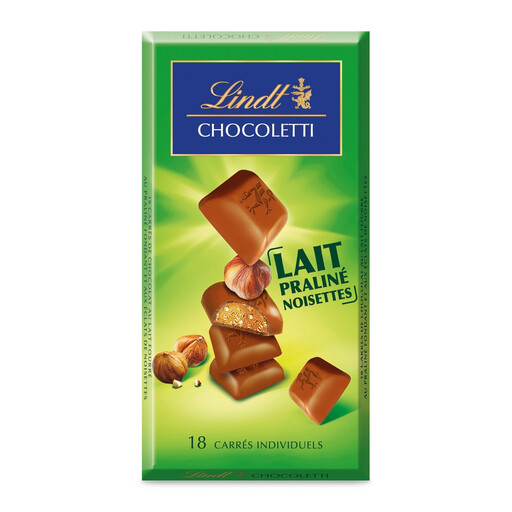 Image unavailable
Lindt Chocoletti praline, 100 g
This praline bar could be sold as a whole unit if the format suits your distribution. Its product information lists 20% hazelnut praline, 7% hazelnuts and 48 g of sugars per 100 g; it also mentions almonds, milk, soya and barley. Check the label before sharing allergen information or planning to hand out individual squares.
View on Joybuy
 Image unavailable
Toblerone Milk, 3 × 50 g
This multipack of three 50 g bars gives you units that weigh less than a 100 g bar. The product information describes a recipe with almond and honey nougat and lists 60 g of sugars per 100 g; the ingredients include milk, almonds, soya and egg white. Check the full label and confirm that each bar has its own wrapper if you need to hand them out separately.
View on Joybuy
Frequently asked questions
Does a chocolate bar sold in France have to display the Nutri-Score?
No. Santé publique France says that displaying the Nutri-Score is voluntary. For the relevant prepacked foods, the DGCCRF distinguishes this logo from the compulsory nutrition declaration. Compare the values per 100 g even if there’s no logo.
What information should you keep to hand during the fundraiser?
Keep the packaging for each prepacked bar to hand so you can share details including its ingredients, allergens, net quantity and best-before date. The DGCCRF says that allergens must be highlighted in the ingredients list, so check the details for the specific product and batch being sold.
Can a bar divided into squares replace individually wrapped portions?
Not necessarily: segmented squares aren’t automatically wrapped individually. If you need to hand out separate portions, check how they’re packaged and how many there are rather than relying on the shape of the bar alone.
How should you store the bars before the fundraiser?
Follow the storage instructions on each pack. The French Ministry of Education reminds organisers to follow the transport and storage conditions shown on labels; Auchan’s product information for Côte d’Or L’Original says to store this product away from heat and humidity.


