Parents comparing fat content
When choosing a bar to add to a recipe, they can compare the figures per 100 g. A product with less fat than another does not necessarily carry a ‘reduced fat’ claim.


When choosing chocolate bars to use in baking with children, compare the fat and sugar content per 100 g rather than assuming a product is ‘reduced fat’ because it contains less fat than another. Next, check the allergens on the packaging and choose a pack size that suits the amount your recipe needs. The Nutri-Score can be a useful extra guide when displayed, but it is not compulsory.
When choosing a bar to add to a recipe, they can compare the figures per 100 g. A product with less fat than another does not necessarily carry a ‘reduced fat’ claim.
If a child has an allergy or intolerance, the ingredients list and any ‘may contain’ warnings on the specific pack take priority over other selection criteria.
The number of bars and their individual weight help you work out how much to add to a recipe or use as decoration. However, a smaller pack does not replace comparing nutritional information per 100 g.
When baking with children, start with the factor that really affects your choice: nutritional content, allergens or a quantity that’s easy to portion out.
| Criteria | What to check | Who is it for? |
|---|---|---|
| Fat | Compare the fat content per 100 g of specific products. If you’re looking for a ‘reduced fat’ claim, check the exact wording on the packaging. | If I want to add a bar to a recipe while keeping an eye on fat, I need to compare measured amounts on the same basis. Around 50% of consumers would prioritise this criterion. |
| Allergens | Read the highlighted ingredients and any ‘may contain’ warnings on the pack you’re buying. | If a child with an allergy or intolerance will be eating the dessert, I need to know whether the ingredients and any stated traces are suitable before choosing a bar. This would be the main concern for around 30% of consumers. |
| Pack size and portion | Check the number of bars, the weight of each one and how much the recipe needs. | If several children are adding pieces to a cake, I first look for a pack that lets me measure out the right amount. This would be the priority for around 20% of consumers. |
To see how two specific products compare, Carrefour France product listings show 20 g of fat per 100 g for Carrefour Sensation caramel-filled bars and 34 g per 100 g for Carrefour Milk Chocolate Bars. These figures alone are not enough to describe the first product as ‘reduced fat’; compare the sugar content too, and check the label on the product you buy.
A difference between two labels describes those two products; it is not a nutrition claim. Nutritional information lets you compare fat content per 100 g, while nutrition claims are governed by the European regulation on nutrition and health claims.
Compare figures on the same basis and check the exact claim on the product separately.
According to Santé publique France, displaying it is voluntary. Its absence therefore does not tell you what score a chocolate bar would receive.
If it appears on the packaging, use it as additional information and check the nutritional values per 100 g too.
For a child with an allergy or intolerance, the ingredients may rule out a bar that would otherwise suit the pack size or recipe you had in mind.
Read the ingredients and any trace warnings on the specific pack before buying or serving it.
The levy described by the Bulletin officiel des finances publiques-Impôts applies to non-alcoholic drinks, not solid chocolate bars.
Check the sugar content per 100 g to compare bars for your recipe, rather than using this tax as a selection criterion.
Two Carrefour products let you compare the fat content shown on their French product listings directly.
The Balisto Fruits des Bois product listed by Carrefour France comes in 18.5 g bars, a weight worth considering when portioning pieces for a recipe.
Mars France lists Snickers and Balisto among its snacking brands. Each product needs to be checked individually.
These chocolate bars include individual formats and multipacks to consider when portioning a topping or comparing labels before baking with children. Check the ingredients that matter for your recipe on each pack.
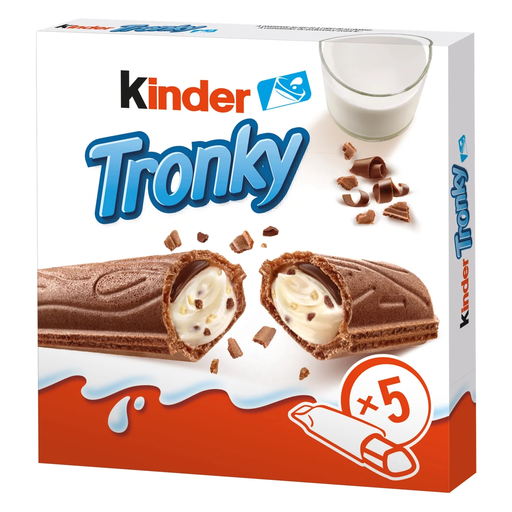 Image unavailable
Worth considering if you’d like to break a wafer bar into pieces for your recipe. The pack weighs 90 g; check its fat and sugar content and allergens on the label before choosing.
 Image unavailable
The pack of nine pieces makes it easier to plan how to divide them between different parts of a bake. Before choosing this variety, check the sugar content per 100 g and the full list of allergens on the pack.
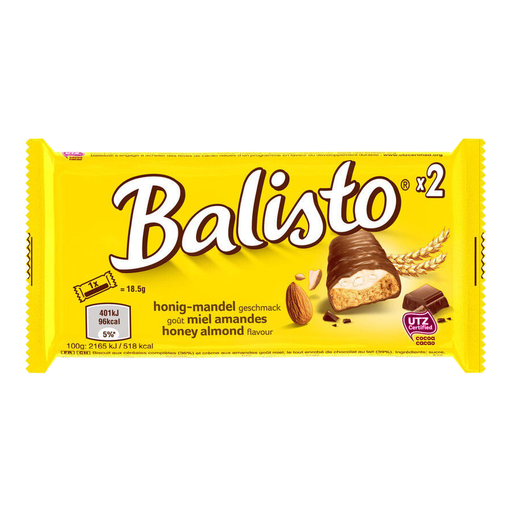 Image unavailable
The weight of this bar helps you work out how much to chop up or add to your recipe. Check the Honey Almond Milk variety on its own: in particular, read its ingredients, any trace warnings and nutritional values per 100 g.
 Image unavailable
This multipack may suit a recipe that calls for several milk chocolate bars. Check that the total quantity and pack size work for the portions you have planned, then read the sugar and fat content and allergens on the pack.
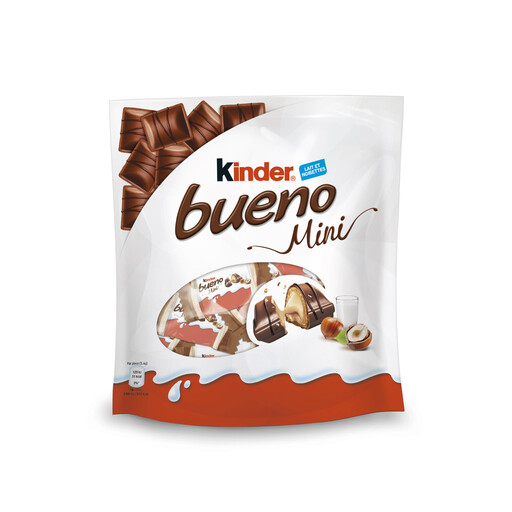 Image unavailable
The mini format may suit you if you want to scatter pieces over a bake as decoration. The bag weighs 108 g; if your recipe calls for a specific number of pieces, check the pack for the count, as well as the ingredients and nutritional values per 100 g.
Look for the exact claim on the pack and check what comparison it is based on; a lower figure than another bar’s is not enough. Then compare the fat content per 100 g and check any other nutritional information that’s relevant to your recipe.
No. Santé publique France says that displaying it is voluntary. For most pre-packed foods, the nutritional information includes fat and sugar content per 100 g, among other details, according to the Directorate-General for Competition Policy, Consumer Affairs and Fraud Control.
Read the ingredients list, the highlighted allergens and any trace warnings on the pack for the variety you’re using. The French Ministry of the Economy says that allergenic ingredients must be listed and highlighted; don’t assume that two varieties from the same brand have the same ingredients.
No. The levy described by the Bulletin officiel des finances publiques-Impôts applies to non-alcoholic drinks under the conditions set out for them, not to solid chocolate bars. To compare bars for a recipe, check their sugar content per 100 g instead.