If you’re keeping track of calories
You have a bar in the morning and want to know the kcal in the individual bar you’ll actually eat, rather than relying on the pack weight.


If you want to keep calories in check during your coffee break, start by looking at the energy in the bar or portion you’ll actually eat. Then compare the values per 100 g, particularly sugars and saturated fatty acids. A smaller bar can help you limit how much you eat, but that doesn’t mean its recipe is lower in energy. If the packaging displays a Nutri-Score, use it as an extra guide, not a substitute for checking the portion.
You have a bar in the morning and want to know the kcal in the individual bar you’ll actually eat, rather than relying on the pack weight.
You enjoy a wafer bar or one with caramel and chocolate, but want to choose a specific portion and check its sugars and energy.
You’re considering a protein bar for your break. Its protein content matters, but you should still check the energy and ingredients in the whole bar.
For a bar with your morning coffee, start with how much you plan to eat. You can then compare the values per 100 g to weigh up recipes sold in different sizes.
| What to consider | What to check | Who is it for? |
|---|---|---|
| Calories in your break | Kcal per bar or portion, and how many bars you’ll eat. | If I have a bar with my coffee, I want to know the energy in that bar before choosing it; around 50 % of consumers are said to prioritise the calories they actually consume. |
| Size and portion | Weight of one bar and nutritional values per 100 g. | I want to enjoy the taste of a classic bar while sticking to a set portion; size is said to be the first consideration for around 30 % of consumers. |
| Protein and ingredients | Protein and kcal per bar, followed by sugars, saturated fatty acids and ingredients. | If protein intake matters to me during my break, I also want to check the ingredients in the whole bar; around 20 % of consumers are said to prioritise this first. |
According to BOFiP-Impôts, the levy in question applies to non-alcoholic drinks containing added sugars. It isn’t a way to rank solid chocolate bars.
When choosing a bar, check its energy per portion, sugars and ingredients list instead.
Santé publique France explains that displaying the Nutri-Score is voluntary and that it is calculated using values per 100 g or 100 mL, not necessarily the amount you eat.
If it’s shown, consider it alongside the nutritional information and the kcal in your portion.
Carrefour France lists, for example, bars weighing 18,5 g and 21 g. The weight of an individual bar doesn’t tell you enough about its composition per 100 g.
Look at the weight of the bar, its energy and its energy per 100 g together.
Protein content alone doesn’t tell you how much energy, sugar or other ingredients a bar contains.
Check the kcal per bar, the other nutritional values and the allergens for the exact product you’re choosing.
Mars France offers a range of snack bars, including Balisto, which combines a cereal biscuit with chocolate and fruit.
In France, KitKat offers milk chocolate-coated wafer bars, with nutritional information provided per portion.
Carrefour also offers a chocolate bar under its own brand, sold in a pack of 10 bars weighing 21 g each.
These two individual bars offer different options for your coffee break: one focuses on protein, while the other sticks to a chocolate, caramel and peanut recipe. For both, check the values for the portion you’re interested in.
 Image unavailable
Worth a look if protein content is part of what you’re considering for your coffee break. This chocolate and peanut bar comes in a 55 g size. Compare the energy and sugars for the whole bar too, then check the ingredients and allergens on the packaging.
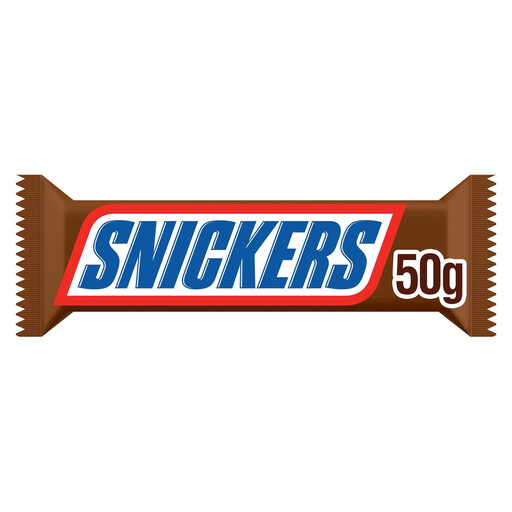 Image unavailable
A good option if you prefer a classic milk chocolate, caramel and peanut bar. It weighs 50 g. To decide whether this portion suits your break, check the kcal and sugars per bar rather than relying on the weight alone.
Not the levy referred to here: BOFiP-Impôts applies it to non-alcoholic drinks containing added sugars, not solid chocolate bars. Sugar content is still worth checking when choosing a product.
No. Santé publique France says producers can choose whether to display it. When it is shown, it is calculated using values per 100 g or 100 mL, so also check the energy and sugars in the portion you’ll eat.
Check the ingredients list and any “may contain” statements on the packaging for the exact product. These depend on the recipe and can’t be determined from the brand name or type of bar alone.
No. The word “protein” doesn’t tell you how much energy a bar contains. Compare the kcal in the bar you’ll eat, along with its sugars, saturated fatty acids and ingredients.