People keeping an eye on snack size
If you’re planning to eat a whole bar during your break, its weight and kcal per bar matter directly. Also compare the figures per 100 g before assuming a smaller format means a less energy-dense recipe.


To limit the kcal in a snack, first compare the portion you’ll eat, then the figures per 100 g: a small bar isn’t necessarily made with a less energy-dense recipe. Check the sugars and ingredients for the exact product too, particularly if you need to avoid an allergen. If a Nutri-Score is shown, remember that it doesn’t replace this information.
If you’re planning to eat a whole bar during your break, its weight and kcal per bar matter directly. Also compare the figures per 100 g before assuming a smaller format means a less energy-dense recipe.
If you’re choosing between different sizes, figures per 100 g give you a consistent basis for comparing energy and sugars. The DGCCRF states that nutrition declarations for prepacked foods are presented on this basis.
Before comparing calories, check the ingredients and allergens for the exact product. A peanut bar and a bar made with a different recipe won’t meet the same avoidance requirements.
When choosing a chocolate bar, start with the amount you plan to eat, then compare recipes at the same weight. If you need to avoid certain ingredients, check the specific product.
| What to compare | What to check | Who it matters to |
|---|---|---|
| Kcal per serving | The weight of one bar and its kcal per bar, if you eat the whole thing. | If I have one bar during my break, I want to know the kcal in that bar rather than the whole pack. Around 42% of consumers put the amount they actually eat first. |
| Recipe at the same weight | Energy and sugars per 100 g in the nutrition information. | To compare two recipes without confusing the recipe with the bar size, I compare their figures on the same basis. This is the priority for around 33% of consumers. |
| Ingredients and allergens | The ingredients list and any allergens declared for the exact product. | If I need to avoid an ingredient, checking whether it’s in the recipe comes before comparing calories. For around 25% of consumers, ingredient suitability is the main consideration. |
Carrefour’s product details for a 21 g bar give 550 kcal per 100 g. A small bar may limit the kcal in one serving without being less energy-dense at the same weight.
Before choosing, check the kcal in the bar you’ll eat as well as the figures per 100 g.
The DGCCRF states that displaying a Nutri-Score is voluntary. Even when shown, it doesn’t tell you the kcal in your portion or list the allergens on its own.
Check the nutrition information and ingredients for the bar you’re considering.
A peanut recipe and a recipe with different ingredients may have different labelling, even within the same brand.
Check the label on the exact product and size you’re buying.
The milk chocolate product reviewed at Carrefour is a 41.5 g wafer bar.
The peanut and caramel product reviewed at Carrefour weighs 50 g.
The biscuit and caramel bar covered in milk chocolate reviewed at Carrefour comes in a 50 g size.
The nougat and caramel bar reviewed at Carrefour weighs 45 g.
The range reviewed includes a 21 g milk chocolate bar and another product containing peanuts.
These two products offer different ways to compare a snack: a multipack of small KitKat bars and an Eat Natural cranberry and dark chocolate bar. Their formats and recipes aren’t interchangeable.
 Image unavailable
This pack of nine is a good option if you want to compare snacks based on one bar eaten during a break. Check the kcal and sugars on the packaging for this flavour, along with the ingredients if you need to avoid certain allergens.
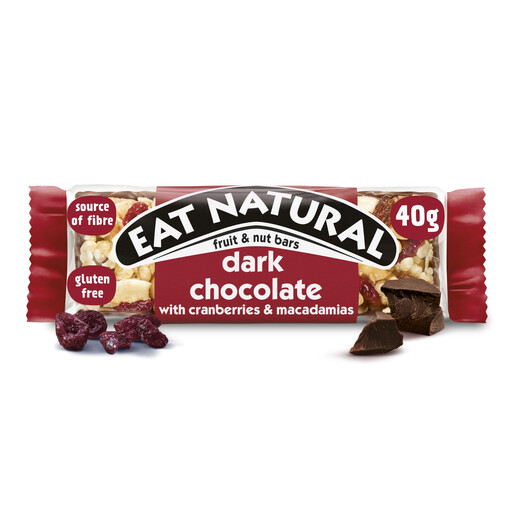 Image unavailable
This 40 g bar could be worth considering if you’re also looking at a recipe with dried fruit and dark chocolate, rather than a classic chocolate confectionery bar. Compare its nutrition information per 100 g and check the ingredients for this product.
Compare the kcal in the amount you’ll eat, then the energy and sugars per 100 g to distinguish the effect of the size from that of the recipe. A small bar may contain fewer kcal per serving without being less energy-dense at the same weight.
No. The DGCCRF states that displaying a Nutri-Score is voluntary in France. For the prepacked foods covered, the nutrition declaration includes details such as energy, fat and sugars. Check it even when a Nutri-Score is displayed.
Read the ingredients and any allergens declared for the exact product, including any relevant ‘may contain’ warnings if you need to avoid certain ingredients. Peanut bars, such as the Snickers product reviewed at Carrefour, require particular care if you need to avoid peanuts.
No. The French Ministry of the Economy describes this levy as applying to sugary drinks, not chocolate bars. Sugar content is still worth checking when comparing recipes, regardless of this tax.